Get Full Government Meeting Transcripts, Videos, & Alerts Forever!
Get email alerts on the School Medicaid Reimbursement topic
No spam. Unsubscribe anytime.
Schools and therapists push bill to return Medicaid dollars directly to districts for school-based care
Summary
Advocates, school districts and therapy associations urged passage of S862 to require MassHealth reimbursements for school-based, medically necessary services to be returned to school districts rather than absorbed at the municipal level, arguing it would sustain school mental-health and therapy services.
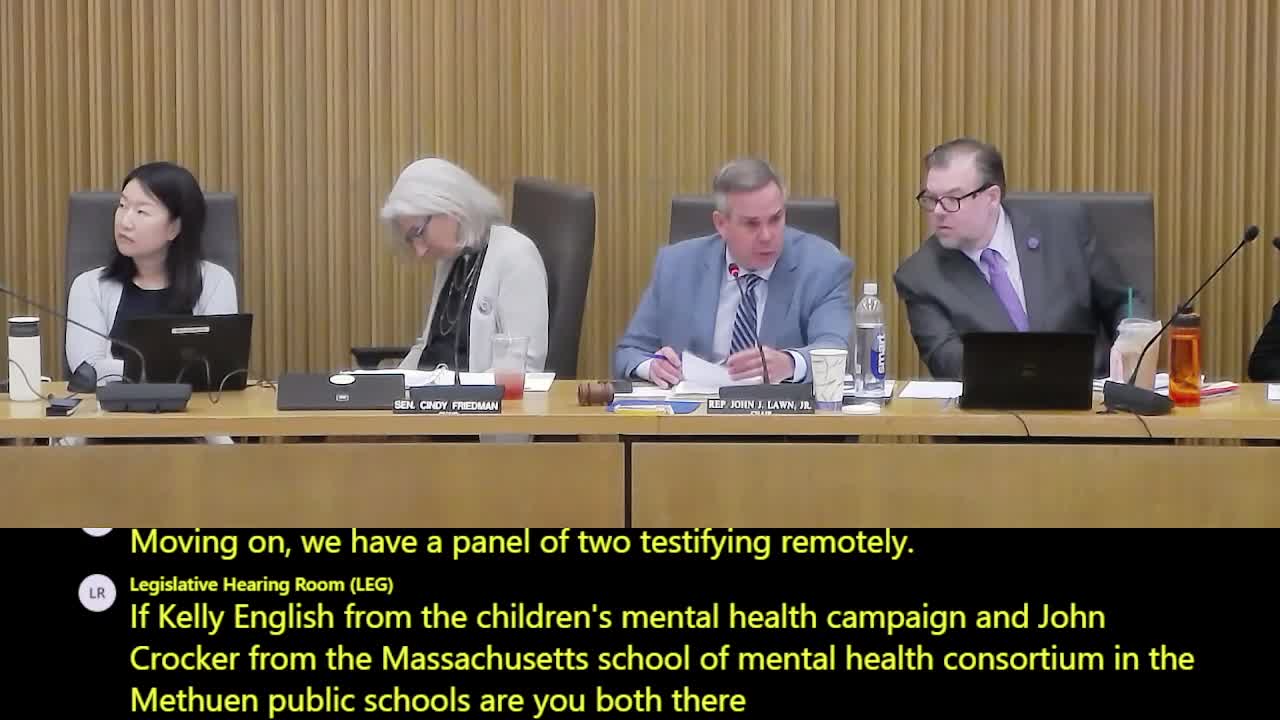
BOSTON — Educators, school mental-health leaders and therapists told the Joint Committee on Health Care Financing that Massachusetts should change how school-based Medicaid dollars are distributed so funds generated by billing are returned directly to districts to sustain mental-health and medically necessary services.
“Up to 80 percent of children and adolescents who receive mental health care do so in a school setting,” said Kelly English of the Children’s Mental Health Campaign. She and Methuen Public Schools’ John Crocker argued that current practice funnels Medicaid reimbursements to municipalities and that giving districts direct access to those funds would expand prevention, screening and hiring of clinicians.
Why the change is proposed: Witnesses said administrative hurdles and a lack of capacity have reduced school participation in billing despite rising student need. Karen Hepler of the Massachusetts Association of Occupational Therapy said that after the 2019 expansion of the school-based Medicaid program, participation declined in many districts because administrative complexity outpaced district capacity. Returning reimbursements directly to districts, witnesses said, would allow investments in staff (nurses, social workers, OT/PT) and billing infrastructure.
Numbers and context: Advocates noted $81 million in school-based Medicaid claims were realized in fiscal 2024 and said that reinvesting these federal funds into school health budgets would be cost-effective and timely as federal pandemic-era emergency education funds have expired. John Crocker emphasized that school-based services improve access and completion rates: students offered services at school are more likely to complete treatment, reducing downstream crises and costs.
Committee reaction: Senators asked about municipal budgeting concerns; witnesses replied that returning funds specifically to school health budgets would increase capacity for prevention and would not reduce town support for general school budgets. Testifiers asked for a favorable report on S862 and pledged to provide further implementation details in writing.