Get Full Government Meeting Transcripts, Videos, & Alerts Forever!
Get email alerts on the PACE Accessibility topic
No spam. Unsubscribe anytime.
Providers, elder-law advocates push to remove PACE spend‑down barrier for community care
Summary
Witnesses including MassPACE and elder-law attorneys urged passage of H1371/S841 to let individuals pay a monthly premium instead of meeting a six‑month deductible that forces some older adults into nursing homes.
BOSTON — Advocates from PACE (Programs of All-Inclusive Care for the Elderly) and elder-law attorneys told the Joint Committee on Health Care Financing that current MassHealth income rules force some older adults to spend down incomes to a federal deductible level — often making nursing home placement the only practical option.
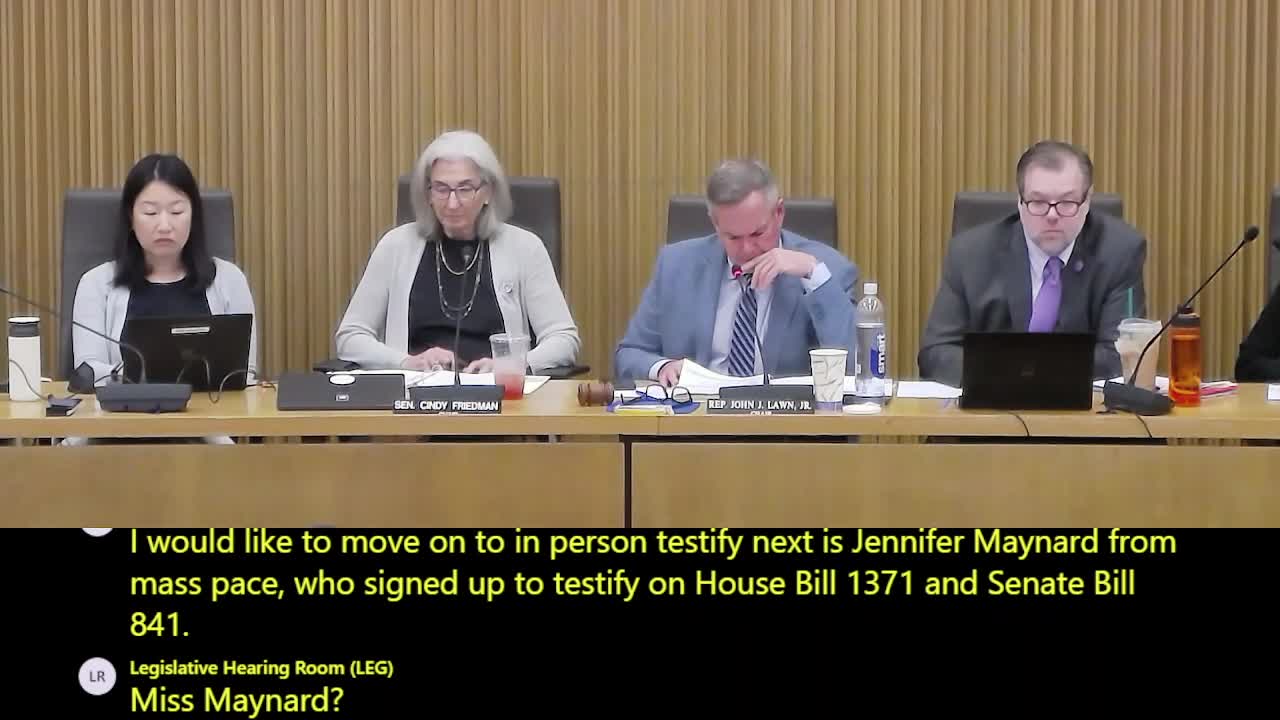
Jen Maynard, executive director of the MassPACE Association, urged support for H1371/S841 to change the eligibility structure so that individuals who earn slightly more than the current threshold could pay a modest monthly premium to MassHealth and retain income for living expenses, rather than depleting assets to meet a six-month deductible. “That number was set by the federal government over 40 years ago and does not reflect the reality of living at home,” Maynard told the committee.
How current rules work: Witnesses explained the deductible model: if gross income exceeds 300% of the federal benefit rate, an applicant must meet a deductible that can leave the person with just $542 a month for living costs during the deductible period. Clarence Richardson of the Massachusetts chapter of the National Academy of Elder Law Attorneys illustrated the effect: an individual with $3,000 monthly income could be required to pay $14,748 over six months before MassHealth would begin covering medical costs.
Why change would matter: Attorneys said enabling a premium option (e.g., $99 a month, as an illustration used in testimony) would allow people to remain in community programs like PACE, preserve continuity of care, and likely reduce higher long-term costs associated with nursing home placement.
Committee follow-up: Witnesses said MassHealth had discussed related policy changes with PACE providers and that implementation was slated in prior proposals, but some speakers expressed concern about federal and broader budget constraints. Advocates asked the committee to report the bill favorably and requested follow-up fiscal analysis from MassHealth.