Get Full Government Meeting Transcripts, Videos, & Alerts Forever!
Get email alerts on the Disability Healthcare Non Discrimination topic
No spam. Unsubscribe anytime.
Disability advocates urge passage of H.1360/S.869 to ban discriminatory medical care and DNR pressure
Summary
Persons with disabilities, family members and disability rights groups testified in favor of H.1360/S.869 to forbid deprioritizing or denying care based on disability and to prohibit coercion into do‑not‑resuscitate orders and discriminatory metrics in treatment decisions.
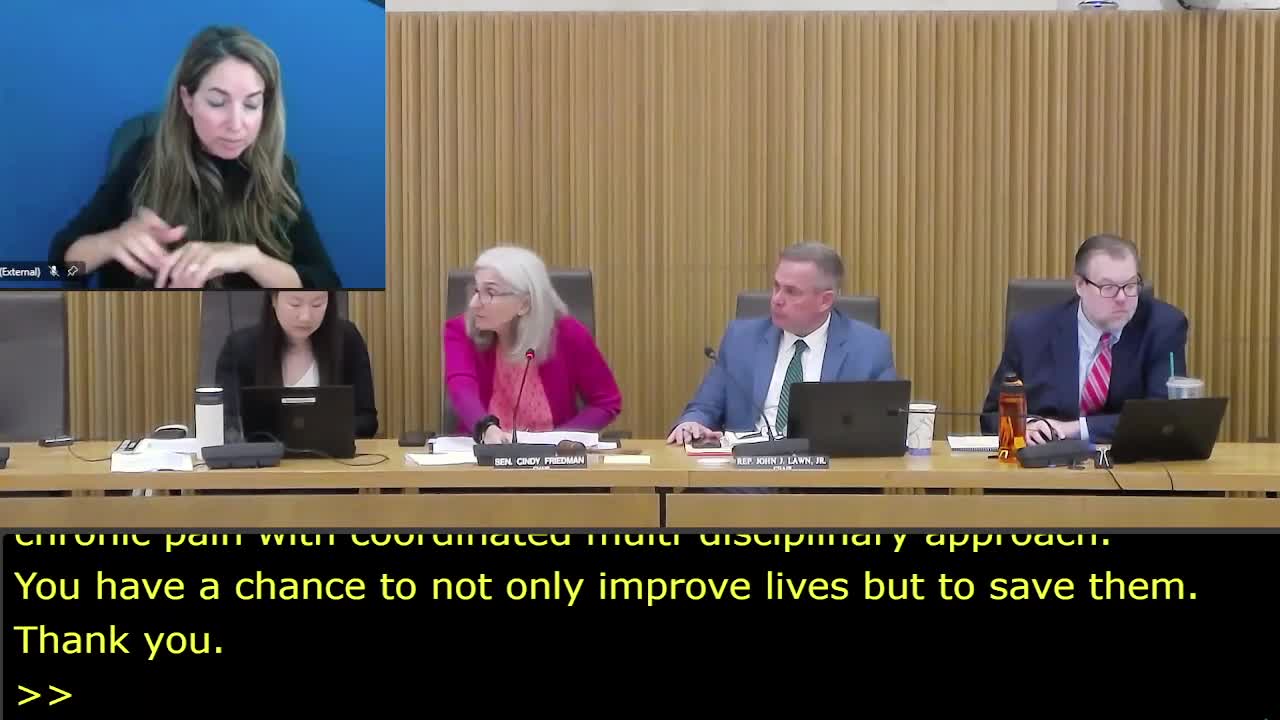
The Joint Committee on Health Care Financing heard more than a dozen people testify in support of H.1360 and S.869, bills described by advocates as needed protections against disability‑based discrimination in health care.
Senate Chair Cindy Friedman introduced the item and called forward witnesses who described repeated instances in which people with disabilities said they were deprioritized, dismissed or pressured in clinical settings. Cody Rooney, testifying in person, said health care workers “look to whoever walks in with me or asks now that I go along as if someone came with me for a rush hour to treat me even though I'm a capable” and argued the bill would require clinicians to base decisions on facts about an individual rather than biased assumptions.
Several witnesses described experience under COVID‑era crisis standards and with DNR pressure. Holly Simeone, chair of the Somerville Disabilities Commission, linked her daughter’s death to crisis standards of care that she said led clinicians to apply a triage “yellow sticker” that limited access to resources; she told the committee her daughter “died at home on 05/05/2025.” The Disability Policy Consortium and the Autistic Self Advocacy Network described the bills as necessary to ban evaluations or metrics that devalue disabled lives, including some uses of quality‑adjusted life year (QALY) frameworks.
People with disabilities recounted practical access failures such as lack of physical equipment (exam tables that cannot be accessed from a wheelchair), repeated denials of procedures, lack of ASL interpreters, and clinicians presuming lack of capacity. Kyle Kennedy described being denied dental care because the office did not have an exam room to fit him; Nini Silva said an emergency‑room companion who is deaf was repeatedly denied interpreting services.
Supporters asked the committee to bar medical decision‑making that uses disability as a proxy for poor quality of life and to require reasonable accommodations and noncoercive consent practices. Samantha Fine of the Disability Policy Consortium summarized the bills’ aims: to ensure “access to lifesaving medical care does not discriminate on the basis of disability, bans metrics in the provision of health care that devalues disabled lives … and protects disabled patients from being pressured to sign do not resuscitate DNR orders.”
Committee notes: The hearing recorded testimony but no committee votes. Chairs asked for written materials and said they would review testimony carefully. A range of personal stories and organizational support letters were entered into the record.