Get Full Government Meeting Transcripts, Videos, & Alerts Forever!
Get email alerts on the Healthcare Medicare For All topic
No spam. Unsubscribe anytime.
Hundreds testify in support of Massachusetts Medicare-for‑All bills at Joint Committee hearing
Summary
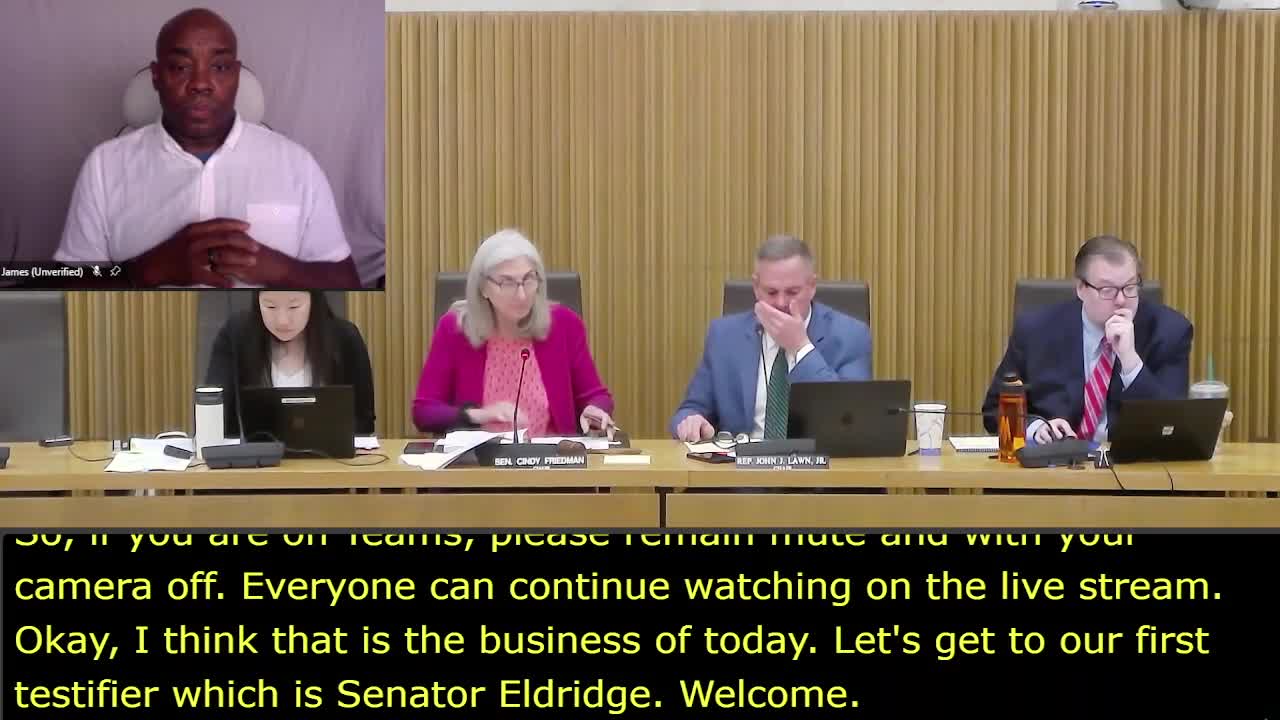
Senate Chair Cindy Friedman and House Chair Representative John Lawn convened a hearing of the Joint Committee on Health Care Financing to receive testimony on H.1405 and S.860, bills to establish a Massachusetts Health Care Trust and a single‑payer, Medicare‑for‑All style system.
Senate Chair Cindy Friedman and House Chair Representative John Lawn convened a hearing of the Joint Committee on Health Care Financing to receive testimony on H.1405 and S.860, bills to establish a Massachusetts Health Care Trust and a single‑payer, Medicare‑for‑All style system.
Supporters told the committee the current system is unaffordable and fragile and urged prompt action. Senator John Eldridge, who filed S.860 with Representative Lindsay Sabadosa, said, “I believe that health care should be a right,” and described the proposed trust as a way to guarantee “no co pays, no deductibles, no denials of care, and no need to reenroll.”
Why it matters: Witnesses said rising insurance costs and hospital closures are already disrupting access to care and municipal budgets. Multiple speakers pointed to recent hospital shutdowns, ongoing pressure on the Group Insurance Commission, and insurer rate requests above state cost benchmarks as evidence the status quo is failing.
What testimony showed: Providers, public‑health experts and patient advocates described three recurring themes: administrative and profit‑driven waste, gaps in access and continuity of care, and financial strain on families, employers and towns. Marge Cohen, an internal medicine physician representing Physicians for a National Health Program, contrasted U.S. outcomes with other wealthy nations and said “our healthcare delivery system is dysfunctional, exorbitantly expensive, and leads to tragically poor health outcomes.”
Local officials and municipal finance officers told the committee that skyrocketing health care costs are forcing tough budget choices. David Cornwitz, chair of the Wellesley Retirement Board, called H.1399 (a separate municipal retiree option) “a win‑win‑win for retirees, for municipalities, and for our taxpayers,” arguing alternatives could lower retiree health liabilities.
Personal stories were central to testimony. Rebecca Wood described years of medical bills and care coordination for her daughter born prematurely; Kimberly Connors recounted delays in receiving cancer treatment paperwork earlier in her care that motivated her to become executive director of MassCare; and Robert McCarthy and other clinicians said the system diverts clinician time to billing disputes rather than patient care.
Fiscal and policy claims: Witnesses cited a recent academic analysis estimating substantial state savings from a single‑payer model and said savings would come from eliminating multiple private insurers, simplifying administration, and using a single public payer’s bargaining power for drugs and services. Proponents also argued a state trust could stabilize funding for hospitals and preserve local services.
Opposition and process questions: The committee did not take a vote. Multiple members noted complexity and the need to evaluate downstream effects across the health system. Some testifiers urged the committee to move the bill forward for fuller debate; others asked for more data on implementation steps and transition costs.
What’s next: The hearing closed with chairs encouraging written testimony; no formal committee action or votes were recorded during the session.