Get Full Government Meeting Transcripts, Videos, & Alerts Forever!
Get email alerts on the Medicare Savings Program topic
No spam. Unsubscribe anytime.
Advocates push Mass. to expand Medicare Savings Program eligibility, raise MassHealth asset limits and penalize improper QMB billing
Summary
Mass Senior Action, beneficiaries and policy experts urged the Joint Committee on Health Care Financing to expand the Medicare Savings Program (MSP) income thresholds, raise MassHealth asset limits (currently $2,000 individual/$3,000 couple) and create state enforcement for improper billing of Qualified Medicare Beneficiaries (QMBs).
Advocates and beneficiaries told the Joint Committee on Health Care Financing that recent expansions to the Medicare Savings Program (MSP) improved access but left gaps for older adults who face a “healthcare cliff” at age 65.
Why this matters: Witnesses asked the legislature to raise asset limits for MassHealth and expand MSP eligibility to reduce financial hardship and protect low‑income seniors from improper provider billing.
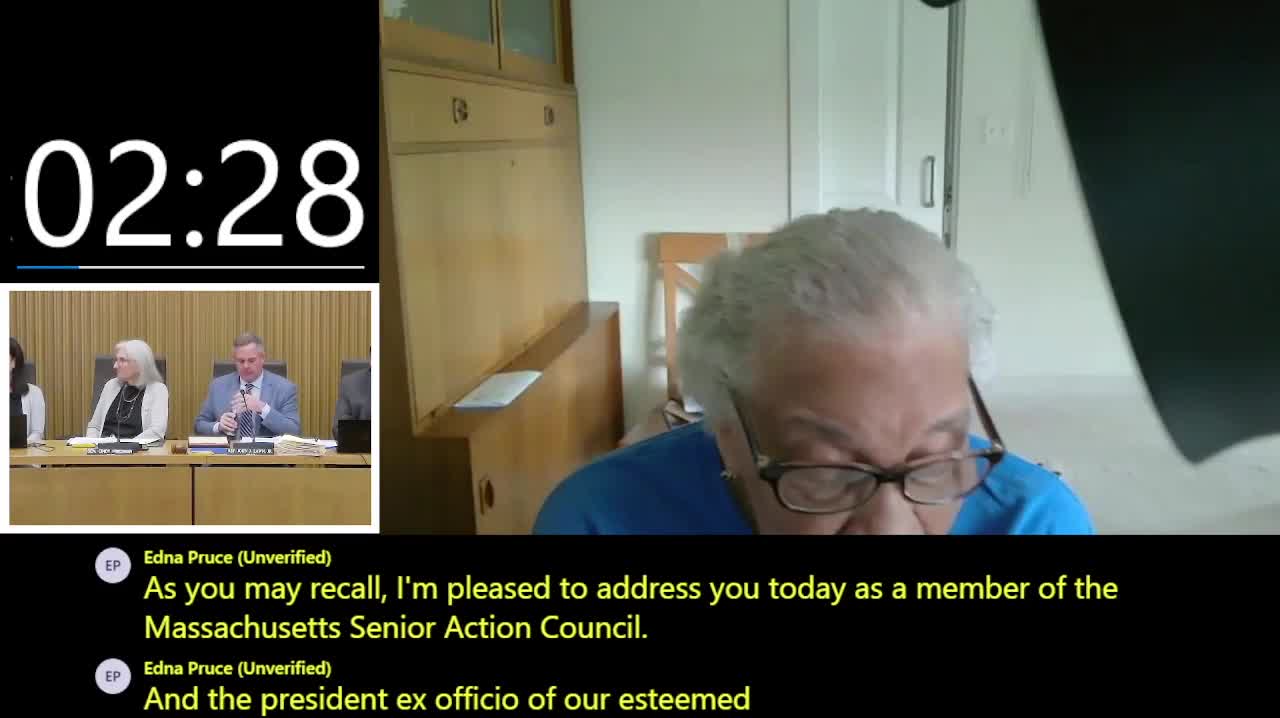
“...Nassau's asset limit of $2,000 for individuals and $3,000 for couples has remained unchanged since 1989,” Edna Proust of Mass Senior Action told the committee, urging support for House Bill 14 14 and Senate Bill 8 79 to raise those limits. Proust said counting life insurance as cash disadvantages those with modest whole‑life policies.
Mass Senior Action members described how the MSP expansion has helped thousands. George Teshew, a Somerville resident and MSP beneficiary, said the Qualified Medicare Beneficiary program covered his Part B premium and reduced his out‑of‑pocket costs. Teshew and other witnesses asked the committee to add state penalties for providers who bill QMB recipients in violation of federal law, citing House Bill 14 15 and Senate Bill 8 83.
“We're working with MassHealth providers and insurers to identify the cause of the improper billing so that it can be corrected,” Teshew said, and requested stronger enforcement tools so low‑income seniors stop receiving improper bills.
Mass Senior Action’s executive director and local leaders described the program’s quick uptake after expansion: enrollment rose from roughly 20,000 to more than 65,000 people in the MSP, with over 54,000 in the QMB category, according to testimony from Carolyn Fillers. Speakers told the committee federal financing leverages the state program and that a modest expansion to align MSP with 300% of the federal poverty level would better match older adults’ needs.
Committee members asked advocates to provide written cost analyses. Senator Friedman and other members noted the racial‑equity concern mentioned by witnesses — that life insurance rules disproportionately affect Black elders who are more likely to hold whole life policies.
No action was taken at the hearing; the committee will continue to accept written testimony and follow up on requested fiscal details.