Get Full Government Meeting Transcripts, Videos, & Alerts Forever!
Get email alerts on the Paid Caregivers topic
No spam. Unsubscribe anytime.
Mass. lawmakers hear broad support for letting family members be paid MassHealth caregivers
Summary
The Joint Committee on Health Care Financing heard extensive testimony supporting bills (including H1394/S886/S914) that would allow legally liable family members — including spouses and guardians — to be paid as caregivers under MassHealth home- and community-based programs.
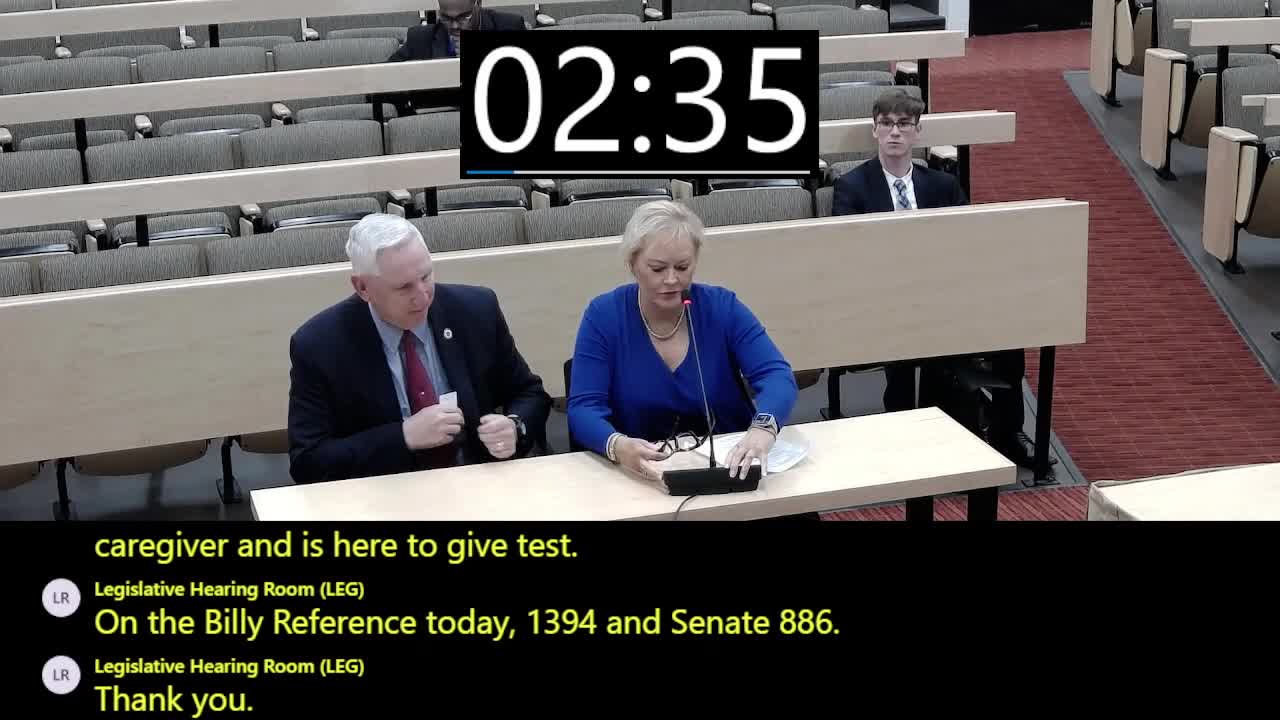
BOSTON — Legislators and advocates urged the Joint Committee on Health Care Financing on Wednesday to allow legally responsible family members to serve as paid caregivers under several MassHealth home- and community-based programs, saying current rules force families into financial hardship and away from home-based care.
Supporters told the committee the change would recognize unpaid labor, expand the caregiving workforce and help keep people with disabilities and older adults in their homes. “This bill isn't just about policy, it's about people,” said Sandra Heller, a parent and member at-large of the Massachusetts Developmental Disability Council. “Families are already providing the essential, loving and often exhaustive care that allows their loved ones to remain safely and comfortably in their homes rather than costly institutions.”
Why it matters: Witnesses said current rules bar parents, spouses and legal guardians from being paid caregivers through programs such as Adult Family Care (AFC) and Personal Care Attendant (PCA) when they are legally responsible for the care recipient, even if no other caregiver is available. Testifiers described single parents and guardians who must reduce or quit work to provide round-the-clock care. Christine Stant, director of the Milton Council on Aging and legal guardian of her adult son, said: “Under current law, a parent, spouse or legal guardian is ineligible to be the paid caregiver under AFC or PCA programs, even if they're the only ones providing the care. This policy makes no sense and it disproportionately punishes single parents like me.”
Evidence and cost: Proponents pointed to national and out-of-state precedents. Virginia Brackett, chief operating officer at Vitra Health, said 23 states allow spouses to serve as paid caregivers under Medicaid waivers and that the U.S. Department of Veterans Affairs does similarly. Speakers argued potential state savings from avoided hospitalizations and institutional placements could offset program costs; Lorena Silva, Vitra Health CEO, cited an AARP finding that self-directed care averaged about $1,774 per month in 2019 versus $6,175 for a semi-private nursing home room.
Concerns and safeguards: Advocates acknowledged past MassHealth cautions about costs (a 2018 memo was repeatedly cited) but said that memo predates today’s workforce crisis and fails to account for savings from avoided institutional care. They urged guardrails already used in AFC — background checks, training, service limits and nursing oversight — as feasible controls if family caregivers are authorized and federal waivers are obtained.
What supporters asked the committee to do: Multiple witnesses, including legislators and representatives of provider associations and family-advocacy groups, urged a favorable report on bills including H1394/S886 and companion measures (including S914 and earlier filings such as H10897/S676 noted by witnesses) and asked the executive branch to seek federal permission where necessary. “This bill will provide critical financial relief,” Sandra Heller told the panel. “It allows compensation for work that's currently being done unpaid.”
Process notes: Committee chairs outlined that written testimony will be accepted through Aug. 22, 2025, and that bills heard in the morning must be reported by Aug. 30, 2025, subject to House rules.
Looking ahead: Advocates said next steps should include specifying program safeguards, estimating fiscal impact with MassHealth, and seeking federal waiver approval where required. The committee recessed and will hear additional, related testimony in the afternoon session.