Get Full Government Meeting Transcripts, Videos, & Alerts Forever!
Get email alerts on the Personal Needs Allowance topic
No spam. Unsubscribe anytime.
Mass. advocates press legislature to raise $72.80 monthly personal-needs allowance for nursing home residents
Summary
Advocates, residents and former officials told the Joint Committee on Health Care Financing that the long-standing $72.80 personal‑needs allowance (PNA) for nursing and rest home residents is inadequate, has not changed since FY2008, and should be raised (to about $113.42 by an inflation adjustment) and indexed to avoid future erosion.
The Joint Committee on Health Care Financing heard extensive testimony urging an increase in the personal‑needs allowance (PNA) that nursing‑home and rest‑home residents keep each month for items not provided by facilities.
Supporters said the current PNA, $72.80 per month and unchanged since fiscal 2008, leaves residents without funds for basic clothing, shoes, phone minutes, toiletries and small social expenses that contribute to dignity and quality of life.
Why this matters: Residents and advocates described daily choices forced by the allowance, and experts estimated a modest budgetary impact compared with the program’s size. They urged lawmakers to approve legislation that raises the PNA and indexes it to inflation so it does not erode again.
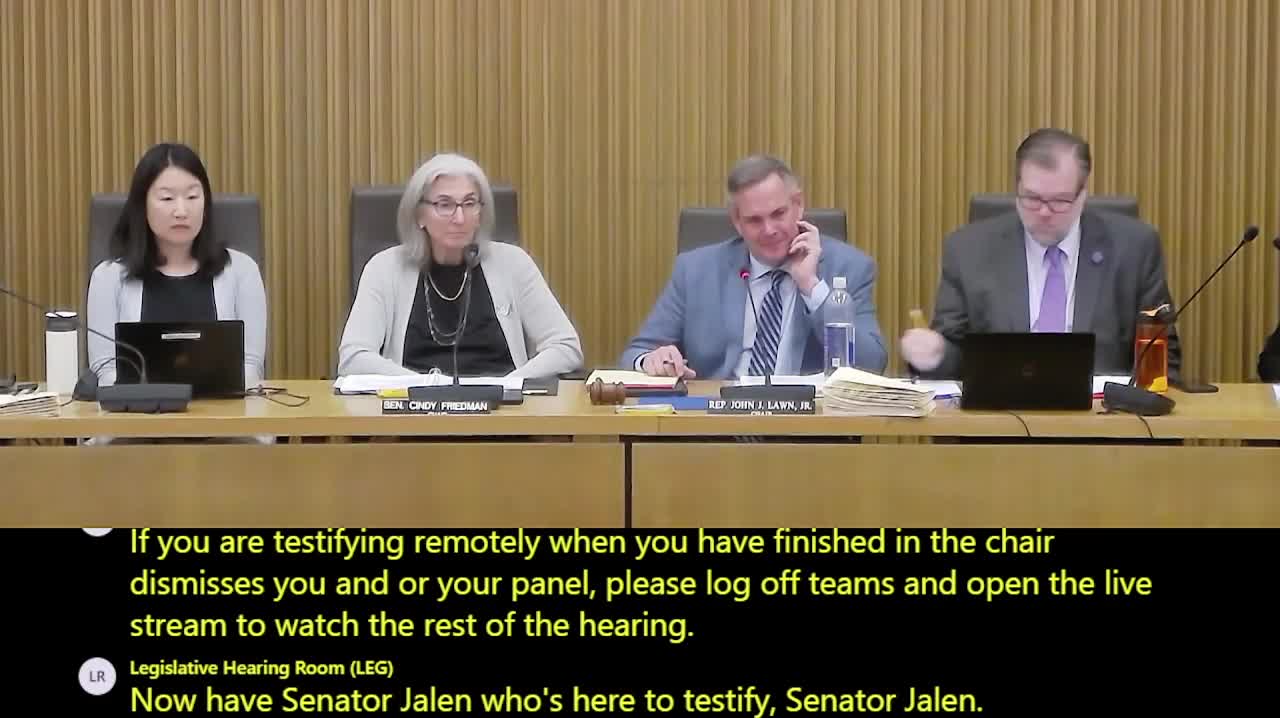
“...it remains at an inadequate $72.80. If the personal needs allowance had kept up with inflation when it was last increased, it would be at least $113.42 today,” Senator Jalen said in his remarks to the committee, calling attention to the gap between the fixed allowance and rising costs.
Residents described how the allowance affects ordinary life. Lovering Hayward, a Hale House resident, said: “I am a recipient of a monthly personal needs allowance of $72.80. I am speaking today in support of an increase to that sum as I find it is inadequate to meet my personal needs.” Hayward listed items that often go unmet: toothpaste, shampoo, underwear and shoes.
Reverend Elizabeth Levitt, another Hale House resident, said the allowance affects mobility and self‑respect: “We deserve the dignity of receiving a $113 a month instead of $72.80 because the cost of living increases you have heard about are not part of the PNA we receive now.”
Administrators and ombudsmen told the committee the PNA does not cover items residents expect to buy themselves. Jill Jameli, administrator at Hale House, asked legislators to “put yourself in the shoes of someone living in a rest home” and noted staff repeatedly help residents prioritize and sometimes seek emergency funds.
Carolyn Fenn, the Massachusetts state long‑term care ombudsman, described how residents often must borrow clothing or rely on lost‑and‑found items because they lack money for basic replacements, and cited fitted incontinence briefs as a dignity issue that can cost more than the monthly allowance.
Academic analysis presented to the committee placed the cost of raising the PNA in context. Paul Schaefer, associate professor at Boston University and co‑director of the BU Medicaid Policy Lab, estimated that the proposed increase would cost MassHealth roughly $10–12 million annually — a small fraction of the state’s overall budget — and recommended indexing the allowance to inflation.
Speakers urged the committee to move bills on the PNA (House Bill 14 11; Senate Bills 4 82 and 8 87) out of committee with a favorable recommendation. No vote was taken during the hearing; testimony will be included with written submissions the committee continues to accept.
Looking ahead: Advocates asked the committee to pair any increase with automatic annual indexing to avoid returning repeatedly to the same issue and to consider the change part of broader efforts supporting resident dignity and workforce stability in long‑term care.