Get Full Government Meeting Transcripts, Videos, & Alerts Forever!
Get email alerts on the Hospital Executive Pay topic
No spam. Unsubscribe anytime.
Doctors, unions and city officials push bill capping hospital CEO pay at 50x lowest wage
Summary
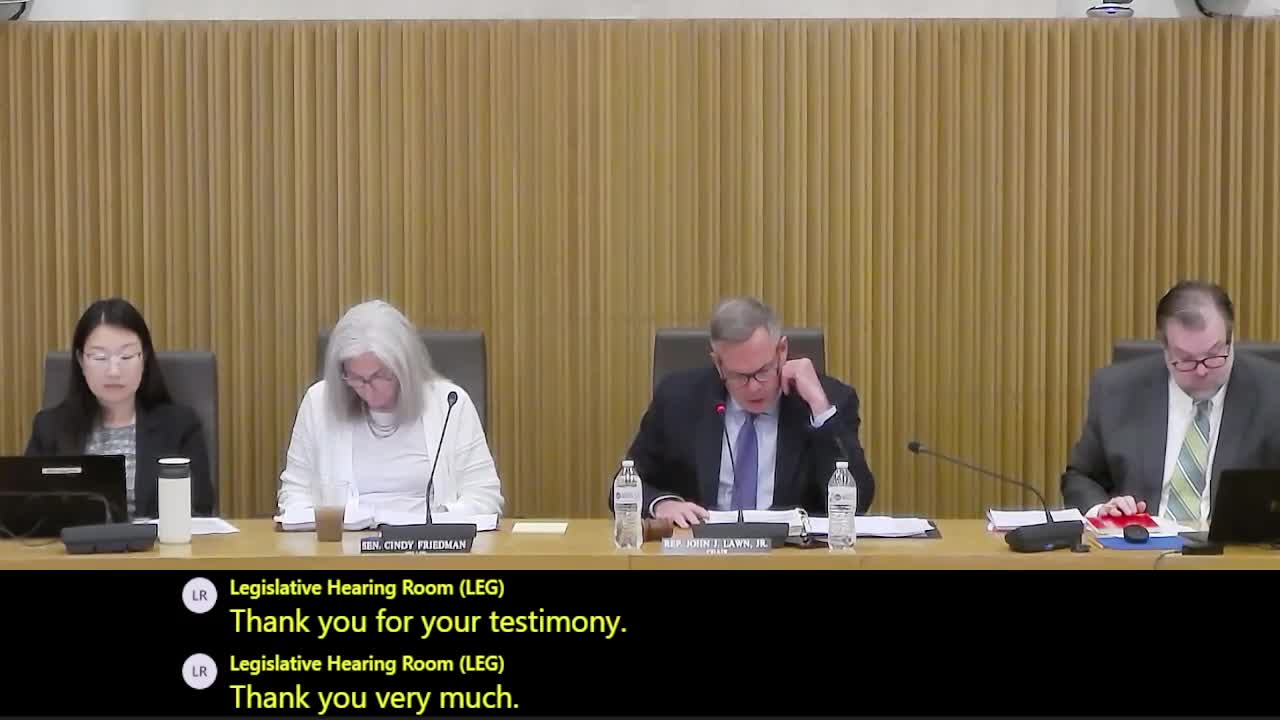
Physicians, union leaders and a Worcester city councilor urged the Joint Committee on Health Care Financing on Wednesday to advance legislation capping hospital CEO pay at 50 times the lowest-paid full‑time worker and directing penalties to a Medicaid reimbursement enhancement fund.
BOSTON — Physicians, union leaders and a Worcester city councilor urged the Joint Committee on Health Care Financing on Wednesday to advance House Bill 1398 and Senate Bill 899, legislation that would require hospitals receiving public funds to disclose detailed financials, cap chief executive pay at 50 times the facility’s lowest-paid full-time employee and deposit penalties into a Medicaid reimbursement enhancement fund.
Supporters said the measure aims to redirect hospital revenue toward patient care and understaffed community programs. "This bill will cap health care CEO pay," said Taylor Walker, president of the physician union CIR‑SEIU, testifying in person. "It is really a moral imperative."
The bill would require hospitals to publish asset and compensation information and create monetary penalties for systems that both exceed operating margin limits and breach the proposed executive-compensation cap. Proponents said money from penalties would be deposited into a Medicaid Reimbursement Enhancement Fund (MREF) to bolster Medicaid payments for eligible hospitals.
Union and physician testimony focused on examples they said show the need for the policy. "Mass General Brigham’s CEO, Anne Klibanski, authorized a 40% raise for herself in 2023, bringing her salary to $6,000,000 per year," Walker said. Resident physicians described cuts to chaplaincy, tobacco‑cessation and domestic‑violence programs while executives receive large compensation packages. "Where hospital CEO pay is $6 million and chaplains make about $100,000, something is wrong," said resident physician Sarah Brown.
Senator Cindy Friedman, co‑chair of the committee, pressed witnesses on scale and mechanism: she noted the statewide safety‑net shortfall she cited at $260 million and asked whether a $3 million sum (an illustrative estimate witnesses offered of savings from a single CEO pay reduction) would meaningfully restore the services named. Walker and other witnesses said the bills redirect penalties specifically into Medicaid reimbursement enhancements and that those enhanced reimbursements would support safety‑net hospitals that serve underserved communities.
Labor and municipal support came from Lindsay Kenney of the Massachusetts AFL‑CIO and Worcester City Councilor Jenny Pacillo, who tied the legislation to the region’s experience in hospital strikes and closures. Kenney said the 50x cap would still allow substantial compensation — she estimated the cap would generally limit CEO pay to about $1.5 million at many hospitals — and argued the bill encourages hospitals to raise pay for lower‑wage workers instead of enlarging executive pay.
Committee members raised implementation questions, including whether hospitals could shift low‑wage positions to contract vendors to raise the baseline used in the 50x ratio and how penalties would be enforced. Walker acknowledged those risks and said contractual shifts would likely be more expensive for hospitals and that the legislation complements other market‑oversight proposals in the docket that target private‑equity and similar practices.
The bills' text would also require public disclosure of hospital operating margins and related financial information, and proponents said that transparency would help regulators and the public evaluate hospital spending choices. Opponents and payers were not part of this panel; questions from the committee focused on mechanics, the scope of funds that would be subject to disclosure and interactions with other oversight bills being considered during the hearing.
If advanced, the bills would be heard and workshopped in committee; no formal vote was recorded at this hearing.
The hearing continued with other health‑care reform matters on the committee’s agenda.