Get Full Government Meeting Transcripts, Videos, & Alerts Forever!
Get email alerts on the Administrative Alignment And Direct Primary Care topic
No spam. Unsubscribe anytime.
Doctors urge alignment of state and federal patient-disclosure rules; direct primary care advocate pitches insurance exemption
Summary
Physicians and hospital representatives asked lawmakers to align Massachusetts patient-cost disclosure rules with the federal No Surprises Act to avoid duplicative notices; a primary-care doctor promoted H.1120 to classify direct primary care as non-insurance to encourage the model.
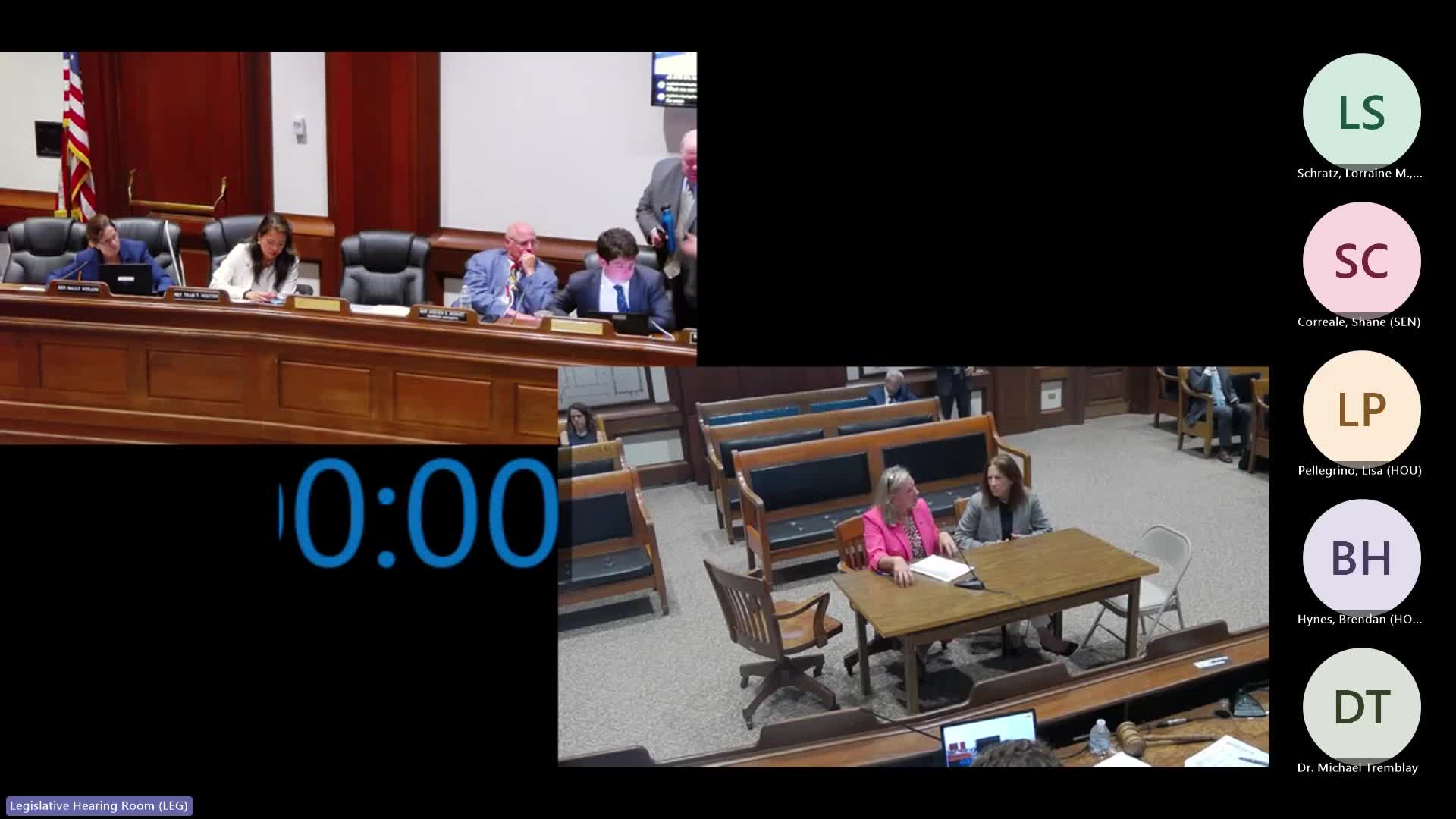
BOSTON — Two administrative and access-focused proposals drew brief testimony on Tuesday. Pediatric cardiologist Lorraine Schratz, speaking for the Massachusetts Medical Society, urged the committee to support H.1126, which would align state patient-disclosure rules with the federal No Surprises Act and simplify notices so patients are not confused by overlapping state and federal requirements.
"Trying to navigate and comply with state and federal laws simultaneously would be nearly impossible for my office," Schratz told lawmakers, noting that the state delayed implementation of its Patient First Act until 2027 to allow federal processes to settle. She said aligning the two laws would reduce administrative burden and simplify information for patients scheduling care.
Separately, Michael Tremblay, CEO of Action Medicine in Braintree and operator of a direct primary care practice, urged support for H.1120 to clarify that direct primary care contracts are not insurance. Tremblay said his practice charges a monthly fee and does not bill insurers, allowing longer visits and more time per patient. He argued a statutory clarification would encourage more physicians to adopt the model and could ease the primary-care shortage.
Both measures were presented as technical or market changes intended to reduce administrative friction or expand care models; the committee did not vote on either item.