Get Full Government Meeting Transcripts, Videos, & Alerts Forever!
Get email alerts on the Specialty Gynecology Access topic
No spam. Unsubscribe anytime.
Advocate with endometriosis urges end to PCP referral requirement for specialty gynecological care (H.1168)
Summary
A legislative aide who suffered long delays getting gynecological specialty care urged the committee to eliminate primary-care referral requirements for in-network specialty gynecological services, saying the change would speed diagnoses such as endometriosis.
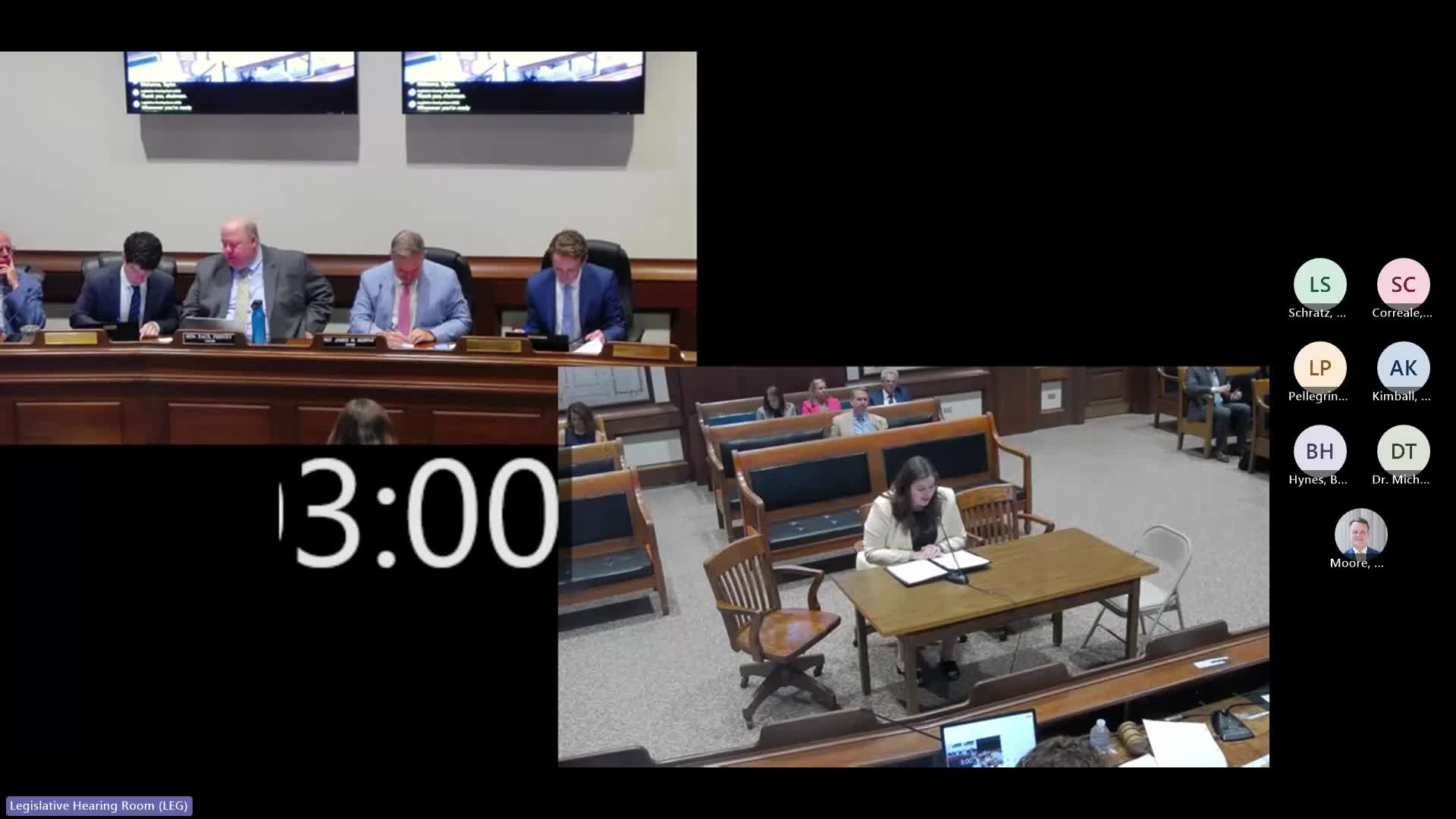
BOSTON — Taylor Sprague, a legislative aide and longtime patient, told the Joint Committee on Financial Services and Insurance that removing the requirement for a primary-care physician referral to see in‑network specialty gynecological care would shorten the time to diagnosis and treatment for conditions such as endometriosis.
"It takes a person an average of eight to 10 years to get diagnosed with endometriosis," Sprague told the committee in support of H.1168 and S.818, which would eliminate the PCP referral requirement for specialty gynecological care from an in-network provider. She described being 14 when she experienced severe pain, the difficulty in obtaining a referral to a pediatric gynecology clinic, and that the specialist diagnosed her almost immediately.
Supporters said the change would not affect emergency care, annual exams, maternity care or other services already covered without referral; it would allow direct access to non-emergency specialty care for chronic gynecological conditions. "Removing the PCP referral barrier is a critical step towards addressing the systemic inequities in health care that leave thousands of people with endometriosis and other gynecological conditions suffering in silence," Sprague said.
Sprague urged lawmakers to report the bill favorably, saying the law would improve health outcomes and potentially reduce long-term costs by avoiding delayed care. No insurer representatives testified at the hearing to offer a response to the proposal; the committee took no vote.