Get Full Government Meeting Transcripts, Videos, & Alerts Forever!
Get email alerts on the Crna Reimbursement Parity topic
No spam. Unsubscribe anytime.
CRNA groups press lawmakers to ban lower insurer reimbursement, cite federal parity and state action
Summary
Certified registered nurse anesthetists and advocates urged the committee to back bills (H.1142/S.783) that would prohibit insurers from reimbursing CRNAs at lower rates than physicians, arguing parity is supported by federal law and would expand access.
BOSTON — Certified registered nurse anesthetists testified to the Joint Committee on Financial Services and Insurance that some commercial insurers reimburse CRNAs at far lower rates than physician anesthesiologists and that state law should prohibit that differential.
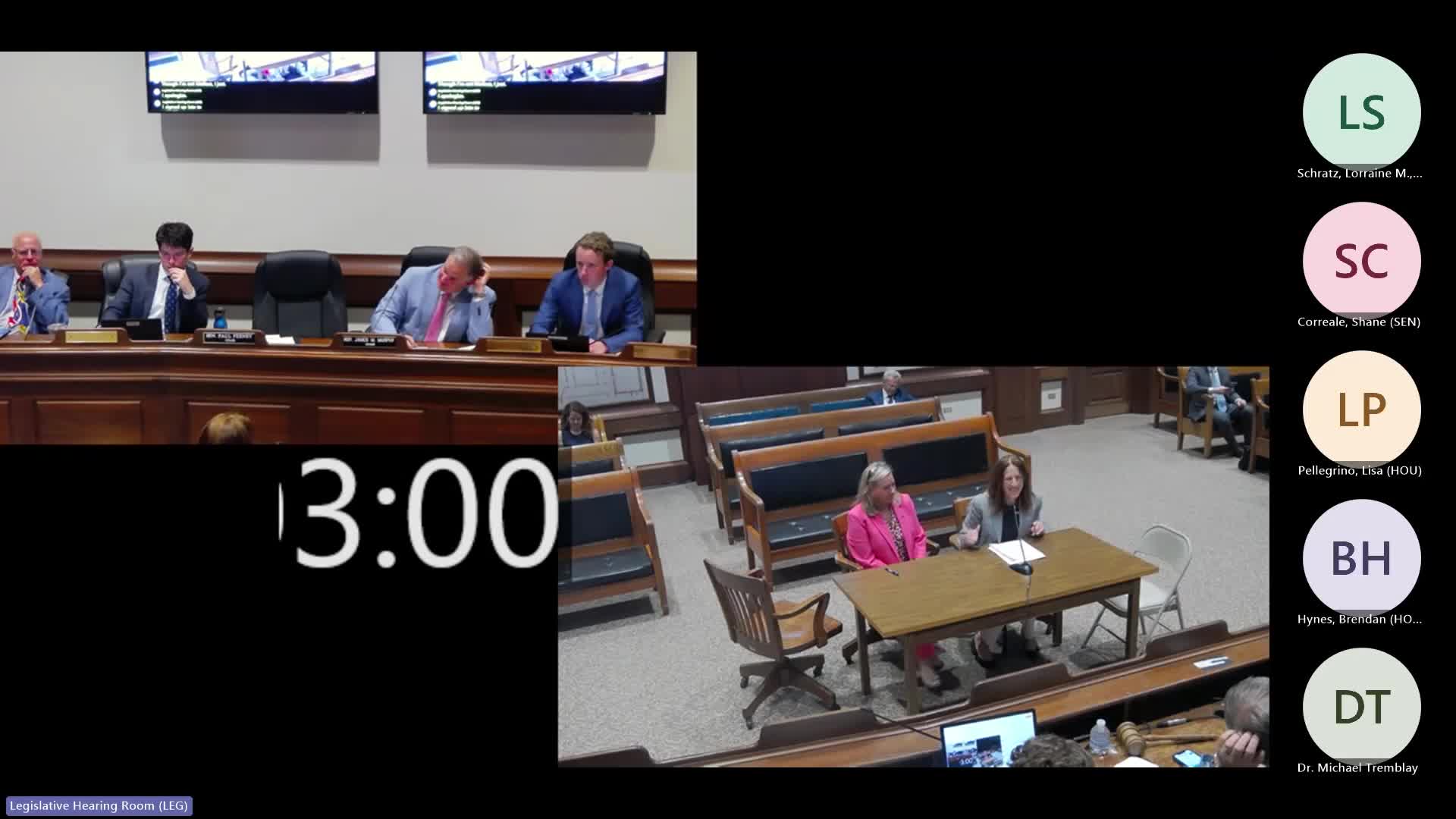
Sarah Frederiksen and Melissa Crode, leaders of the Massachusetts Association of Nurse Anesthesiology, urged support for H.1142 and S.783, "An Act to promote increased access to patient care through equitable reimbursement." They said Medicare and MassHealth reimburse CRNAs at parity with physicians and that withholding parity in commercial contracts reduces facility revenues and can hinder hiring.
"CRNAs and physician anesthesiologists provide the same services at the same standard of care," Frederiksen said. She noted Massachusetts granted full practice authority for CRNAs in 2020 and that federal Medicare reimbursement parity has existed since the 1986 Omnibus Budget Reconciliation Act. She and Crode said some commercial payers have reduced CRNA reimbursement; Crode cited a July 1 announced 15% cut by UnitedHealthcare and earlier actions by other large carriers.
Advocates said parity is required by the Affordable Care Act's provider nondiscrimination clause, but enforcement is limited and federal litigation is ongoing. "The problem is that it has never been promulgated, and so there's no way to enforce this law," Crode said. She pointed to Ohio's recent enactment of state-level provider nondiscrimination as a model and urged Massachusetts lawmakers to adopt a state prohibition on lower CRNA reimbursement.
Witnesses stressed the difference between reimbursement to a facility and individual salaries: insurer payments flow to facilities that hire CRNAs, and low reimbursement can reduce a facility's capacity to employ providers. They said parity at the state level would protect access without changing clinical practice.
Committee members and other witnesses discussed the complexity of anesthesia billing and facility contracting. Frederiksen and Crode said insurer contracts with individual facilities are proprietary and that ERISA-regulated plans are not required to report reimbursement practices to state all-claims databases, which limits public data on commercial reimbursement.
No vote was taken at the hearing. Proponents asked for a statutory prohibition so insurers cannot reimburse CRNAs at lower rates in Massachusetts contracts, and they offered to provide model language and technical assistance to the committee.