Get Full Government Meeting Transcripts, Videos, & Alerts Forever!
Get email alerts on the Prior Authorization Reform topic
No spam. Unsubscribe anytime.
Mass. health providers, patient advocates urge fast, standardized prior-authorization rules in hearing on H.1136
Summary
Doctors, hospitals and patient groups told a legislative committee that current prior-authorization practices delay care, increase costs and burden clinicians; witnesses urged H.1136 to require 24-hour urgent decisions, 1-year authorization periods and public reporting.
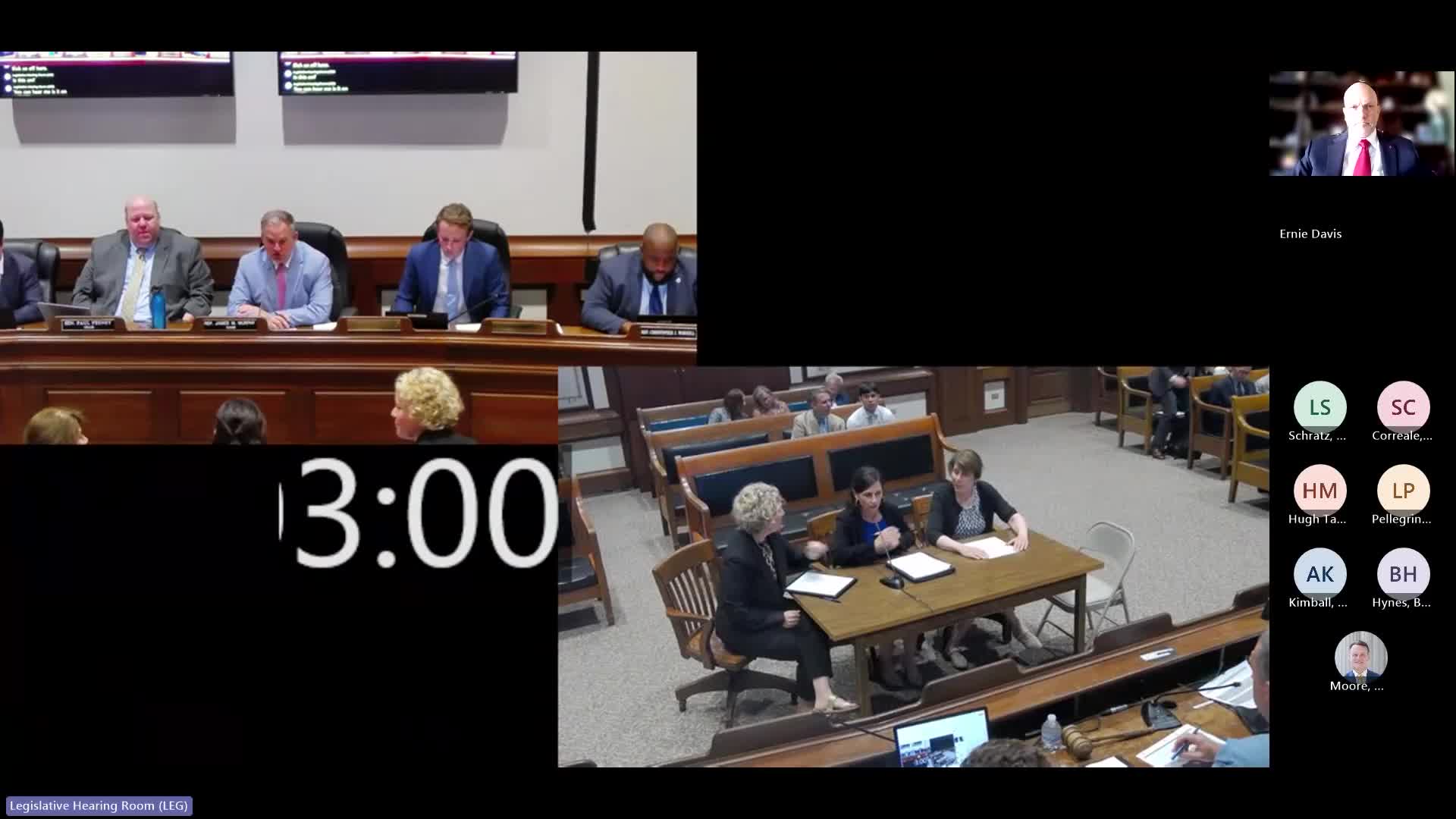
BOSTON — Dozens of doctors, hospital administrators and patient advocates told members of the Joint Committee on Financial Services and Insurance on Tuesday that prior-authorization rules used by insurers are delaying medically necessary care and creating heavy administrative costs, and they urged lawmakers to approve H.1136 to standardize and speed the process.
The bill would keep prior authorization as a utilization-management tool but require faster responses for urgent requests, require insurers to publish which services need prior authorization and create continuity rules when patients switch plans. "Prior authorization unnecessarily delays and denies access to medically necessary care for patients, and also the costly administrative waste that it creates in our health care system," said Lita Anderson, director of advocacy and government relations for the Massachusetts Medical Society.
Supporters said lengthy, inconsistent reviews force health systems and practices to hire staff devoted to authorizations and contribute to clinician burnout. Karen Granoff, senior director of managed care policy for the Massachusetts Health and Hospital Association, said slow insurer responses can keep patients in hospital beds while staff wait for placement in post-acute settings. "Insurance issues were the number-one problem in timely discharges from acute care to post-acute care settings," she said.
Patient advocates and clinicians gave multiple examples of harm they said resulted from delays. Veronica Rosnick, a primary-care physician at Brigham and Women's Faulkner Hospital, described a patient with uncontrolled diabetes who went without prescribed insulin for a week while a prior authorization request was pending and was later hospitalized. "I really believe that if H.1136 had been in place, we could have reduced cost by keeping both of these patients out of hospital and overall improve their medical outcomes," she said.
Witnesses highlighted three provisions in H.1136 they said would reduce harms: authorizations valid for the duration of treatment or at least one year to avoid redundant reapproval; a grace period when patients change plans so active treatment is not interrupted; and a 24-hour response requirement for urgent care. Ashley Blackburn, senior director of policy and government relations at Health Care for All, said the bill strikes a balance by keeping prior authorization while instituting data-driven reforms.
Advocates pointed to emerging federal rules and reporting requirements. Granoff noted the Centers for Medicare & Medicaid Services' interoperability and prior-authorization final rule, which requires public reporting starting in 2026; she said H.1136 largely aligns with that timeline. Several witnesses also cited national studies showing high administrative time: an American Medical Association study that respondents said average 39 prior authorizations per provider per week and about 13 hours per provider per week spent processing them.
Hospitals described operational burdens. Stacy Rosenblum of Dana-Farber Cancer Institute said oncology requests often require peer-to-peer reviews and can be outsourced by plans to third parties, complicating appeals and causing delays. She described a case in which a second-line immunotherapy request was denied and required lengthy appeals and scheduled peer-to-peer interviews that risked delaying care.
Health Law Advocates attorney Wells Wilkinson urged clearer consumer-facing information, saying some insurer handbooks list prior authorization requirements in vague terms that make it impossible for patients to know when a preauthorization is needed. "This bill would require health plans to list all the services that require prior authorization and create a digital interface providers can access," he said.
Not all witnesses called for elimination of prior authorization. Several, including Lita Anderson and Wayne Altman of the Massachusetts Academy of Family Physicians, said H.1136 preserves prior authorization for appropriate uses while reducing unnecessary barriers. Altman said the administrative costs of many programs may approach the savings they produce. "When you consider the human cost — physicians and patients reducing their hours and leaving the profession — there's such an opportunity to make significant changes," he said.
Committee members asked about insurer use of automation and artificial intelligence for authorization decisions. Altman and other witnesses said AI tools are being adopted and could help if paired with human review, but raised concerns about harm if unchecked by regulation.
The hearing was informational; no committee vote occurred. Public testimony and examples will be entered into the committee record for further consideration.
The bill would change state insurer practices; several witnesses noted alignment with pending federal requirements and recommended standardized, electronic processes to reduce delays and create transparency for patients and providers.
For now, supporters said, enactment of H.1136 would address routine delays in urgent care decisions, minimize repeated approvals when treatment is ongoing, and give hospitals more predictable discharge planning timelines.