Get Full Government Meeting Transcripts, Videos, & Alerts Forever!
Get email alerts on the Wastewater Financing topic
No spam. Unsubscribe anytime.
South Coast leaders back coastal wastewater financing commission to address aging septic and sewer needs
Summary
Municipal officials, regional planners and environmental groups urged the Joint Committee to support S638/H1000 to create a Coastal Waters Wastewater Financing Commission that would study and recommend funding solutions for wastewater projects on the South Coast and Buzzards Bay, where witnesses estimated roughly $2 billion in needs.
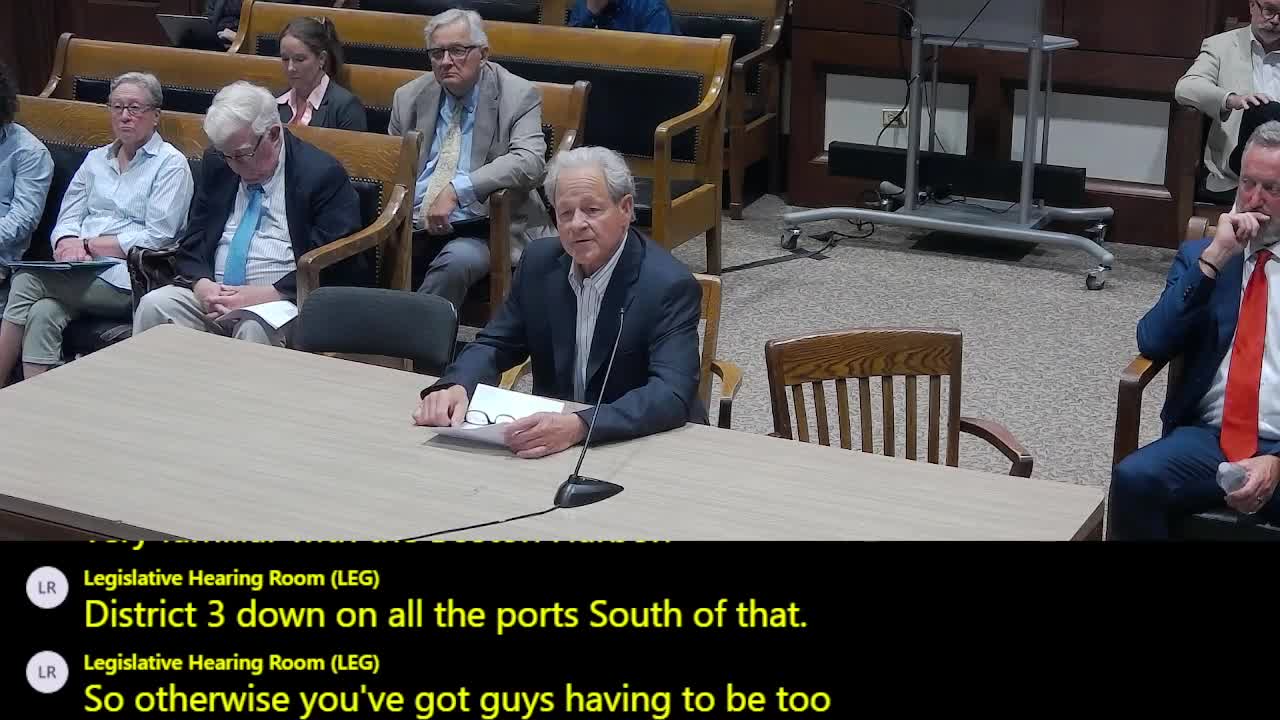
Representatives of regional planning agencies, town boards, conservation and environmental groups and municipal public‑works officials told the Joint Committee on Environment and Natural Resources they support Senate Bill 638 and House Bill 1,000 to create a Coastal Waters Wastewater Financing Commission to study and propose funding mechanisms for wastewater infrastructure on the South Coast and Buzzards Bay.
Corinne Peterson, vice president for Clean Water Advocacy at the Buzzards Bay Coalition, said the coalition’s water quality monitoring shows persistent bacterial contamination and nutrient pollution driven in large part by aging on‑site septic systems and insufficient sewer infrastructure. Peterson said Buzzards Bay communities need roughly $2 billion to address wastewater infrastructure gaps and that existing state and federal sources are insufficient; she pointed to the Cape and Islands Water Protection Fund, created by the legislature in 2018, as a model that has awarded more than $200 million and leveraged other resources.
John Bullard (former NOAA northeast regional administrator and ex‑mayor of New Bedford) and municipal officials described the affordability gap for small towns where many homeowners cannot afford costly denitrification system upgrades or sewer assessments. Philip Weinberg and Vinny Furtado (Westport and Fairhaven officials) and Norm Hills (Marion) described local projects and the need for grants or low‑cost financing. Testimony noted the 2024 State Revolving Fund statewide awards were roughly $800 million but only about $70 million reached the non‑Cape Buzzards Bay towns in one funding cycle, which witnesses said demonstrates current funding shortfalls.
Speakers asked that a commission convene regional leaders, municipal officials and finance experts to identify financing models—grants, excise mechanisms, dedicated funds or other mixes—to make wastewater projects affordable, equitable and implementable across multiple small communities.
Ending: Witnesses urged the committee to report the bills favorably so the commission can begin discussions on sustainable, regionally‑appropriate financing for wastewater infrastructure; no vote occurred at the hearing.