Get Full Government Meeting Transcripts, Videos, & Alerts Forever!
Get email alerts on the Land Conservation topic
No spam. Unsubscribe anytime.
Coalition pushes 'Nature for All' to dedicate sporting‑goods tax for land protection and access
Summary
Conservation groups, outdoor businesses and recreation advocates urged the committee to support House Bill 901 and Senate Bill 597 to dedicate existing sales tax revenue on sporting goods to a 'Nature for All' fund aimed at accelerating land protection, park equity and stewardship.
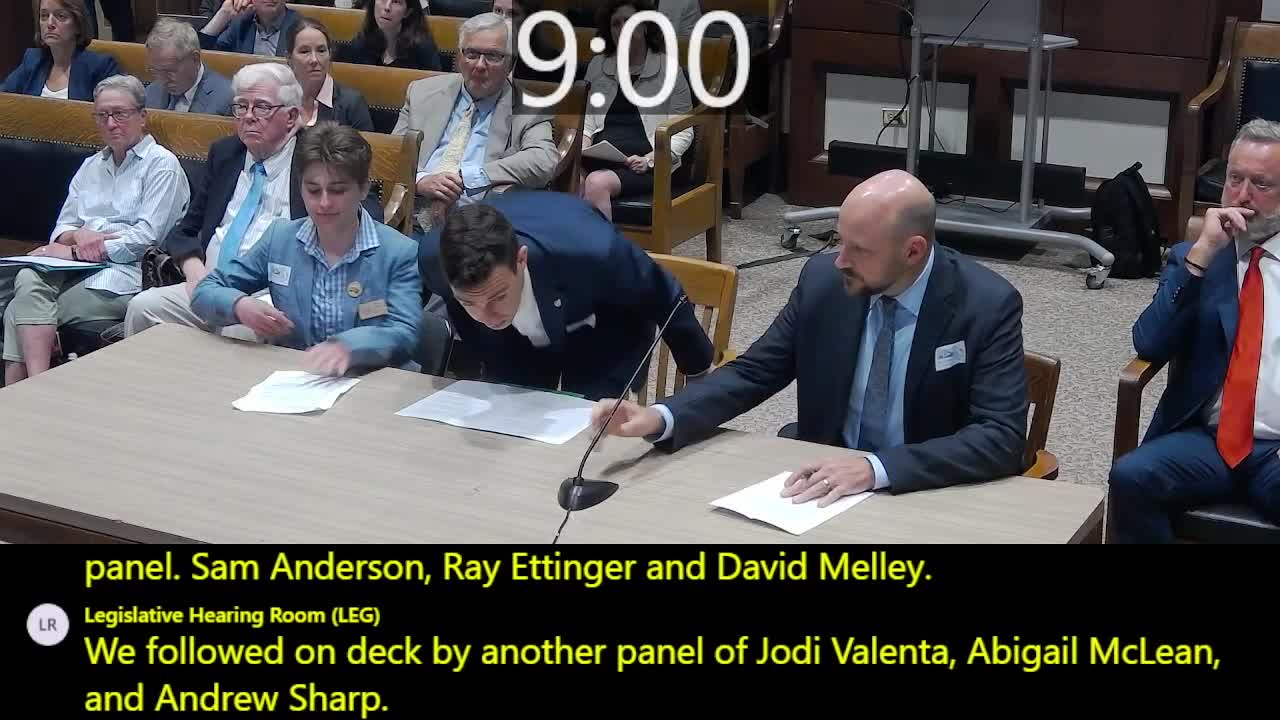
Witnesses from Mass Audubon, the Environmental League of Massachusetts, Appalachian Mountain Club, Trust for Public Land and business supporters urged the Joint Committee to advance H901 and S597, collectively described as the “Nature for All” proposal, which would dedicate existing sales‑tax revenue on sporting goods to a new conservation fund.
Sam Anderson of Mass Audubon said Massachusetts must accelerate land protection to meet state climate and biodiversity goals. He asked the committee to consider the scale of the need: Mass Audubon’s analysis, he said, found that meeting a 30 by 30 conservation target would require a substantial increase in annual public funding; Anderson said state agency capital investments in land protection have declined in recent years and that the coalition’s analysis estimates an additional $300 million per year in public funding would be needed to reach the 2030 acreage goal.
David Melly, senior policy director at the Environmental League of Massachusetts, described the bill’s structure: it would dedicate existing sales‑tax proceeds on sporting‑goods purchases to a Nature for All Fund, establish an advisory board and allow the Executive Office of Energy and Environmental Affairs discretion to allocate funds across conservation, access and stewardship programs while maintaining accountability and public input.
Ray Ettinger of the Appalachian Mountain Club and Jody Valenta of Trust for Public Land highlighted park‑equity and economic arguments. Ettinger said the outdoor recreation economy is a large and growing sector (testimony cited an annual contribution of roughly $13.2 billion and more than 100,000 jobs) and that dedicating a portion of the sporting‑goods tax would create or enhance parks, trails and green infrastructure without raising new taxes. Valenta noted gaps in park access — she said roughly 600,000 residents lack access to quality parks — and said a fund of about $100 million annually could be created by redirecting the sporting‑goods sales tax into a dedicated capital source.
Speakers also described existing programs that lack scale and called for the state to provide stable funding for land protection, urban parks, and stewardship to meet climate resilience and equity goals.
Ending: Supporters asked the committee to report the bill favorably; committee members requested additional comparative information about similar funds in other states and the proponents offered to supply further data.