Get Full Government Meeting Transcripts, Videos, & Alerts Forever!
Get email alerts on the Water Infrastructure topic
No spam. Unsubscribe anytime.
Water‑system groups urge state funding and policy changes to close infrastructure gap
Summary
Municipal water and wastewater officials, trade groups and clean‑water advocates told the committee Massachusetts faces billions in drinking‑water, wastewater and stormwater needs and urged a dedicated funding program, revised project scoring and support for biosolids and PFAS work.
Representatives of Mass Water Works, the Massachusetts Water Environment Association and municipal superintendents told the Joint Committee on Environment and Natural Resources that Massachusetts faces a large, multi‑billion dollar gap in drinking‑water and wastewater infrastructure spending and urged a legislative package to create steady, dedicated funding and policy changes.
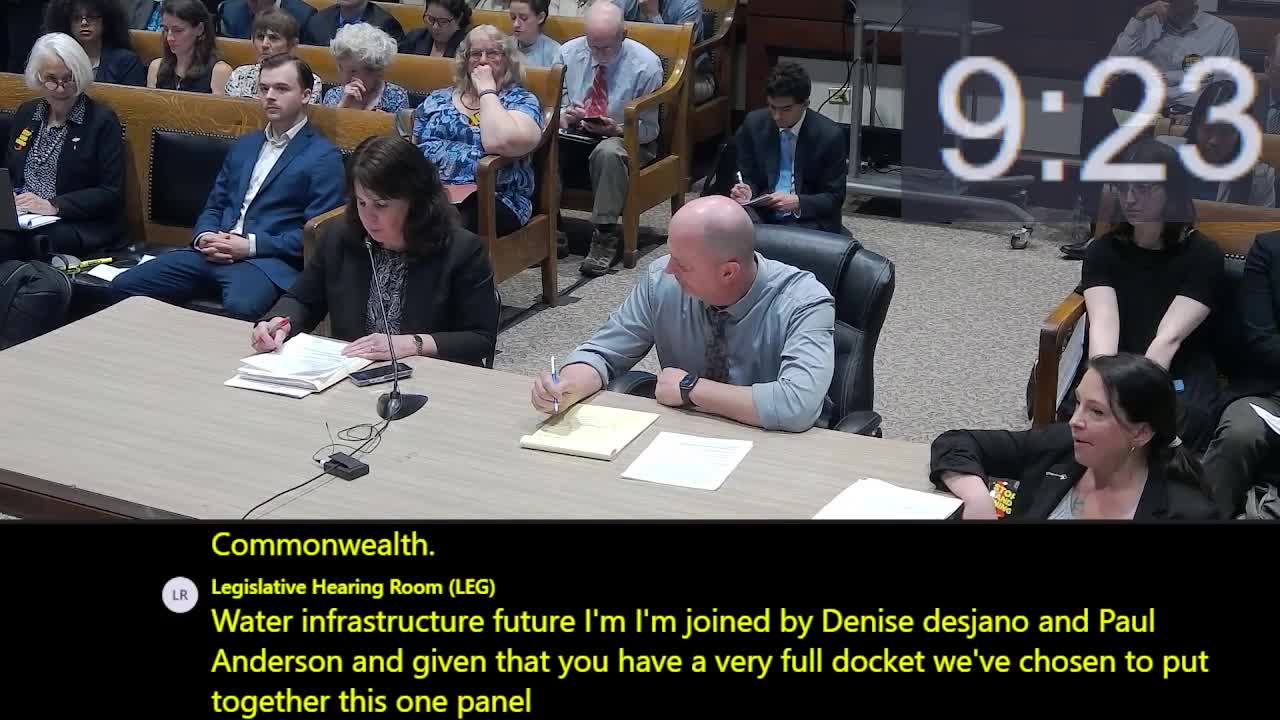
"Massachusetts is facing a growing water infrastructure crisis," Jennifer Peterson, executive director of Mass Water Works, told the committee. She cited a U.S. EPA estimate that the Commonwealth needs roughly $37 billion for drinking‑water and clean‑water investments over the next 20 years. Testimony highlighted regional examples: the Upper Blackstone district faces hundreds of millions in nutrient‑removal projects; Springfield and Lowell face large consent‑decree or long‑term financing needs.
Witnesses asked the committee to consider new recurring revenue, not just one‑time bonding, to support replacement of critical reliability components such as mains, pump stations and tanks that often score poorly for current funding streams. "This bill puts forward a realistic and thoughtful plan to start addressing the gap," Peterson said, summarizing a bill package (for example H.1022/S.563) that would authorize targeted state assistance, capital and policy reforms.
Speakers also stressed the interdependence of water capacity with housing and local growth objectives. Several municipal officials described projects that could not move forward because available water or sewer capacity was lacking.
Testimony also covered biosolids and PFAS. Denise Deschano of the Massachusetts Water Environment Association described rising biosolids management costs and the need for research pilots and funding to ensure continued land application options and protect environmental justice communities from unaffordable rate increases.
Committee members asked about interactions with existing State Revolving Fund programs and how additional state funds would be channeled. Witnesses said SRF remains critical but its capacity is constrained due to high demand for PFAS projects and low‑interest loans; the bill package would restore earlier program authorizations and consider grants or contract assistance as complements to loans.
Supporters asked the committee for a favorable report and urged inclusion of some recommendations in a pending or forthcoming environmental bond bill.