Get Full Government Meeting Transcripts, Videos, & Alerts Forever!
Get email alerts on the Watershed Collaboration topic
No spam. Unsubscribe anytime.
Regional planners and watershed groups urge creation of Merrimack River collaborative to coordinate water quality work
Summary
Regional planning agencies, watershed councils and municipal representatives urged the Joint Committee on Environment and Natural Resources to advance legislation (H1053/S671) to formalize a Merrimack River Collaborative that would coordinate testing, data sharing and cross‑jurisdictional projects to address sewage, CSOs and emerging pollutants.
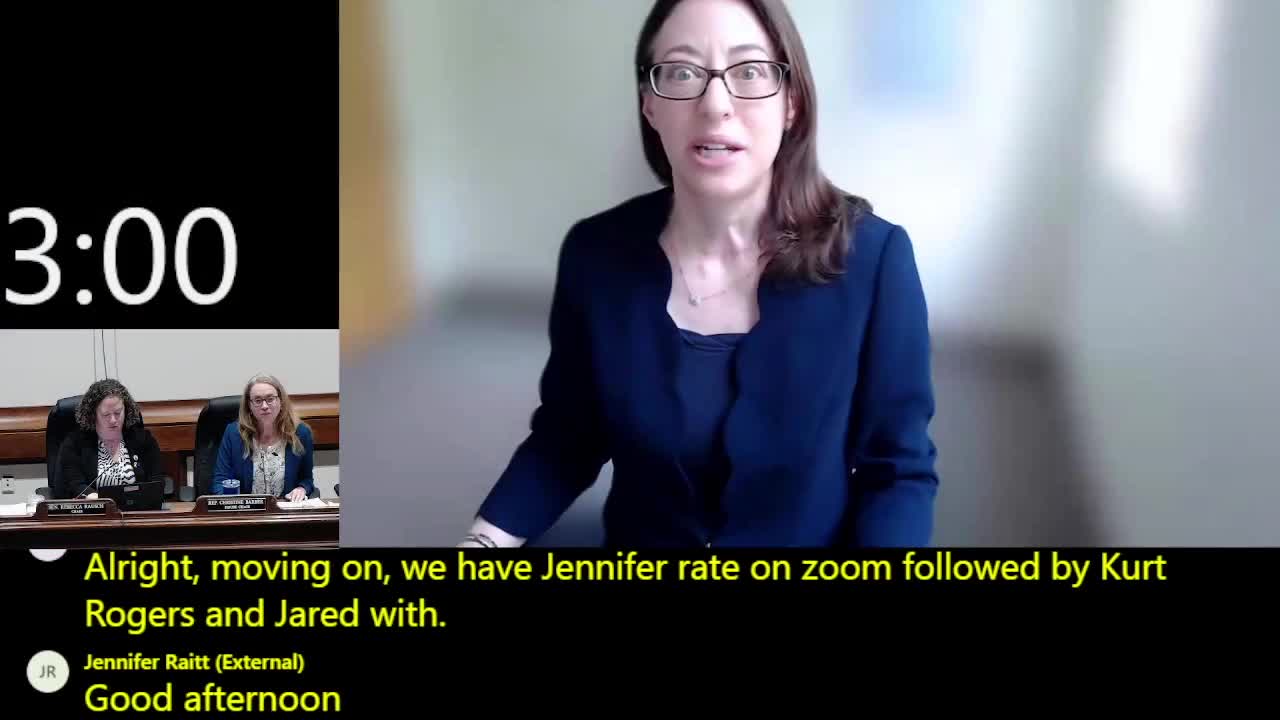
Jennifer Raitt, executive director of the Northern Middlesex Council of Governments, told the committee she supports H1053 to establish a Merrimack River Collaborative to coordinate municipalities, state agencies, and nonprofit partners on water quality, data, and long‑term watershed planning.
Curt Rogers, executive director of the Merrimack River Watershed Council, and other witnesses said the river remains threatened by combined sewer overflows, stormwater runoff and contaminants; MRWC described pilot testing that suggested bacteria from some CSO events may persist longer than the commonly assumed three‑day window and flagged the need for expanded monitoring and “hotspot” investigations. Rogers said the council’s 2024 pilot programs—testing beyond three days after CSO events and deploying cloud‑based sensors—produced unexpected results and raised questions about plume duration and downstream travel.
Speakers argued a legislatively recognized collaborative would serve as a convener, a central clearinghouse for data, and a forum to marshal state resources and agency attention across the river’s multi‑municipal basin. They emphasized the collaborative would not by itself authorize funding but would help pursue coordinated projects, standardize monitoring and bring municipalities, state agencies and regional planning entities to the same table.
Gerard Whitten, executive director of the Merrimack Valley Planning Commission, told the committee the collaborative is intended to connect municipal staff, environmental experts and elected leaders across the watershed and that the bill does not request operating funds; it seeks formal recognition and structure for existing partnerships.
Ending: The witnesses urged a favorable report so the collaborative can be used as a regional clearinghouse for monitoring results, public education and coordinated watershed projects; no vote occurred during the hearing.