Get Full Government Meeting Transcripts, Videos, & Alerts Forever!
Get email alerts on the Agriculture Beef Packers topic
No spam. Unsubscribe anytime.
Ranchers press Senate for Packers & Stockyards enforcement, checkoff reforms and country‑of‑origin labeling
Summary
Ranchers and industry advocates told a Senate subcommittee that four large packers control roughly 80% of beef processing, leaving independent producers with declining incomes; witnesses urged enforcing the Packers and Stockyards Act, completing USDA rulemaking and advancing bills including the OFF Act and a beef labeling measure.
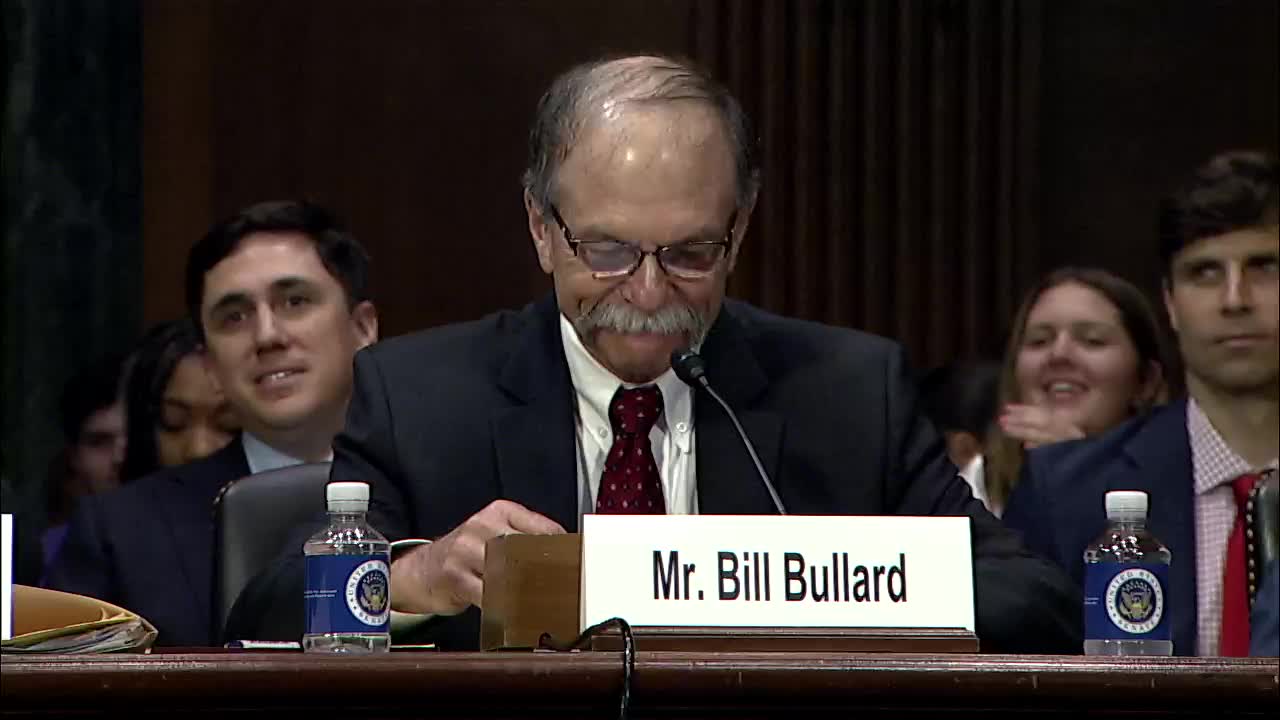
Bill Bullard, chief executive of R‑CALF USA, told the subcommittee mid‑hearing that consolidation in meatpacking has left independent ranchers at a disadvantage and rural communities diminished. “In 1980, the 4 largest packers controlled 36% of the fed cattle market. Today, they control approximately 80%,” Bullard said, describing the market as a bottleneck that depresses prices paid to producers while keeping consumer beef prices high.
Why it matters: Witnesses argued that concentrated buyer power in processing squeezes ranchers and can harm consumers and rural economies. They asked Congress and federal agencies to complete rulemaking under the Packers and Stockyards Act, police unfair buying practices, and reform mandatory producer assessments known as checkoff programs.
Bullard and other witnesses urged several legislative and administrative actions. They supported the Opportunities for Fairness in Farming (OFF) Act — described during the hearing as a bipartisan bill to reform mandatory checkoff programs by requiring transparent financial reporting, banning conflicts of interest and mandating audits — and they backed the American Beef Labeling Act to restore mandatory country‑of‑origin labeling for beef.
Bullard told senators he represents farm and ranch members who have seen operations decline in number and asserted the packing industry has operated with de facto deregulation that enabled consolidation. On oversight, he said past USDA inquiries had not adequately addressed alleged misuse of checkoff funds and that producers remain compelled to pay assessments that in some cases funded policy work at odds with their interests. “We ultimately filed a lawsuit alleging that the lack of oversight on the part of USDA constituted an unlawful subsidy,” Bullard said.
Senators asked agency witnesses about enforcement. Roger Alford and Mark Meador said antitrust enforcement and administrative rulemaking are complementary tools. Alford described the Packers and Stockyards Act as a critical statutory tool that can be applied alongside antitrust litigation; Meador said the FTC will continue to review submissions from producers and other stakeholders when evaluating regulations that may insulate incumbents.
On labeling, witnesses said a 2015 repeal of mandatory country‑of‑origin labeling for beef left consumers unable to distinguish imported from domestic beef in some processing and packaging practices; witnesses called for mandatory labeling to restore price transparency and protect domestic producers. Bullard said USDA rule changes scheduled to take effect in early 2026 are voluntary and do not replace a statutory country‑of‑origin requirement.
Senators on both sides pressed for quick completion of USDA rulemaking under the Packers and Stockyards Act and for Congress to consider the OFF Act and beef labeling legislation. Witnesses asked for sustained enforcement resources so that statutory protections translate into meaningful remedies for producers.
No formal action or vote occurred on the bills during the hearing; witnesses provided written testimony and the subcommittee set questions for the record.