Lifetime Citizen Portal Access — AI Briefings, Alerts & Unlimited Follows
Four Florida District Court Nominees Testify Before Senate Judiciary Committee; Questions Focus on Experience, Constitutional Interpretation and Deference to U.
Loading...
Summary
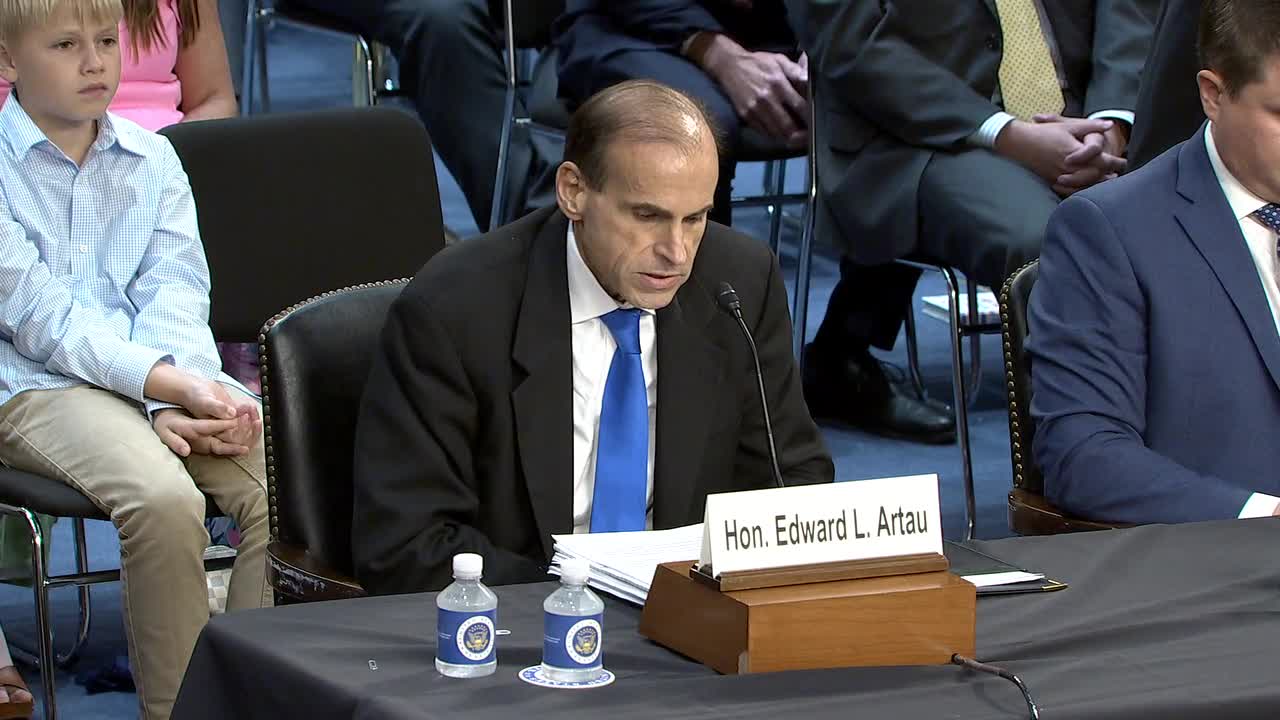
Four nominees for federal district judgeships in Florida—Edward Artaud, Kyle Dudek, Anne Leigh Gaylord Moe and Jordan Pratt—testified before the Senate Judiciary Committee. Senators asked about judicial philosophy, experience trying cases, and whether executive branch actors must follow court orders.
Four nominees to federal district court seats in Florida appeared before the Senate Judiciary Committee for a combined panel, where senators asked about legal philosophy, on-the-bench experience and whether executive branch officials must comply with court orders.
Who testified: Judge Edward Artaud, Judge Kyle Dudek, Judge Anne Leigh Gaylord Moe and Judge Jordan Pratt were sworn in as a panel and each gave short opening remarks. Senators asked the nominees about interpretive methods, the supremacy clause, Title VI of the Civil Rights Act and the duties of an Article III judge.
Why it matters: District judges manage federal trials, rule on motions that determine whether cases proceed to juries, and resolve urgent matters requiring immediate judicial authority. Senators probed whether nominees have the temperament and the practical trial experience for a position that carries life tenure.
Experience and trial work: Some senators pressed nominees about practical courtroom skills and trial experience. In particular, one senator asked whether a nominee had conducted voir dire, direct or cross-examination or argued motions in limine. Nominees described careers that emphasized appellate work, clerkships, public service and state-court judging; at least one nominee said appellate practice had been the focus of his career and that he had tried a limited number of trials as lead counsel.
Constitutional interpretation and judicial approach: Nominees described a text-focused approach to statutory and constitutional interpretation. One nominee described beginning “with the text” and relying on “the public meaning at the time of enactment.” On substantive due process questions, a nominee said he would be bound to apply Supreme Court precedent such as Glucksberg and Dobbs if those precedents were controlling.
Obeying court orders and enforcement: Multiple senators asked whether executive branch actors must follow court orders. All four nominees responded that lawful court orders should be followed and that a judge would expect compliance pending any lawful stay or appeal. In hypothetical follow-ups about willful contempt by the government, nominees said sanctions are a judicial option and that appropriate contempt proceedings and remedies would depend on the circumstances.
Notable state-court decision and questions: Senator Durbin questioned Judge Pratt about a recent state-court opinion he authored regarding parental-notification judicial waivers for minors seeking abortions; Pratt said his opinion focused on parents’ due-process rights to notice and an opportunity to be heard in the context presented and that the specific issue in the case did not present the question of sexual-assault victims forced to continue pregnancies.
Process and recusal queries: Senators asked about prior contacts with senators’ offices regarding possible nominations. One nominee said he had longstanding relationships and occasional courtesy conversations with home-state senators; another described a prior civics-related opinion in which he was later asked about impartiality. Nominees said they would comply with recusal rules and the judicial canons.
Ending: The panel concluded after questioning by multiple senators. Each nominee said they would apply precedent and follow the rule of law if confirmed. The committee took no final votes at the hearing and will consider written questions and documents submitted for the record.