Get Full Government Meeting Transcripts, Videos, & Alerts Forever!
Get email alerts on the Post Election Audits topic
No spam. Unsubscribe anytime.
Witnesses urge committee to expand, speed and standardize post-election audits under S.517 and H.876
Summary
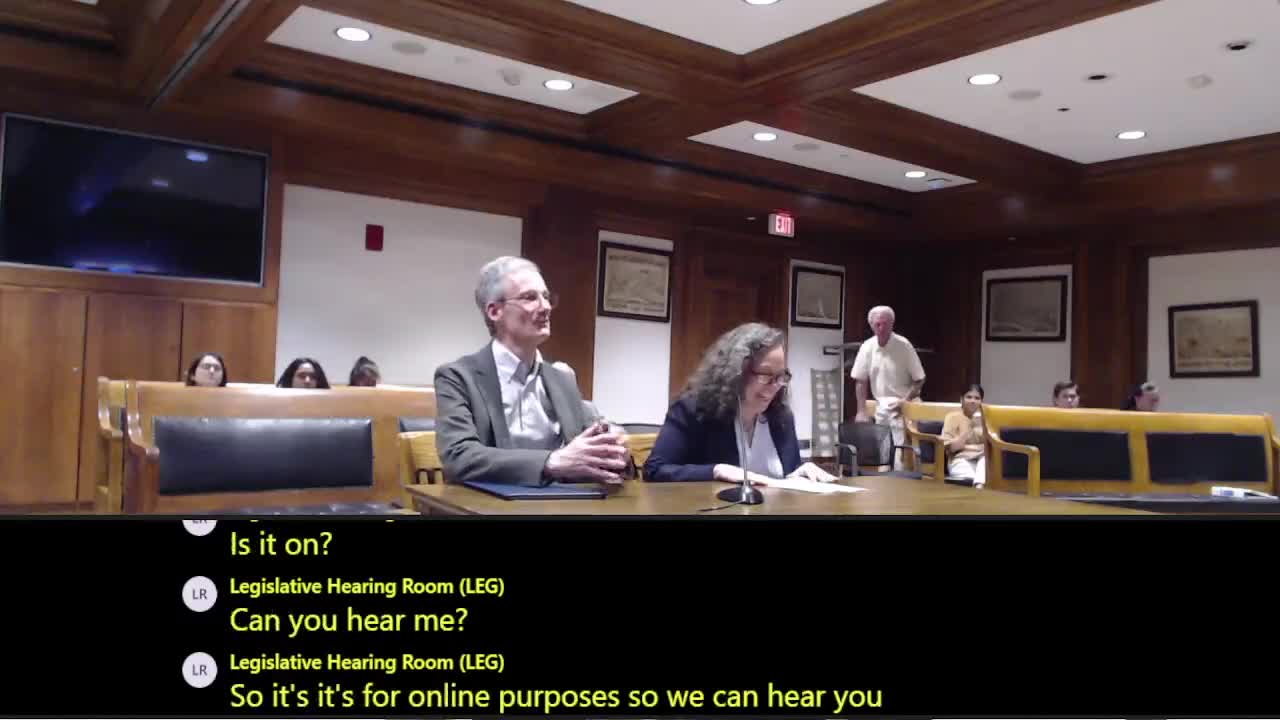
Advocates representing the Brennan Center, Common Cause, Verified Voting and the League of Women Voters testified before the Joint Committee on Election Laws to support S.517 and H.876, which would broaden which ballots are audited, increase audit frequency, require faster statewide reporting and create a work group to study risk‑limiting audits.
Members of the Joint Committee on Election Laws heard testimony urging lawmakers to strengthen Massachusetts’ post‑election audit process and to adopt bills S.517 and H.876 that would expand which ballots are audited, make audits more frequent and publish statewide audit results sooner.
The advocacy panel told the committee the changes would improve public confidence in election results. "Public confidence in American elections has been declining for some time," said Lisa Dammit, a resident of Newton testifying on behalf of the Brennan Center for Justice. She said post‑election tabulation audits "can detect ballot counting errors, confirm electoral outcomes, deter fraud, and improve the security and reliability of election counts."
The bills would require audits to cover every category of validly cast ballot — including absentee, early‑voting and UOCAVA ballots — rather than limiting audits to ballots cast on Election Day. Deb Chatterjee of Common Cause Massachusetts told the committee that current law requires audits only every four years during presidential elections; the proposals would require audits every two years and authorize, but not require, municipal audits under standards set by the secretary of the commonwealth.
Mark Lindeman, policy and strategy director for Verified Voting, recommended a measured approach to adopting risk‑limiting audits. He said the legislation sensibly establishes a work group of stakeholders and national experts to pilot audit methods and to report back with recommendations on implementing risk‑limiting audits or other improvements by 2027.
The League of Women Voters’ legislative specialist, Nell Forgus, emphasized transparency provisions in the bills, including a requirement that the statewide audit report be published within 30 days of the election and remain available online for at least six years.
Committee members pressed witnesses about how Massachusetts compares to other states and about costs and mechanics. Lindeman and other witnesses said many states use risk‑limiting audits or other tabulation audits and that audits typically validate results; they noted occasional instances in other states where audits uncovered omitted or miscoded votes. Witnesses said risk‑limiting audits scale the sample size to the closeness of a contest and can escalate to full recounts if discrepancies are detected.
No formal committee vote occurred during the hearing. Witnesses and legislators indicated support for further work: the bills would create a collaborative process to define practicable audit procedures for Massachusetts’ hybrid system of local election administration and centralized coordination.
Ending: Advocates asked the committee to report the bills favorably so the state can broaden audits, shorten reporting times and create a path to adopt risk‑limiting audits after stakeholder review.