Get Full Government Meeting Transcripts, Videos, & Alerts Forever!
Get email alerts on the Spoiled Ballots Accountability topic
No spam. Unsubscribe anytime.
Former legislator recounts 2022 spoiled‑ballot dispute and urges S.536 to improve documentation
Summary
Former Representative Lenny Mera and Sandra Capo described an incident from the 2022 Raleigh recount in which mailed ballots were marked spoiled and later contested; they testified in favor of S.536, a bill to require documented records of spoiled ballots and public inspection.
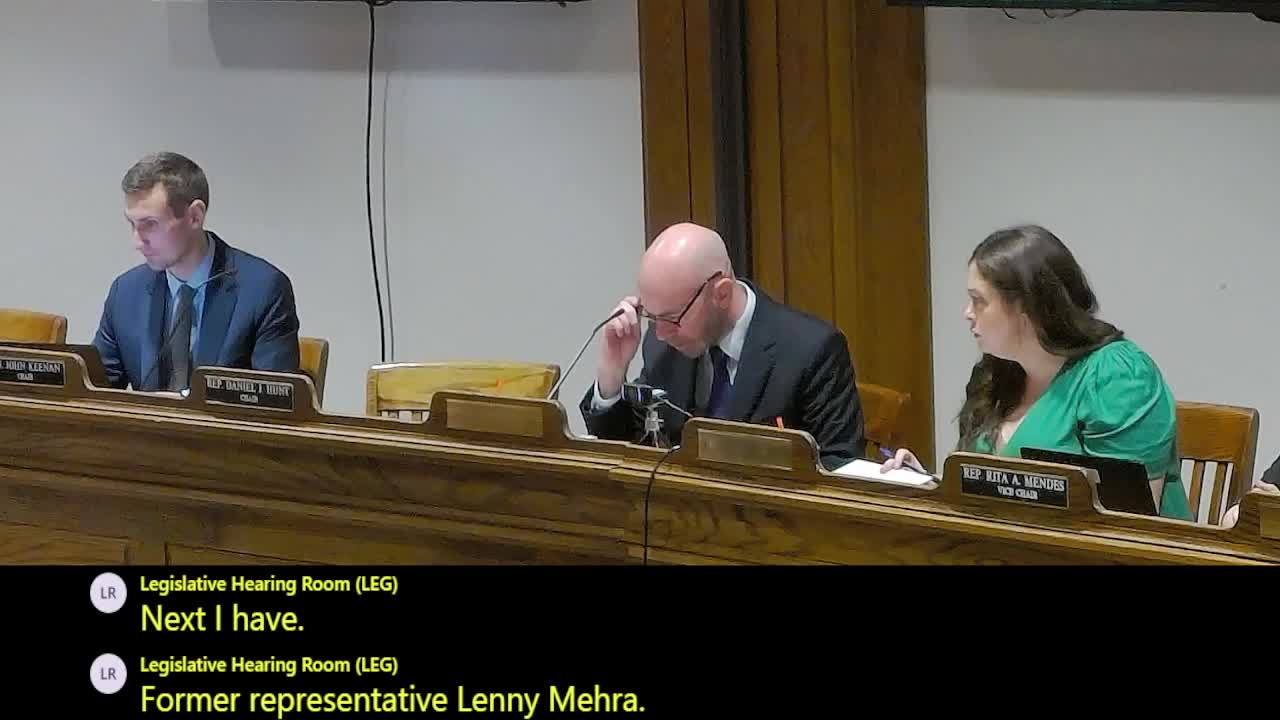
Former Representative Lenny Mera told the Joint Committee on Election Laws he and others experienced improperly spoiled mailed ballots during a 2022 recount in Raleigh that they say disenfranchised voters and affected the outcome.
“My team…got to look at them, and over 80% of those spoiled ballots were for Lenny,” a witness in the recount told the committee, describing an instance in which attorneys were permitted to inspect and extract five ballots from a larger pile of spoiled ballots during a recount.
Sandra Capo, who testified she was present during that recount, described attempts to have contested ballots counted and recounted a series of legal and procedural hurdles. She referenced Mass. Gen. Laws ch. 54, § 103 and said that statute states only the Supreme Judicial and Superior Courts may order the counting of improperly rejected ballots. Capo said the recount process allowed opposing counsel to sift spoiled ballots and that some legally cast ballots were never counted.
“The way it’s supposed to work is when mail‑in ballots get rejected by vote counting machines, they're supposed to be hand counted, not marked as spoiled,” Capo said, calling the 2022 handling “a travesty” that prompted a court complaint and a special House committee review.
Capo and Mera said S.536 would amend the law on spoiled ballots to require election officials to mark and record the number of spoiled ballots and the reasons they were spoiled, store those ballots in a documented manner, and make that documentation available for public inspection. They argued the change would make later investigations and recounts more transparent and help prevent legally cast ballots from being lost during processing.
Committee members asked witnesses about the recount process, including why only a subset of spoiled ballots was examined at the recount and whether voters who later cast in‑person ballots were mixed among the spoiled mail ballots; witnesses said the paper handling and processes were confusing at the time and cited a newly assigned town clerk as part of the explanation.
No committee vote was conducted; proponents said they would submit written testimony.