Get Full Government Meeting Transcripts, Videos, & Alerts Forever!
Get email alerts on the Language Access Bilingual Ballots topic
No spam. Unsubscribe anytime.
Randolph leaders urge bilingual ballots in Haitian Creole to improve access
Summary
Town officials, community groups and state lawmakers urged the Joint Committee on Election Laws to give a favorable report to S.509, a home-rule petition that would require bilingual ballots in Haitian Creole for Randolph to improve voting access and civic participation.
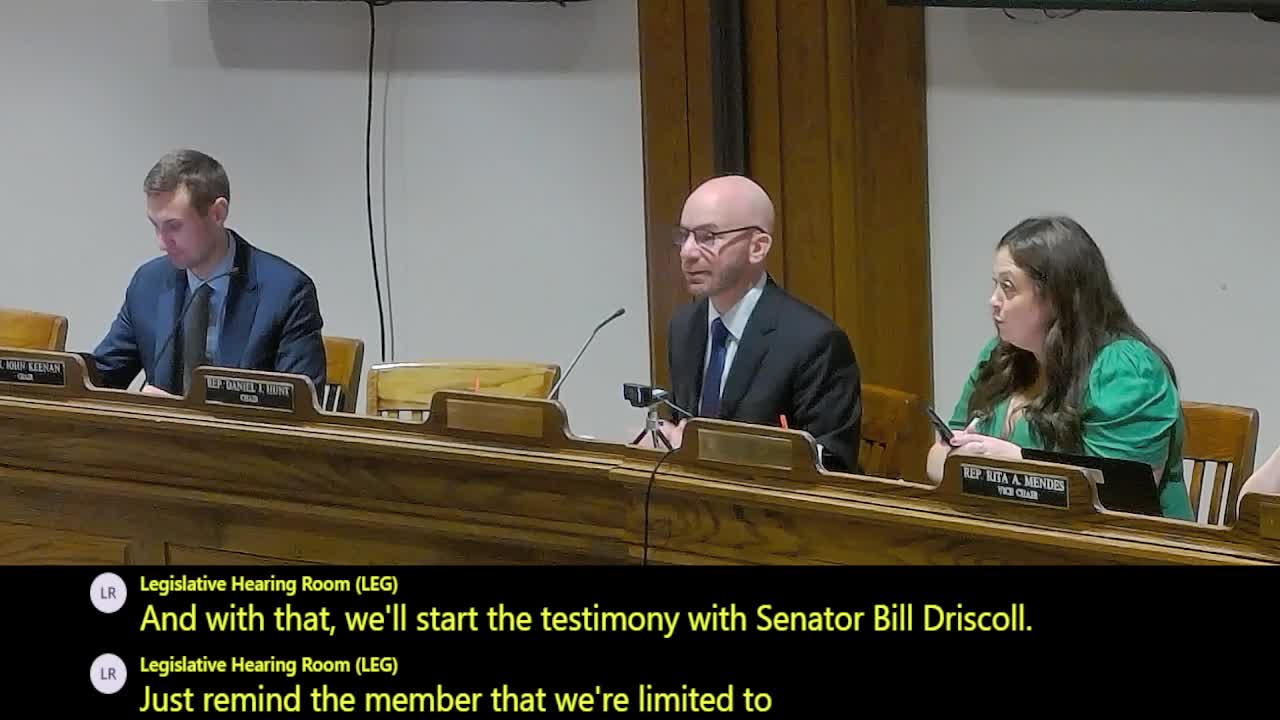
Senator Bill Driscoll, sponsor of S.509, told the Joint Committee on Election Laws the measure seeks a “favorable report” to allow bilingual ballots in English and Haitian Creole for the town of Randolph.
“This measure takes a substantial step forward to make Randolph elections more in a more inclusive process and to foster deeper civic engagement in local government,” Senator Driscoll said.
The proposal drew multiple speakers from Randolph who described language barriers that they say keep Haitian Creole speakers from fully participating. Brian Howard, identified in testimony as Randolph’s town manager, said Randolph has “35,000 plus residents” and that Haitian Creole is a significant language group in the town. He told the committee Randolph already provides some Vietnamese-language ballots under the federal Voting Rights Act, Section 203, but that Haitian Creole is not covered.
“Providing ballots in a voter’s preferred language builds confidence, reduces anxiety, and would ensure informed decision making by the voter,” Howard said.
Councilor Heff Larmen said the Randolph Town Council voted unanimously to submit the home-rule petition and described language access as both a legal and moral issue. Heather Ho, who identified herself as co‑chair and co‑founder of the Randolph Diversity, Equity and Inclusion Coalition and a member of the Randolph Community Partnership board, said the town’s English‑learner program has a wait list of more than 300 people.
“I grew up in Randolph. My mother served as a bilingual poll worker,” Ho said. “Residents want to show up and exercise their right to vote, but they’re denied the dignity of understanding what they’re voting on.”
Dr. Yolett Ebakate, identifying herself as a Haitian American resident of Randolph, said bilingual ballots would affirm Haitian‑speaking voters’ civic belonging. Deja Kirkland, a member of Randolph’s DEI board, told the committee the town is “one of the most diverse towns” in Massachusetts and said bilingual ballots would move the state “closer to being a leader of what equitable and inclusive voting actually looks like in America.”
Senator Driscoll characterized S.509 as a home‑rule petition meant to address a local need not presently covered by Section 203 of the federal Voting Rights Act. Testimony included references to research suggesting translated ballots can increase local turnout; Howard cited a study that he said showed a roughly 10% increase in turnout after translation in some cases.
Committee members did not take a vote during the hearing; the committee accepted written testimony for several bills. The hearing record will remain open for submitted testimony to the Joint Committee on Election Laws.