
Justice Department official outlines sweeping investigations into alleged illegal DEI practices
Get AI-powered insights, summaries, and transcripts
Subscribe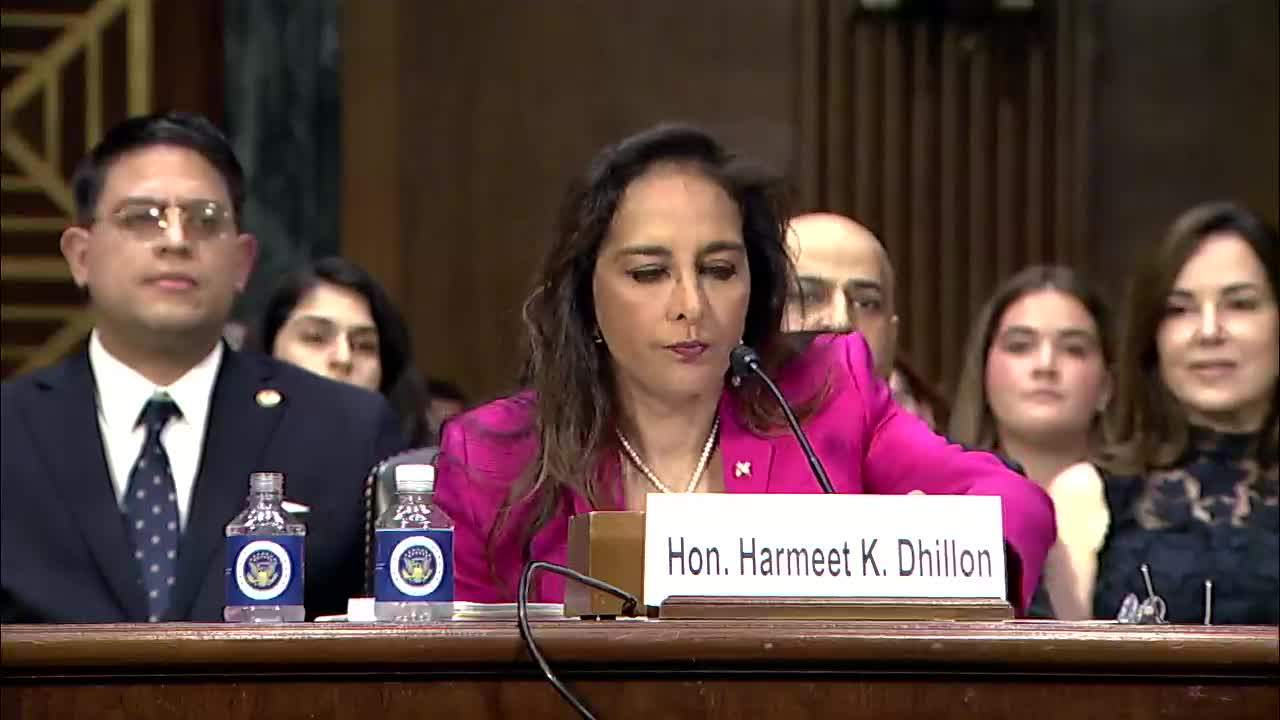
Summary
Assistant Attorney General Harmit Dhillon told a Senate Judiciary subcommittee the Civil Rights Division is pursuing investigations and lawsuits targeting what the division calls unlawful diversity, equity and inclusion (DEI) policies at universities, state and local governments, and private employers.
Assistant Attorney General Harmit Dhillon told the Senate Judiciary Committee’s subcommittee on the Constitution on July 1 that the Justice Department’s Civil Rights Division has opened and is pursuing multiple investigations and enforcement actions aimed at practices it characterizes as illegal diversity, equity and inclusion programs.
Dhillon, the assistant attorney general for civil rights, said the division has opened inquiries into about 50 major universities, 16 law schools and seven medical schools and is “in discussions with many educational institutions” about ending what the division alleges are unlawful DEI programs. She told senators the division is also investigating state and local hiring practices and employment policies, and has pursued Title VII matters against employers including law firms that ran diversity fellowships that excluded white men.
Why it matters: Dhillon and several senators framed the work as enforcement of federal civil rights statutes where the government has reason to believe programs or practices treat individuals differently on prohibited bases. The matters potentially touch institutions that receive federal funding and could lead to civil litigation or administrative consequences if investigators find violations.
Dhillon attributed the division’s priorities to recent Supreme Court decisions and the administration’s policy directives. “We are taking our guidance from the priorities of this administration and the obvious violations that are occurring coupled with recent Supreme Court precedents,” she said in her opening remarks, citing Students for Fair Admissions v. Harvard as a legal milestone the division is using to guide enforcement of race-based practices in higher education.
The assistant attorney general cited several categories of activity the division is pursuing: investigations into university hiring and admissions practices, probes into public-employer hiring rules in states such as Minnesota and Rhode Island, an inquiry into Hennepin County’s plea-bargaining policy, and Title IX litigation related to alleged discrimination affecting women and girls. She said the division has sent letters requesting admissions and hiring data to institutions and that some schools have voluntarily provided data in response.
Dhillon said the division coordinates with other agencies, including the Equal Employment Opportunity Commission, when private employment matters fall under EEOC jurisdiction. “When those investigations are concluded without satisfactory resolution or termination of the DEI policies in question, these matters are often referred to the civil rights division for further enforcement,” she said.
Several senators pressed Dhillon about how the division will identify programs that have been rebranded to avoid the label “DEI.” Dhillon said the division relies on whistleblowers, public records and document requests. “Sometimes simply opening an investigation results in the individuals who are blatantly flouting our federal civil rights laws being terminated or reassigned,” she said.
Not all witnesses at the hearing agreed on the scope or the remedy. Gene Hamilton, president of America First Legal, testified later in the hearing that his organization has pursued litigation and complaints to “fight discrimination” and called for sustained civil or private litigation to impose liability on institutions that maintain exclusionary practices. Senator Robert Stewart, a guest witness representing Alabama’s Black Belt region, said the term DEI should not be used to block programs aimed at remedying long-standing infrastructure and environmental inequities in rural communities.
The hearing record shows multiple ongoing inquiries rather than final enforcement outcomes. Dhillon described litigation and investigations already underway and said she expects “numerous investigations and lawsuits” throughout the administration’s tenure. She also told senators she supports using committee oversight tools, including subpoenas, when appropriate: “Unequivocally, yes, senator,” she answered when asked whether congressional subpoena power could be helpful to this line of inquiry.
The subcommittee did not take formal votes at the hearing. Members from both parties used the hearing to press the assistant attorney general on the legal bases for enforcement, the division’s priorities, and how the department will distinguish lawful, race-conscious efforts from unlawful race-based preferences.