Get Full Government Meeting Transcripts, Videos, & Alerts Forever!
Get email alerts on the Cpr Aed Schools topic
No spam. Unsubscribe anytime.
Students, health professionals and Red Cross push to require CPR and AED training in schools
Summary
Multiple bills proposing mandatory CPR/AED training and certification in Massachusetts schools drew testimony from survivors, student trainers, medical professionals and the American Red Cross, who said teaching simple CPR and defibrillator use to students would save lives.
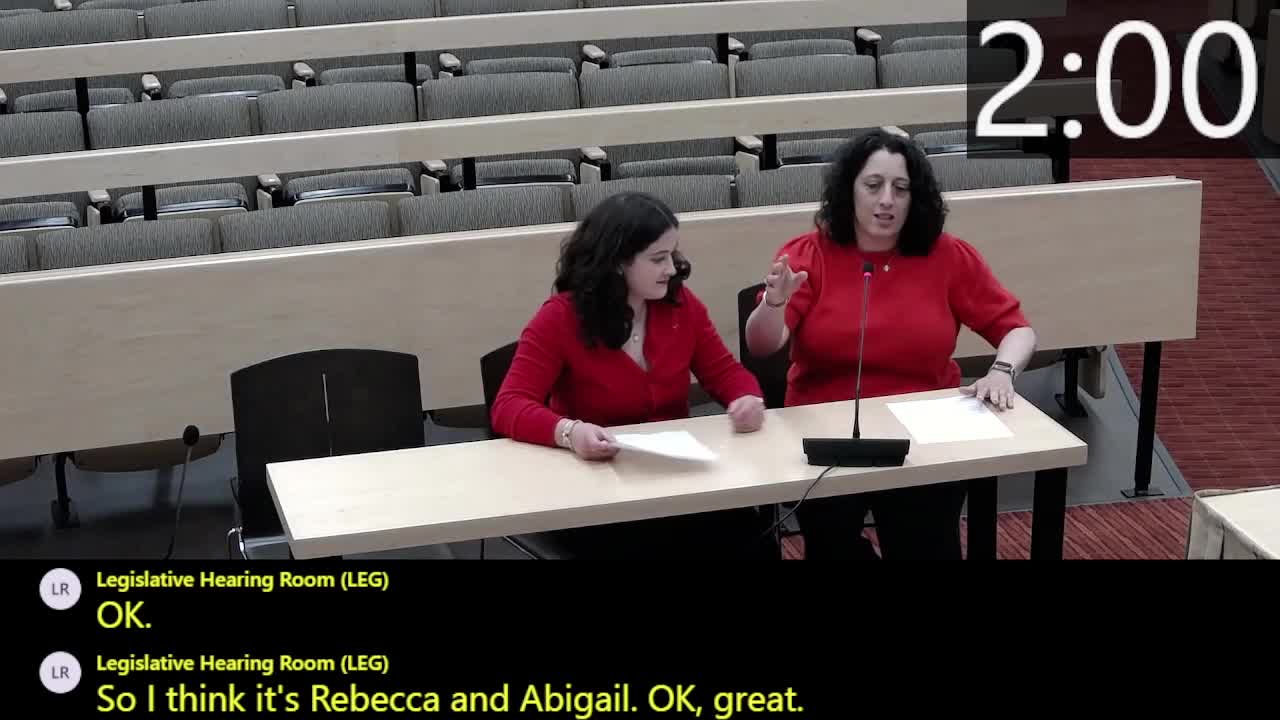
Survivors, family members and medical professionals urged the Joint Committee on Education to pass legislation that would require CPR and automated external defibrillator (AED) training for students and promote staff certification. Testimony covered several bills that would make instruction a condition of graduation or a required part of the health curriculum. Survivors described how bystander CPR and on‑site defibrillation were decisive in restarting hearts; Rebecca Scott said she survived a cardiac arrest after bystanders started CPR and an AED delivered multiple shocks.
Student trainers and volunteer groups described scalable programs that teach hands‑only CPR in short sessions that are easy to integrate into class time. Representatives of the American Red Cross and Massachusetts medical organizations emphasized the 10‑percent rule — survival drops roughly 10 percentage points for each minute without CPR and defibrillation — and recommended hands‑only CPR plus AED familiarity as a pragmatic statewide standard. Several municipalities and school districts (Wellesley and others) already provide training; advocates asked the committee to make skills universal and proposed grant funding to purchase training mannequins and AED trainers.
The hearing recorded no committee decision. Witnesses asked for a favorable report and for state grants to cover equipment costs so every district can train students and staff.
Ending: Advocates said teaching CPR and AED use is low cost, evidence‑based and would create large public‑health benefits by increasing bystander response rates to out‑of‑hospital cardiac arrests.