Get Full Government Meeting Transcripts, Videos, & Alerts Forever!
Get email alerts on the Alzheimer Dementia Policy topic
No spam. Unsubscribe anytime.
Mass. legislators, providers push bills to expand dementia training, coordination and hospital protections
Summary
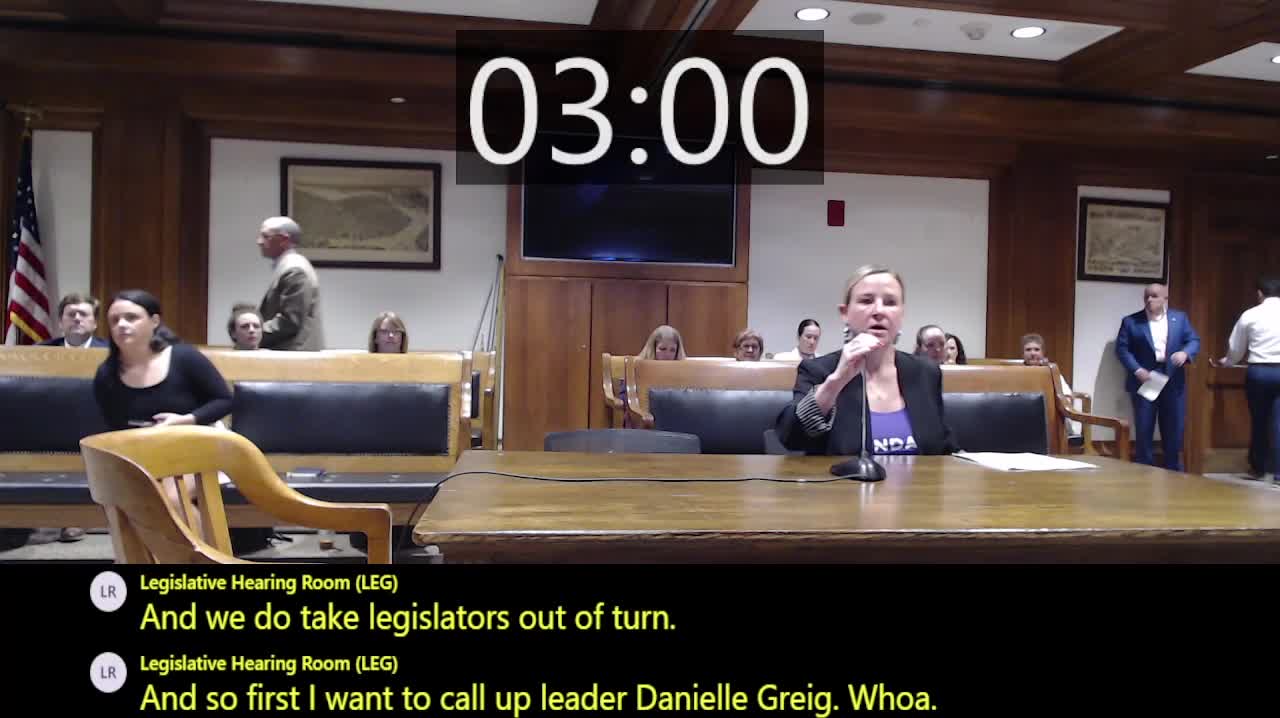
Representative Danielle Gregoire introduced legislation to update Massachusetts' Alzheimer's law and expand services, training and hospital safeguards.
Representative Danielle Gregoire introduced legislation to update Massachusetts' Alzheimer's law and expand services, training and hospital safeguards.
The bills before the Joint Committee on Elder Affairs — principally House Bill 769 and Senate Bill 468 — would require dementia training for first responders, establish a dementia services coordinator at the Executive Office of Health and Human Services, expand dementia care planning and care- coordination benefits in some MassHealth plans, require dementia-specific data collection and create a statewide public awareness campaign, proponents said.
The bills build on the 2018 Omnibus Alzheimer's and Related Dementias Act, which previously required training for some health professionals and hospital operational plans. "We're at the dawn of the new era in Alzheimer's treatment with FDA-approved disease-modifying therapies offering hope to millions," said Susan Koviak, vice president of programs and services at the Alzheimer's Association Massachusetts/New Hampshire chapter, urging the committee to act.
Representative Danielle Gregoire (Fourth Middlesex District), who led the 2018 law, told the committee the new proposal is intended to close remaining gaps: "We are looking now to include fire, police, and EMTs in that training," she said, stressing stakeholder involvement and cross-agency coordination.
Law‑enforcement representatives and unions supported a training mandate. Tim King, in‑house counsel for the Massachusetts Coalition of Police, described the proposed curriculum and recommended delivery: "These bills mandate at least 2 hours of dementia specific training during recruit training and a continued 1 hour biannual education," he said, adding the coursework would include de‑escalation and caregiver engagement.
Medical witnesses told the committee the hospital provisions are central to patient safety. Dr. Maura Kennedy, division chief of geriatric emergency medicine at Mass General Brigham, described a case where the presence of a family caregiver helped avoid an invasive intervention: "Caregivers are not visitors. Caregivers are actually a part of the care team," she said, noting caregivers can clarify a patient's baseline, calm them in emergency settings and aid safe discharge planning.
Advocates and public‑health officials urged requirements for data and public education. Catherine O’Malley (Boston University School of Public Health) and Andrea Dottore (Boston Public Health Commission) said earlier diagnosis supports access to new treatments and that better data on race/ethnicity and caregiving would improve planning. The Alzheimer's Association witnesses cited state estimates that more than 135,000 people in Massachusetts live with Alzheimer's and dementia and warned prevalence will rise.
Stakeholders also asked that dementia care coordination be made available to eligible members of senior care plans and One Care. Lainie Titus Summit of the Alzheimer's Association said such coordination — an evidence‑based caregiver support model — is associated with fewer rehospitalizations and delayed nursing home entry.
No committee vote was recorded at the hearing. Multiple presenters asked the committee to "report favorably," and sponsors and advocates said they would work with chairs and staff on technical and funding questions.
What happened next: The hearing closed with no formal action recorded. Sponsors and advocates asked for the bills to be advanced to committee consideration for possible amendment and a future vote.
Why it matters: Proponents said the combination of training, data, care coordination and hospital protections aims to prepare the Commonwealth for rising dementia prevalence and new treatment options while aiming to reduce avoidable costs and safety events.