
Nominee Crystal Carey Defends NLRB Record as Senators Press on Staffing, Precedent and Corporate Clients
Get AI-powered insights, summaries, and transcripts
Subscribe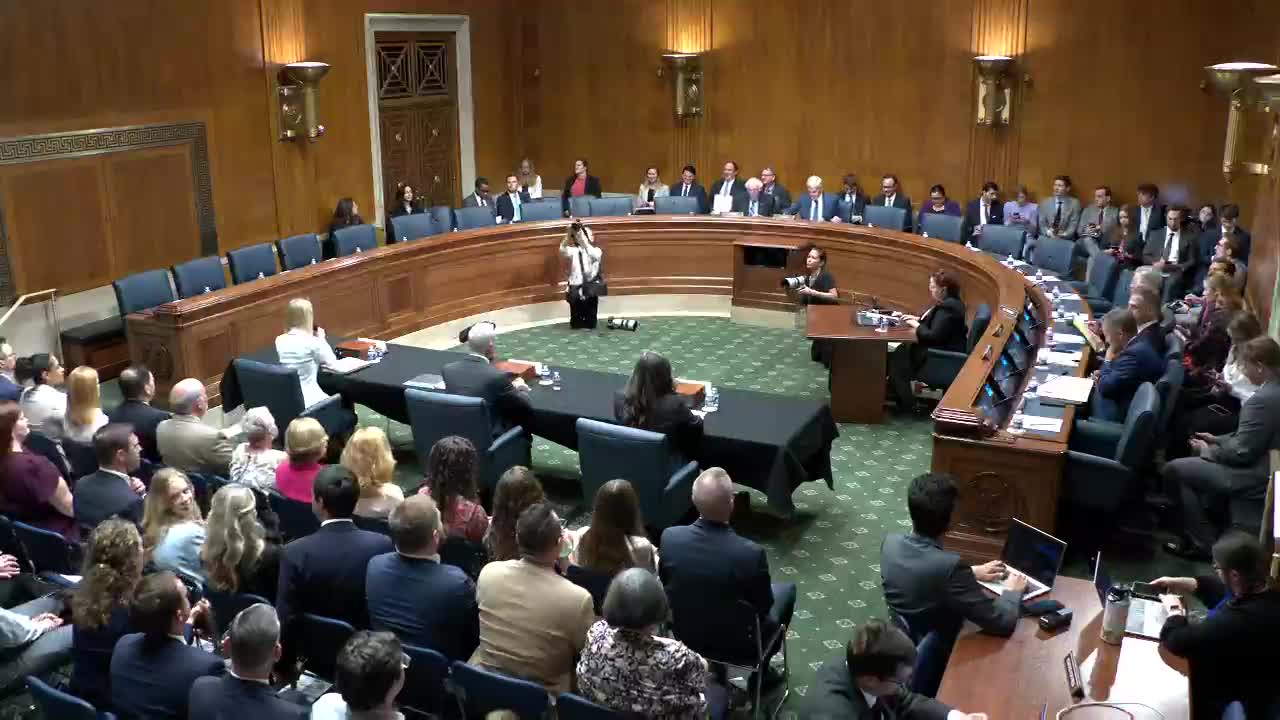
Summary
Crystal Carey, President Trump's nominee for general counsel of the National Labor Relations Board, told the Senate HELP Committee she would respect board precedent and address a case backlog while senators pressed her on corporate clients, prosecutorial discretion and agency staffing.
Crystal Carey, President Trump’s nominee for general counsel of the National Labor Relations Board, testified before the Senate Health, Education, Labor, and Pensions Committee on July 16, saying she would respect longstanding NLRB precedent and conduct an organizational assessment to address the agency’s case backlog and staffing shortfalls.
The NLRB nominee told senators she would ‘‘respect longstanding board precedent’’ and pledged to prioritize resources and training for field staff, who senators and witnesses said have struggled to process a rising caseload. Senator Baldwin noted the agency received nearly 25,000 cases in the prior year and has seen median case-processing times rise from about 105 days to well over 450 days; she asked Carey whether she would seek funding to hire and retain sufficient staff. Carey said she would review the data and, if more resources were needed, work with Congress and the White House.
The hearing focused on several recurring concerns: the NLRB’s backlog and staffing levels, the agency’s independence and precedent, and Carey’s prior work for corporate clients including Amazon. Senator Sanders opened the session by criticizing the Trump administration’s removal of a prior general counsel and a board member, saying those actions had ‘‘effectively shut down’’ the agency and made it harder for workers to form unions. Sanders argued that Carey’s background representing employers such as Amazon and Dollar General raised questions about how vigorously she would enforce the National Labor Relations Act. Carey answered repeatedly that she had not participated in the Amazon litigation and that questions about the constitutionality of the agency belonged to the courts.
Carey described her career at the NLRB — as a field agent, appeals attorney and senior staff counsel — and said one of her priorities would be an organizational assessment to identify causes of delay. "I think there are resources available throughout the agency that can help them with that backlog and provide some backup to them at some point," she said. She also told senators she would be a ‘‘good steward of public funds’’ and would first review data before promising specific staffing commitments.
Several senators pressed Carey on prosecutorial discretion and how her private views might affect enforcement. Senator Hawley said Carey had been "vociferously critical" of a recent board decision on so-called captive-audience meetings and asked whether she would enforce board precedent even if she disagreed with it. Carey replied that she would enforce board orders while using prosecutorial discretion on new regional cases, noting that such discretion has been exercised by previous general counsels.
Senators also raised party- and region-specific concerns: Senator Murkowski asked how Carey would handle complex jurisdictional questions involving sovereign tribes and Alaska Native corporations; Carey said such issues are fact-intensive and that she would provide technical assistance and work with senators to address them. Senator Baldwin asked about a reported access by a government efficiency office to sensitive NLRB systems; Carey said she would work with the agency’s technology and privacy teams to protect data and would comply with lawful requests for information.
No formal votes or procedural actions on the nomination were recorded in the hearing transcript. The committee’s questioning emphasized the distinction between enforcing existing board orders in court and exercising prosecutorial discretion on new charges filed at regional offices, a separation Carey underscored in her answers.
The hearing also included specific examples senators used to illustrate the stakes: Sanders described recent workplace disputes at Whole Foods and Mass General Brigham where union victories have been challenged and said that, without a functioning NLRB, workers have limited recourse. Carey recounted a case from her time as an NLRB appeals attorney that resulted in nearly $1.1 million in back pay after the Supreme Court agreed with an NLRB position.
The committee’s examination of Carey centered on three practical questions: whether she will seek resources to reduce the backlog, whether she will enforce board precedent even if personally critical of it, and whether her private-practice work requires recusals. Carey said she would assess staffing and resources, enforce board orders, and recuse where necessary for conflicts tied to specific former clients. The transcript records senators asking for follow-up questions for the record; no final committee action was recorded at the close of the hearing.
Carey’s remarks and the senators’ questions underscored the committee’s interest in rapid case processing, the consistent application of NLRB law, and protections for the agency’s data systems—issues that members said affect union organizing and employers across the country.