
Sanders and panelists clash with colleagues over Medicaid cuts, coverage and Medicare for All
Get AI-powered insights, summaries, and transcripts
Subscribe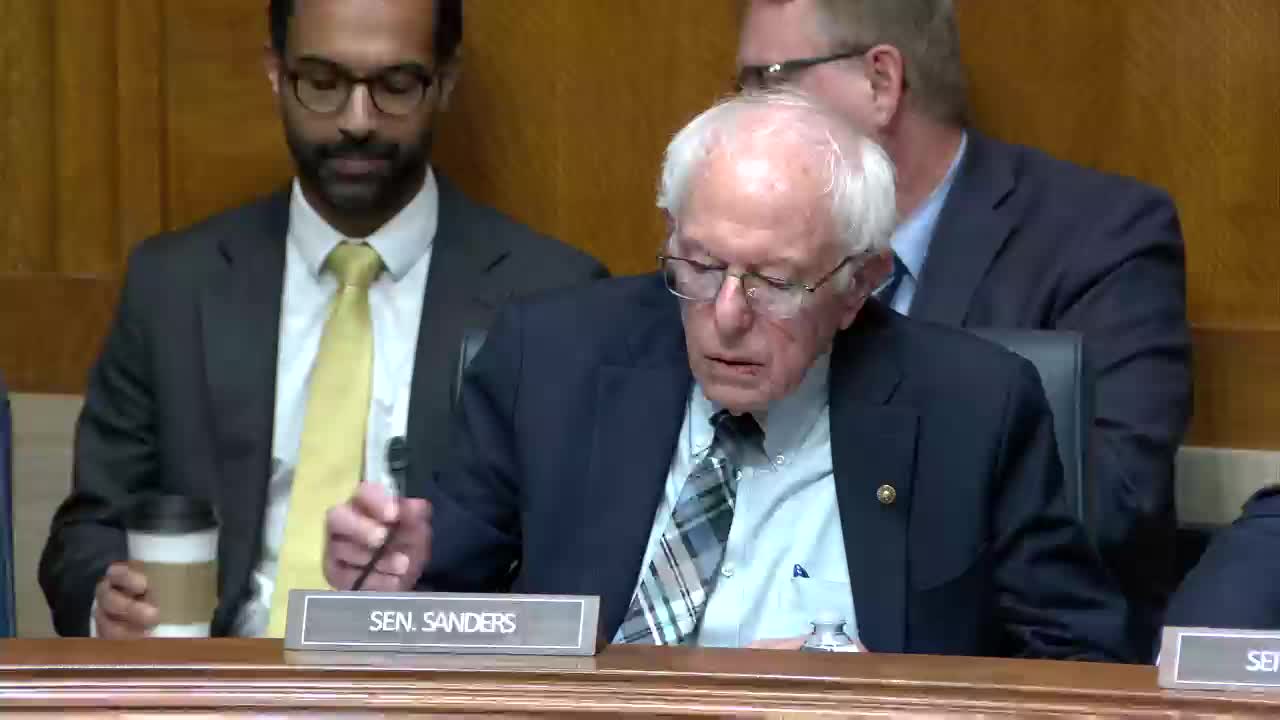
Summary
Senator Sanders and several witnesses warned that recent federal budget changes will cause millions to lose coverage and argued for broad reforms, including Medicare for All; other witnesses and senators emphasized transparency and targeted reforms instead of sweeping system replacement.
Senator Sanders used his opening remarks at the Senate HELP Committee hearing to argue that the U.S. health‑care system is "dysfunctional" and to press for a national single‑payer approach, while other senators and witnesses emphasized targeted, bipartisan reforms like price transparency and PBM oversight.
Why it matters: Lawmakers debated whether the immediate priority should be to undo near‑term federal budget provisions that witnesses said will reduce coverage, or to pursue structural reforms such as Medicare for All to expand coverage and reduce costs over time.
Sanders called the system "totally broken" and said other wealthy countries provide universal coverage at far lower per‑person costs; he noted that a recent budget reconciliation bill and expiration of enhanced premium tax credits "will cause over 15,000,000 people to lose the health insurance they have," a figure he attributed to the Congressional Budget Office. Sanders said he introduced Medicare for All and cited an estimate that the proposal could save the country hundreds of billions annually: "The director of the CBO... estimated that the Medicare for all bill that I introduced would save the American people $650,000,000,000 a year," he said.
Other witnesses presented different diagnoses and remedies. Dr. Adam Gaffney, an intensive care physician and health services researcher, described harms from lack of coverage — including patients foregoing treatment and higher mortality risk — and said price transparency and PBM reforms are insufficient alone to protect people lacking coverage. He emphasized that tens of millions are uninsured or underinsured and that coverage expansions that reduce out‑of‑pocket costs — no co‑pays or deductibles — are central to making care affordable.
Other panelists urged more incremental or targeted policies: Bennett Bolita and Dr. Brian Miller highlighted practical steps employers and regulators can take to improve price transparency, reduce administrative waste and enable purchasers to steer patients to lower‑cost care. The committee's questioning reflected a range of views, with some senators urging immediate steps to shore up Medicaid and community health centers and others emphasizing the long‑term debate over the proper scope of public and private roles in the health‑care system.
The hearing underscored a central political divide: whether to pursue comprehensive public options like Medicare for All or to seek a suite of narrower, bipartisan reforms focused on transparency, competition and targeted program fixes. Senators requested follow‑up materials and placed several contested claims — including the estimates of coverage loss tied to recent budget actions — on the record for further review.