
Committee examines 340B discounts and whether savings reach patients or raise employer costs
Get AI-powered insights, summaries, and transcripts
Subscribe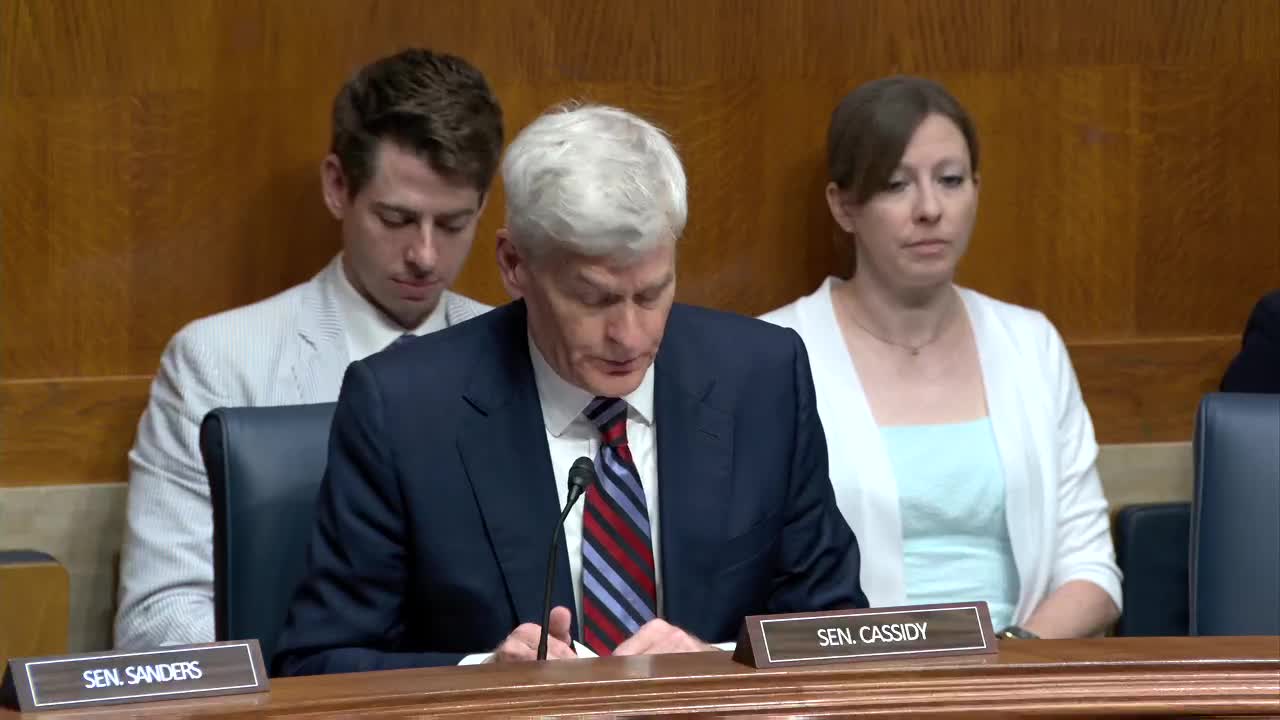
Summary
Senators and witnesses questioned whether the 340B drug discount program achieves its goal of making care affordable for low‑income patients, citing a study attributing multi‑billion dollar costs to employer‑sponsored insurance and recommending greater transparency or alternative funding mechanisms.
At the Senate HELP hearing, senators and witnesses raised concerns that the 340B drug discount program, created to help hospitals care for low‑income patients, may have unintended effects on commercial prices and employer costs unless the program is more transparent or better targeted.
Why it matters: Several witnesses told the committee that discounts captured by hospitals do not always flow to patients and that those discounts can create price incentives that affect employers and private insurers.
Chairman Cassidy and witnesses cited a recent National Pharmaceutical Council (NPC) study and internal staff work: the NPC estimate discussed at the hearing found that 340B "may make employer sponsored insurance more expensive, costing workers an estimated $4,500,000,000 from 2017 to 2023." Witnesses said that hospitals can buy drugs at steep discounts but then bill insurers or patients at higher prices, creating an arbitrage that can push prices in the commercial market upward.
Panelists suggested several policy responses. AEI and other witnesses proposed tying 340B benefits more precisely to care delivered to low‑income or uninsured patients — for example, by requiring hospitals receiving discounts to report how the savings are used or by tying subsidies to the number of patients served. Dr. Brian Miller suggested an alternative: give hospitals explicit funds (a flat user fee or tax) to support uncompensated care rather than leaving discounts tied to list prices and downstream billing arbitrage.
Senators asked staff to study the program's transparency and potential legislative fixes. Panelists emphasized that 340B policy choices interact with larger market incentives and that Congress should consider targeted reforms — such as reporting requirements, audits, or a different funding mechanism — to ensure discounts benefit the intended patients rather than widening price differences in the commercial market.