Get Full Government Meeting Transcripts, Videos, & Alerts Forever!
Get email alerts on the Housing Discrimination Enforcement topic
No spam. Unsubscribe anytime.
Lawmakers, testers and tenants press committee to adopt stronger enforcement against housing discrimination
Summary
Senators, a housing discrimination testing program and voucher holders urged the committee to pass S.245/H.431 to link Attorney General findings to temporary license suspensions for real estate brokers and require fair housing training, quarterly disciplinary disclosures and a board seat with lived experience.
Lawmakers, fair-housing testers and tenants described widespread housing discrimination in Massachusetts and urged the Joint Committee on Consumer Protection and Professional Licensure to advance S.245 and H.431, an act to end housing discrimination.
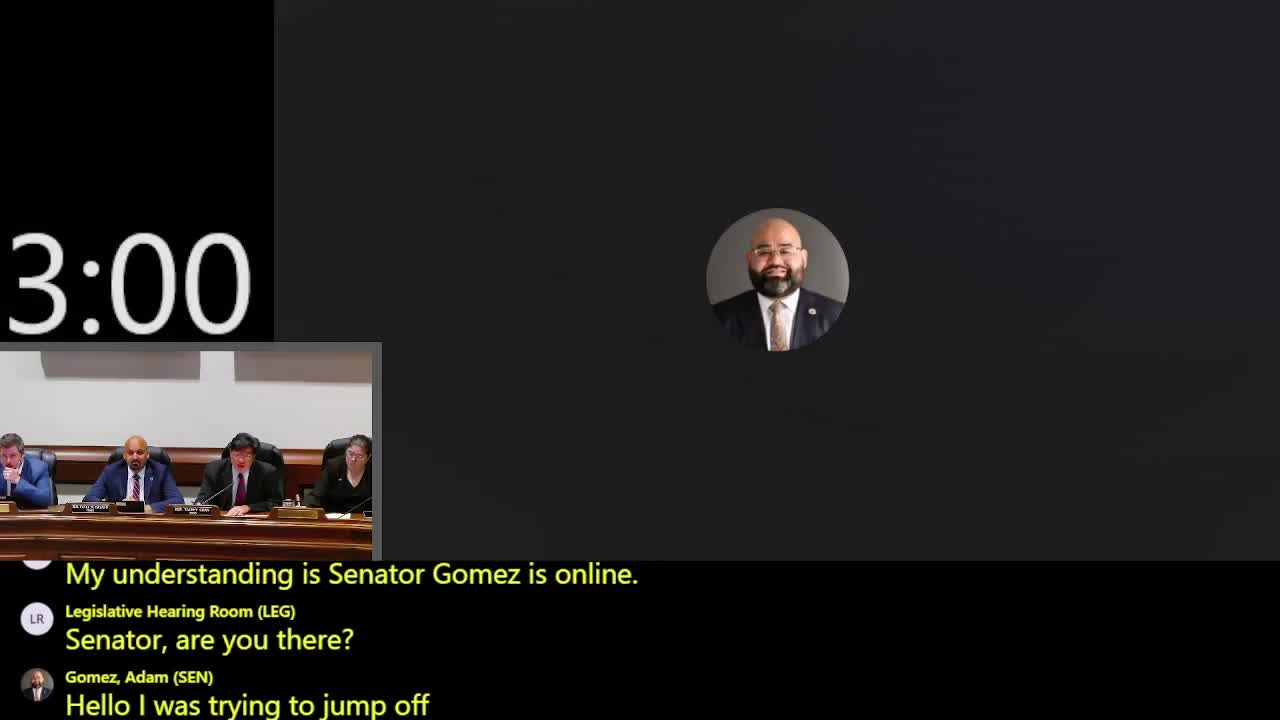
Senator Gomez said testing and research show high rates of discrimination, especially against Black renters and voucher holders, and said existing laws are insufficient without coordinated enforcement. "Housing discrimination in Massachusetts is real," he told the committee, citing a 2020 study that found 71 percent of Black testers and 86 percent of testers using housing vouchers experienced discrimination.
S.245 would create a formal referral process: when a Massachusetts court finds unlawful discrimination by a real estate professional, the Attorney General would notify the Board of Registration of Real Estate Brokers and Salespersons, and the board would be required to use its authority to impose temporary license suspensions. The bill would also require fair-housing training for new licensees, quarterly publication of disciplinary actions, add a fair-housing expert or a tenant with voucher experience to the board, and increase the penalty for a second violation from a 90-day to a 180-day suspension.
Kelly Viera of Suffolk University's housing-discrimination testing program said the group's work shows real estate professionals were the primary interlocutors for testers in the rental market and account for most discriminatory interactions. "The vast majority of the people who are testers...were interacting with real estate professionals," Viera said.
Several tenants described personal experiences. Nikkita Haywood of Dorchester said agents told her she sounded "very ethnic and scary" and hung up on her; Elaine Minahan of Quincy described a landlord who "became visibly hostile" when told a prospective tenant had a Section 8 voucher. Cheryl Ricketts, who is both a licensed realtor and a tenant who experienced discrimination, said she has received inquiries from voucher holders that were ignored or rejected with unreasonable demands.
Supporters said the bill is a practical enforcement fix that bridges existing legal authority and adds transparency and education. They urged the committee to favorably report the measure.
No final committee action was taken at the hearing.