
Senate HELP committee advances bipartisan ESOP measures to expand employee ownership
Get AI-powered insights, summaries, and transcripts
Subscribe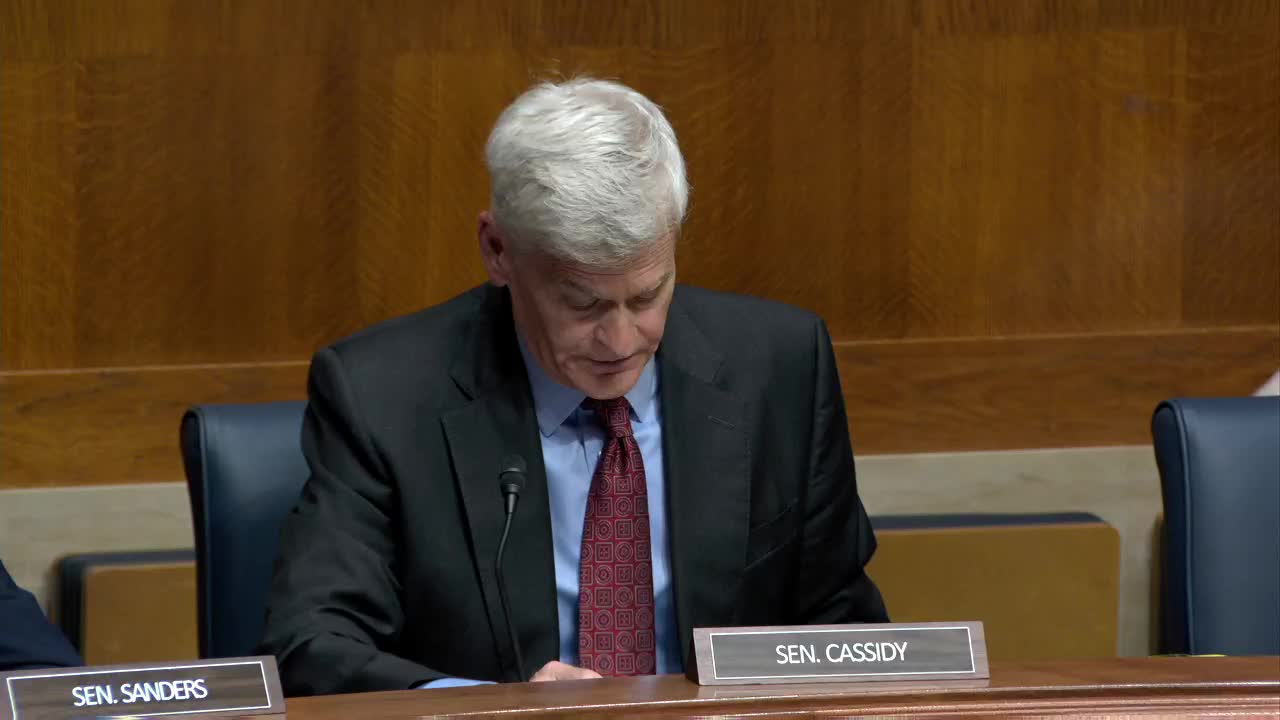
Summary
The Senate HELP Committee voted unanimously to adopt amendments and manager's substitutes for bills clarifying ESOP valuation safe harbors, creating Department of Labor advisory structures, and supporting employee ownership centers.
The Senate Committee on Health, Education, Labor, and Pensions on Tuesday advanced multiple bipartisan measures aimed at expanding employee stock ownership plans (ESOPs) and other forms of worker ownership, adopting amendments and manager's substitutes and reporting the bills favorably out of committee.
Committee Chairman Bill Cassidy, chairman of the Senate HELP Committee, said the panel was "voting on bills to strengthen employee stock ownership plans, ESOPs, empowering workers to have a stake in their company and build wealth for themselves and their families." The measures moved include the Retire Through Ownership Act (S.2403) and the Employee Ownership Representation Act (S.1728).
The measures taken address valuation uncertainty, Department of Labor (DOL) authority, and federal support for worker-ownership programs. Senator Bernie Sanders urged broader federal support for employee ownership and described the bills as "a modest, modest step forward," saying a federal bank of financial support would be needed for larger-scale expansion.
Key actions adopted by the committee include a Sanders amendment to S.2403 clarifying that the Department of Labor retains the authority to promulgate regulations on ESOP valuation and fiduciary duties; the manager's amendment in the nature of a substitute to S.2403; and the manager's substitute for S.1728. The committee also approved Sanders's amendment to S.1728 that would create an employee ownership council at the Department of Labor and a seven-member advisory council on employee ownership. Senator Maggie Hassan's amendment (offered by Senator Hasson) to establish an employee ownership advocate at DOL was also adopted.
Those votes were unanimous on recorded counts in committee: several amendments and manager's substitutes passed on voice votes or unanimous recorded tallies (the transcript records 23 ayes, 0 nays on roll calls shown). Committee debate emphasized that uncertain valuation processes and potential later DOL challenges can deter owners from selling to employees; sponsors said the bills use IRS valuation precedent and create a safe harbor if sellers follow that guidance. "DOL was supposed to do regulations about valuation. For 50 years, they haven't," a sponsor said in committee testimony, and supporters argued the statutes will provide the needed clarity.
Discussion in committee included appeals for broader federal investments: Sanders said many small business owners would prefer to leave businesses to employees "if they had the tax breaks and the knowledge as to how to do that," and he urged continued work to create federal supports beyond the bills before the committee.
The committee recorded motions to adopt the manager's amendments and authorized staff to make technical and conforming changes when preparing the bills for committee report. The measures were reported favorably and will move to the Senate floor process as part of the committee's legislative referrals.