Get Full Government Meeting Transcripts, Videos, & Alerts Forever!
Get email alerts on the Credit Card Fees topic
No spam. Unsubscribe anytime.
Restaurants, small‑business groups urge lawmakers to allow credit‑card surcharges and block fees on taxes and tips
Summary
At a Joint Committee hearing, restaurant owners, trade groups and small‑business advocates pushed bills letting merchants add optional surcharges for card payments and barring interchange charges on taxes and gratuities. Payment‑industry witnesses warned some proposals would be operationally complex and could face federal preemption.
At a hearing of the Joint Committee on Consumer Protection and Professional Licensure, restaurant owners, trade groups and other small‑business advocates urged lawmakers to let merchants add optional convenience fees for credit‑card payments and to bar card processors from charging interchange fees on taxes and tips.
Supporters said the changes would reduce an outsized cost for small operators and restore parity with other states; opponents from the payments industry and some credit unions warned that some bills would be technically infeasible, invite legal challenges and could destabilize the payments system.
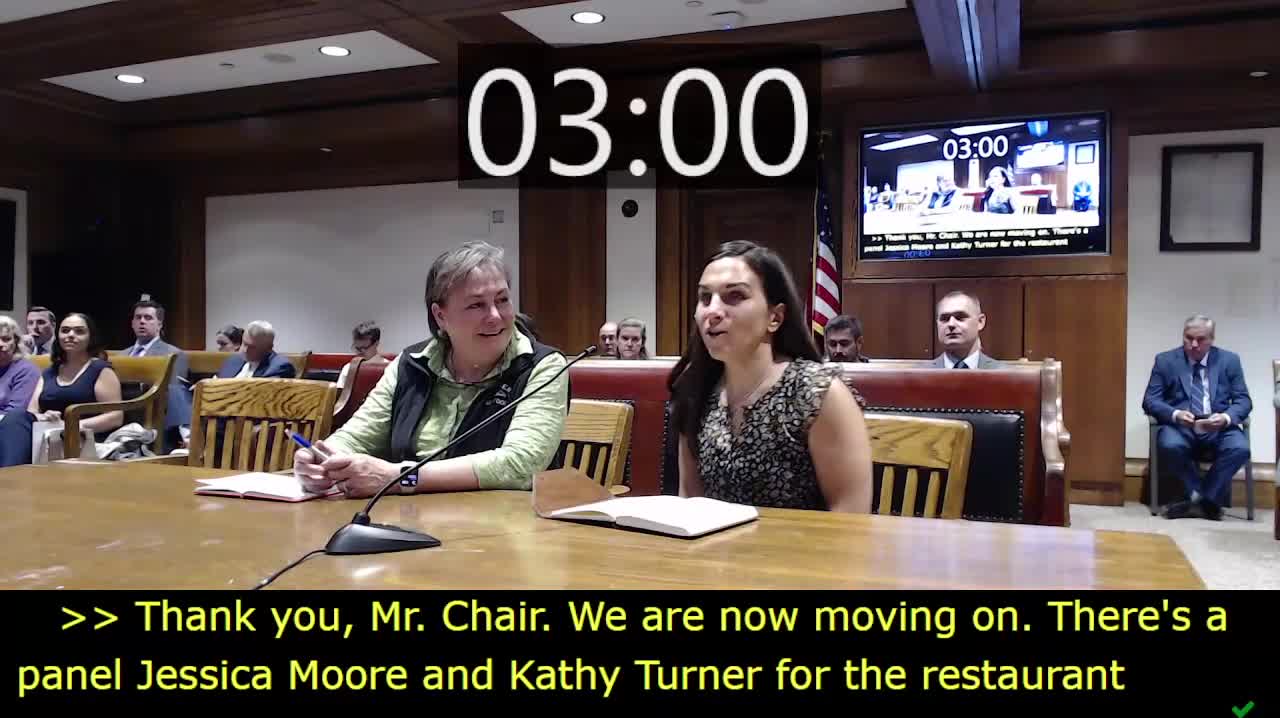
The argument from the restaurant sector was straightforward: processing fees are large and growing. “This happens in restaurants every single day,” Jessica Moore, director of government affairs for the Massachusetts Restaurant Association, told the committee, citing industry data and a petition from hundreds of operators. Moore said restaurants nationwide pay millions annually in fees and asserted that restricting merchants from recovering those costs leaves small businesses subsidizing payment rewards programs.
Kathy Turner, owner of Turner Seafoods, offered a floor‑level example of the burden. “Last year, just at our 3 little restaurants… we paid $400,000 in credit card fees. 400,000. Of that, 100,000 went to collect taxes and tips,” Turner said. She and other operators told the panel that a substantial share of fees is charged on amounts the restaurant does not keep — sales tax and gratuities — and that returning or preventing those charges would be the quickest relief.
Nancy Defina, human resources and compliance director for Nitsch Hospitality Group, told lawmakers her company paid $458,218 last year for processing. “Credit card fees are the third largest expense behind labor and food cost,” she said.
Business groups urged two related approaches: allow an optional convenience or surcharge that merchants can choose to add and require that interchange not be assessed on taxes and tips. Christopher Carlozzi, Massachusetts director for the National Federation of Independent Business, said Massachusetts is one of two states that currently prohibit surcharges and that the restriction puts small companies at a competitive disadvantage.
Payment‑industry witnesses pushed back on legislation aimed at changing interchange mechanics. Steve Rauschenberger of the Electronic Payment Coalition called the U.S. payments system “the envy of the world” and warned that statutes seeking to alter how interchange is set or to require networks and issuers to unbundle rates would be operationally complex. Brian Yates of the Electronic Transactions Association said measures that would force merchants to negotiate one‑on‑one with issuers risked “regulatory fragmentation” and added litigation exposure.
Credit unions urged caution on bills that would require merchants to negotiate separate agreements with card issuers. “Removing or altering universal acceptance on a state‑by‑state basis would lead to regulatory fragmentation resulting in confusion, increased compliance costs, and inefficiencies,” Jessica Avery of the Cooperative Credit Union Association testified.
Lawmakers heard technical and economic questions about which changes would be easiest to implement. Several restaurant witnesses said removing interchange charges from meals tax and gratuities would bring immediate relief and would not necessarily create added accounting burdens for operators. Payment‑industry representatives said the existing system was not designed to separate those amounts in real time and implementing the change would require significant technical work by processors and networks.
The committee heard several bills on its docket including measures to allow merchant surcharges and other bills that would limit interchange practices. No votes or committee actions were taken at the hearing; the committee received written and oral testimony and asked staff to gather additional operational and legal information before taking further action.
The debate highlighted a split: small businesses seeking near‑term relief from growing card costs, and payments and banking groups warning of implementation complexity and federal preemption risks.