
Senate panel grills State Department on reorganization, layoffs and transfer of foreign aid to State
Get AI-powered insights, summaries, and transcripts
Subscribe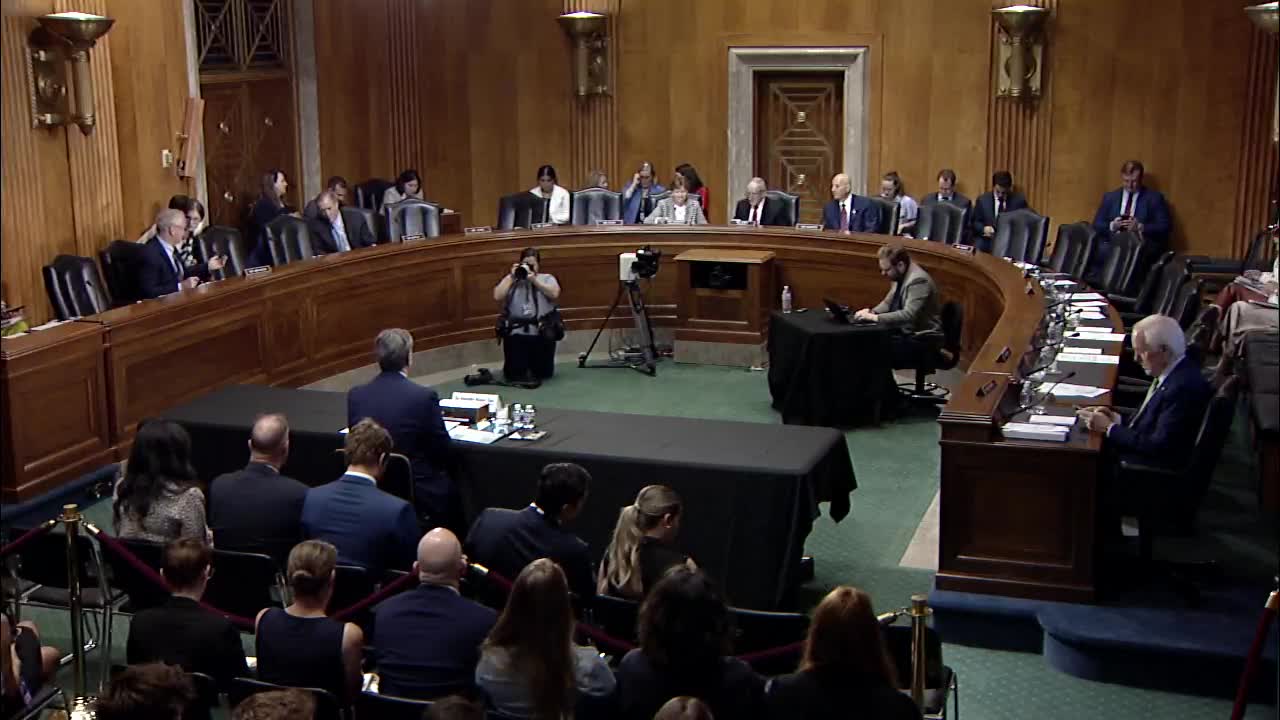
Summary
Deputy Secretary Regas defended the State Department's reorganization and budget request before the Senate Foreign Relations Committee, while senators from both parties raised objections to the speed and execution of reductions in force and demanded documentation and plans for food and program transitions.
Deputy Secretary Regas defended the Trump administration's State Department reorganization and its fiscal 2026 budget request before the Senate Foreign Relations Committee on Tuesday, while senators from both parties pressed for documentation, raised national‑security and humanitarian concerns, and described chaotic executions of reductions in force.
Regas, the department's deputy secretary for management and resources, told the committee the administration's FY2026 request is $28,500,000,000 and represented a 48 percent reduction from FY2025, and said the reorganization will consolidate the department's domestic footprint, merge or eliminate nearly 45 percent of domestic offices and move foreign assistance administration from USAID into State. "As of July 1, USAID no longer implements foreign assistance," he said.
Why it matters: senators said the timing and implementation of cuts — including a reduction in force (RIF) that affected about 1,300 positions — risks hollowing out critical expertise in diplomacy, consular services, counterterrorism and other technical areas; undermines U.S. influence while competitors expand; and, in one high‑profile example, is entangled with an unresolved question about food purchased with U.S. funds that may be expiring in overseas warehouses.
Regas framed the reorganization as a long‑needed effort to reduce bureaucracy and empower ambassadors and regional bureaus. He said the department had more than 1,500 domestic office units that created slow clearance chains and that the reorganization is intended to make State "move at the speed of relevance." He also described the personnel reductions as conducted under the Office of Personnel Management's competitive "bump and retreat" process that weighs skills, tenure and veterans' preference.
Lawmakers pressed specifics and raised examples of work they say was disrupted. Ranking Member Jeanne Shaheen (D‑N.H.) said the cuts disproportionately hit career professionals and cited reports that the Office of Casualty Assistance, consular fraud‑prevention staff and other specialized teams were terminated. She asked for a list of affected offices and an explanation of how, in her words, decisions were made "since these decisions were not based on performance or evaluations or merit." Regas said some administrative and management functions were consolidated and that passport adjudication and law‑enforcement functions were not eliminated, and he agreed to provide documentation about the RIF process and personnel decisions.
Several senators described operational and humanitarian fallout. Senator Maggie Hassan (D‑N.H.) and others pressed for an immediate inventory and plan for food commodities reportedly held in U.S. warehouses that could expire; Senator Shaheen asked for a committee submission within a week with an inventory and distribution plan. Senator Jacky Rosen (D‑Nev.) and others cited termination of counterterrorism programs and the closure or re‑assignment of offices that previously supported countering violent extremism and human trafficking.
Lawmakers also raised programmatic and budgetary concerns. Senator Chris Murphy (D‑Conn.) called for broader opportunities to re‑compete positions for separated staff and opposed what he described as an effective halving of the department's diplomatic capabilities amid strategic competition with China and Russia. Senator Mike Ricketts (R‑Neb.) and others urged management reforms and process improvements, endorsing measures to make hiring and operations more efficient.
Regas described steps the department plans to take going forward: ongoing assessment of the new structure, use of a centrally managed America First Opportunity Fund to direct foreign assistance, reinvigorating the Office of Overseas Building Operations to enable "expeditionary diplomacy," and iterative process improvement. He agreed to provide the committee with written documentation of the RIF procedures and to return information the committee requested.
Discussion vs. decisions: The committee did not vote on the reorganization. The formal, executed decisions discussed during the hearing are the department's internal reorganization, the RIF affecting about 1,300 positions, and the administration's FY2026 budget proposal — actions Regas described as already implemented or requested. Legislative action in response was introduced by senators; Ranking Member Shaheen and Democratic colleagues noted they had filed the "Protecting America's Diplomatic Workforce Act," legislation to require justification and national‑security assessments before broad staff terminations.
What remains open: Senators demanded documentation and timelines. Shaheen asked for (1) a list of offices and bureaus affected by the RIF, (2) a written explanation of the RIF methodology and OPM role, and (3) an inventory and distribution plan for food commodities that may be expiring in U.S. warehouses. Regas committed to providing materials and to follow up in writing.
Ending: The committee left the record open for supplemental questions and requested timely return of records and inventories. Several senators warned the panel would continue oversight as the administration implements the reorganized structure.