
Senate Foreign Relations Committee questions four Trump nominees on consular operations, NATO ties and Latin America
Get AI-powered insights, summaries, and transcripts
Subscribe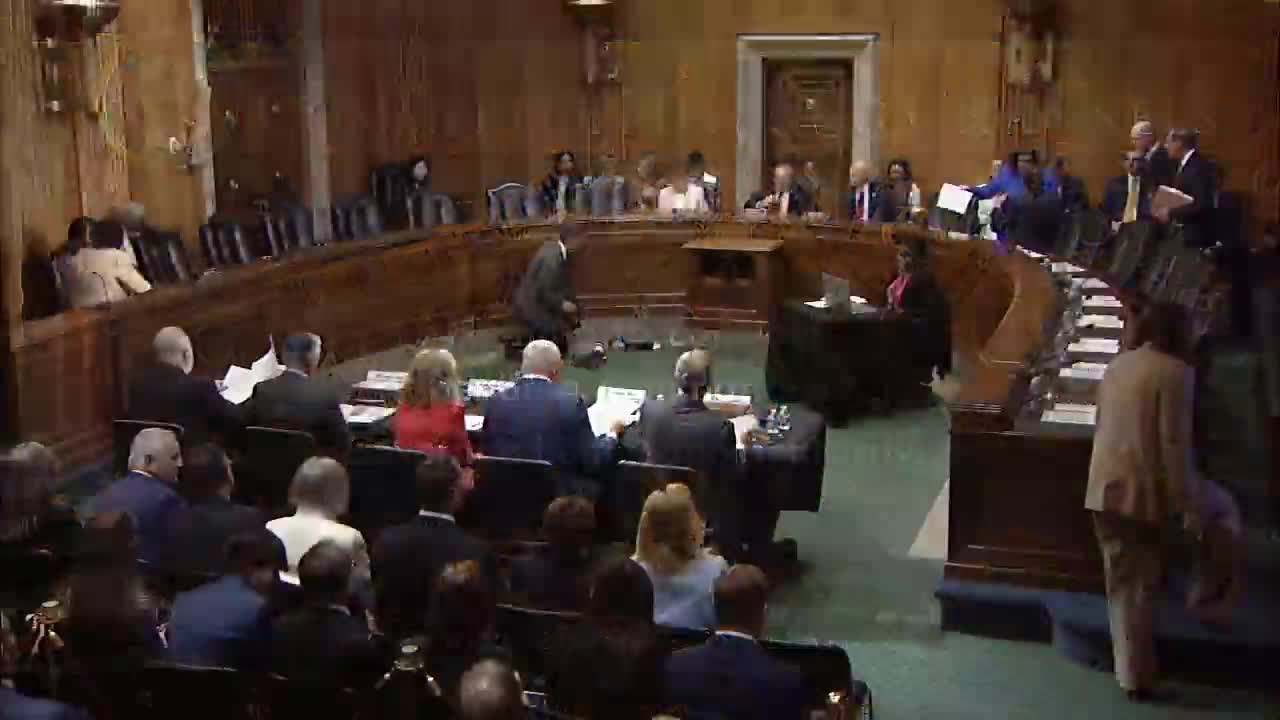
Summary
The Senate Foreign Relations Committee convened July 22 to consider four administration nominees: the president’s pick for undersecretary for management and three ambassadorial nominees to Poland, Belgium and Argentina.
The Senate Foreign Relations Committee convened July 22 to consider four administration nominees: the president’s pick for undersecretary for management and three ambassadorial nominees to Poland, Belgium and Argentina. Chairman Jim Risch opened the hearing and said the nominees “will be charged with…furthering” core bilateral relationships and with key management responsibilities at the State Department.
The hearing’s central issues included consular operations and passport and visa processing, the State Department’s recent personnel reductions, transatlantic defense spending and NATO burden sharing, and U.S. economic and security competition with China in Latin America.
In his opening statement, Chairman Risch emphasized Belgium’s role as host to the NATO and EU headquarters and pressed the nominees to strengthen alliances and collective security. Ranking Member Jeanne Shaheen flagged consular services as a top constituent concern, saying the Bureau of Consular Affairs “issues passports to Americans” and “processes visas for foreign nationals,” and asked nominees to address backlogs and staffing at the National Passport Center and the National Visa Center in Portsmouth, New Hampshire.
Mister Evans, the nominee to be undersecretary for management, described the portfolio that he would lead as spanning “13 bureaus and offices” including diplomatic security, overseas building operations and medical services. He told the committee, “My priority is to ensure every person we send overseas is protected from harm.” Evans said he would review how foreign service officers are evaluated and assigned and pledged, if confirmed, to “ensure CA has the personnel and resources needed to effectively fulfill its missions.” When asked about the Afghan special immigrant visa (SIV) program, he said he was familiar with the process from prior duty in Afghanistan and committed to brief the committee after reviewing current status: “If confirmed, I will be happy to…look into that and bring back some answers to the committee.”
Tom Rose, the nominee to be ambassador to Poland, framed Poland as a “frontline state” and pledged to press U.S. priorities while respecting Polish sovereignty. He said Poland “is our strongest ally in Europe” and described himself as prepared to “advance President Trump’s demand for policies that protect and promote American interests.” Senators probed him on political neutrality after prior commentary; Rose affirmed he understands an ambassador’s role to work with all political parties “Of course, I understand that,” he said.
Bill White, the nominee to be ambassador to Belgium, highlighted economic and defense ties between the two countries, citing bilateral goods trade figures he described as roughly $74.8 billion annually and saying the Port of Antwerp moved about 17 million metric tons of U.S. goods. White told the committee he would push Belgian partners on energy and defense cooperation and said he would prioritize the safety of U.S. citizens in Belgium. Senators questioned him about social‑media posts that criticized U.S. state officials and the retweeting of foreign accounts; White said he removed some posts and offered to refrain from commenting on Belgian internal politics if confirmed.
Dr. Peter Lamellas, the nominee to be ambassador to Argentina, recounted his immigrant background and private‑sector experience and said he would promote U.S. trade, investment and cooperation on security issues. He addressed congressional concern about China’s influence in Latin America and said he would press Argentina on non‑tariff trade barriers and intellectual property protections to encourage U.S. investment. On Argentina’s 1994 AMIA (Argentine Israelite Mutual Association) bombing, Lamellas said he would support Argentine efforts to investigate and prosecute those responsible and pledged to work with Buenos Aires on accountability efforts.
Committee members asked all nominees about implementation risks and congressional priorities. Several senators raised the recent personnel “riffs” (reductions in force) at the State Department and asked how the department would restore morale and preserve specialized consular and cyber expertise. Evans acknowledged the impact of recent personnel moves and said “we have to sort of repair the damage” and “put the people where they need to be.”
The committee left the record open for additional questions and documentary submissions; Chairman Risch closed the hearing by thanking nominees and their families.