
Senate officials warn China’s dominance of Africa’s critical minerals threatens U.S. supply chains; urge commercial diplomacy
Get AI-powered insights, summaries, and transcripts
Subscribe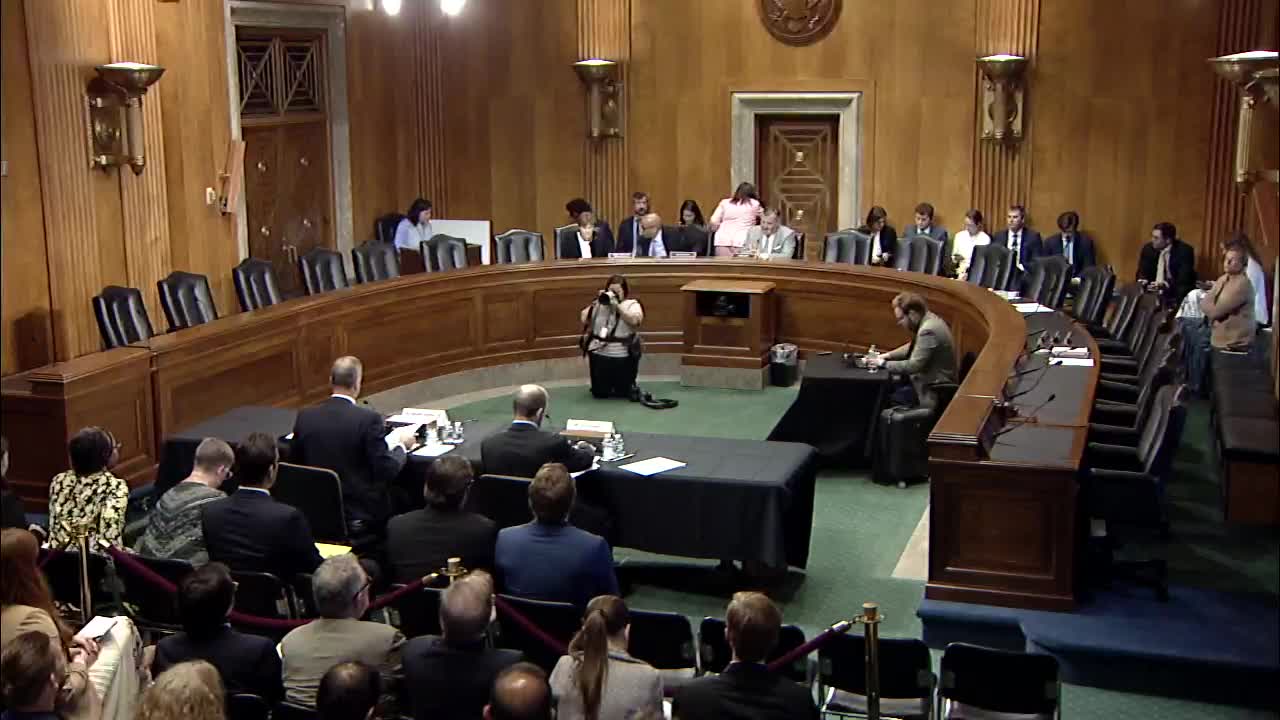
Summary
At a Senate Foreign Relations subcommittee hearing, lawmakers and State Department officials said China’s control of mineral processing and refining in Africa poses national security and economic risks and called for increased U.S. investment, embassy engagement and better use of development finance institutions.
At a Senate Foreign Relations subcommittee hearing, lawmakers and senior State Department officials said China’s dominance of mineral processing and refining in Africa poses an “acute national security threat” to U.S. supply chains for defense and high‑tech industries.
The hearing focused on how to strengthen U.S.–Africa partnerships to secure supplies of cobalt, lithium, rare earths and other materials. Chairman Cruz opened the session saying, “China is a global threat that must be confronted globally,” and described Chinese Belt and Road loans as a tool Beijing uses to gain leverage over African mineral assets.
Why this matters: U.S. defense platforms and advanced technologies depend on critical minerals. Witnesses and senators repeatedly warned that heavy reliance on Chinese processing capacity leaves U.S. industry and national security vulnerable to supply disruptions, price manipulation and economic coercion.
State Department witness Ambassador Jonathan Pratt said Africa is central to U.S. strategy to reduce those vulnerabilities, noting the continent’s reserves of cobalt, lithium, tantalum and graphite and pointing to U.S. executive orders targeting mineral production. “The administration’s approach prioritizes partnerships with African nations to ensure their minerals flow west, not east to China,” Pratt testified.
Deputy Assistant Secretary Scott Woodard described a two‑pronged problem: the need to expand U.S. mining and processing capacity at home and to diversify overseas supply chains away from China. Woodard said embassies and regional strategies aim to link American firms with African governments and financing tools such as the U.S. International Development Finance Corporation (DFC) and the Export‑Import Bank.
Senator Booker, the ranking member, criticized recent policy changes and staffing cuts at the State Department, saying the U.S. has “retreated” in Africa and that reductions to programs like the Millennium Challenge Corporation and other assistance undermine longer‑term commercial diplomacy. Booker said a comprehensive U.S. strategy should “reflect our values, protect our interests and reduce barriers for investment.”
Witnesses and senators also discussed domestic actions to increase onshore capacity, citing the Mountain Pass rare earth facility and Department of Defense investments in domestic processing. Pratt and Woodard emphasized that onshoring alone will not meet demand and that parallel engagement with African partners is required.
The subcommittee closed with senators signaling bipartisan interest in reauthorizing and better capitalizing public finance tools, and with the panel noting that senators may submit additional questions for the record. The hearing adjourned with a request for more interagency coordination and a focus on both domestic and overseas investment to secure supply chains.