
Senate subcommittee examines ‘day after’ Gaza plans and faults current aid mechanism
Get AI-powered insights, summaries, and transcripts
Subscribe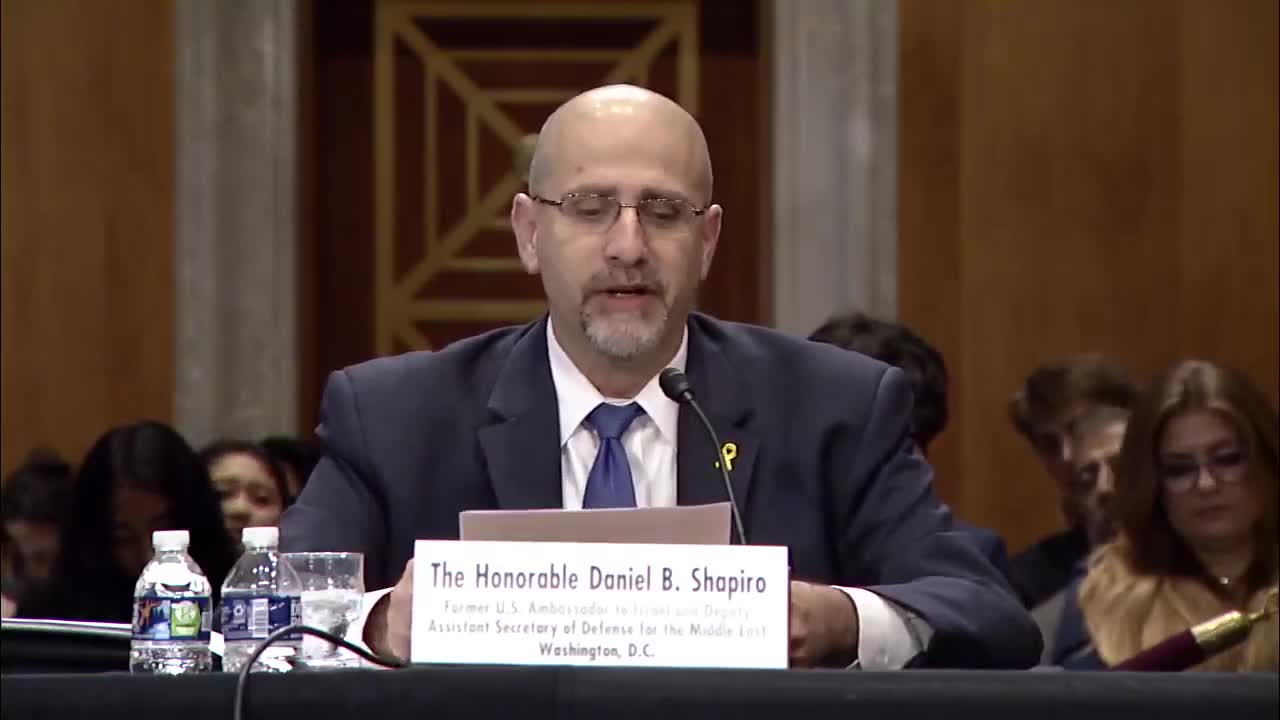
Summary
Witnesses urged a comprehensive “day after” plan for Gaza that pairs hostage releases and Hamas removal with interim security and a wider humanitarian distribution system; witnesses and senators criticized the Gaza Humanitarian Foundation as insufficient and dangerous.
Chairman McCormick convened the Senate Foreign Relations Subcommittee and framed the hearing around recent military and diplomatic developments in the Middle East and the need for a coherent post-conflict plan for Gaza.
The central contention at the hearing was the shape of a “day after” plan for Gaza. Former senior U.S. official Dan Shapiro told the subcommittee the plan should “include the release of all hostages, protection of Israel's security, removal of Hamas from power, relief for Palestinian civilians, and a regionally supported reconstruction for Palestinians who want to live in peace with Israel.” He argued the plan needs interim security provided by willing Arab states and stronger Palestinian Authority leadership.
Shapiro criticized the recently established Gaza Humanitarian Foundation, calling it “vastly insufficient, and it's flawed and dangerous in its design, which has led to far too many deaths.” He recommended widening distribution points and “flood the zone” approaches so aid does not concentrate in a few locations that require long, dangerous transit for recipients.
RAND Senior Policy Researcher Shelly Culbertson emphasized reconstruction and shelter needs. She said roughly 70% of Gaza’s housing is damaged or destroyed and that “a couple things. First, the damage is not, it's not universal. There are neighborhoods that can be rehabilitated.” Culbertson urged investing in incremental rehabilitation, improved temporary-camp design, and expanding safe sites for humanitarian deliveries so the Gaza population can be sheltered while longer-term reconstruction proceeds.
Witnesses and some senators pressed for a credible interim security arrangement. Shapiro suggested an Arab-led interim security mission, supported by the U.S., as a bridge until Palestinian security forces can be trained and deployed. He referenced historical precedents for exile and relocation of combatants, saying evacuations of remaining Hamas leaders and fighters should be part of an endgame package.
Committee members also raised the humanitarian toll from centralized distribution systems. Senator Van Hollen referenced reports of civilians killed in or near distribution centers and asked witnesses about alternative distribution models; witnesses reiterated that current arrangements risk concentrated violence and diversion and that expanding distribution points and routes would reduce those risks.
The hearing closed with lawmakers and witnesses agreeing that any durable regional integration or normalization efforts will be difficult to sustain while the Gaza war continues, and that a negotiated ceasefire and credible mechanisms for hostage release are prerequisites to wider reconstruction and normalization efforts.