Get Full Government Meeting Transcripts, Videos, & Alerts Forever!
Get email alerts on the Family Miranda Rights topic
No spam. Unsubscribe anytime.
Massachusetts parents and advocates press committee to pass ‘Family Miranda’ bill requiring DCF to read rights
Summary
Supporters of S.114 told a joint legislative committee that requiring the Department of Children and Families to give parents a written and verbal statement of rights at the start of an investigation would reduce coercion and improve accountability.
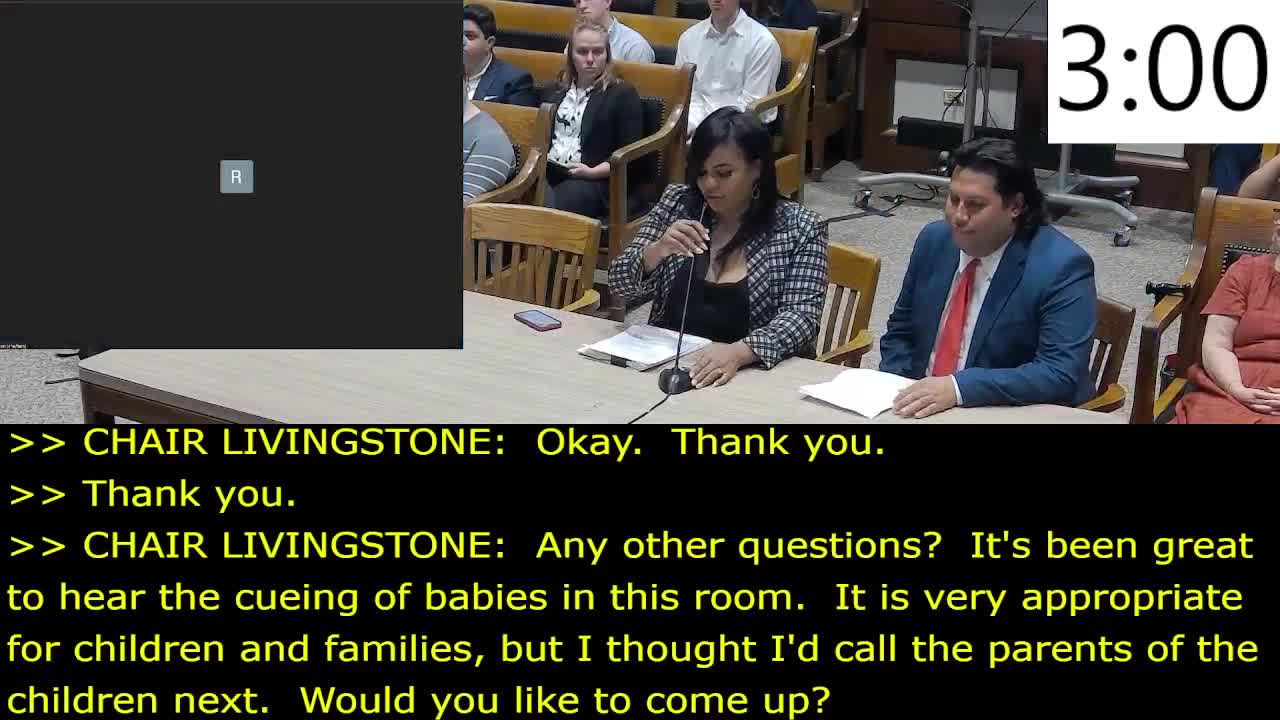
Supporters of S.114, the Family Protection and Transparency Act, told the Joint Committee on Children, Families, and Persons with Disabilities that notifying families of their rights at the start of Department of Children and Families investigations would reduce fear, prevent coercion and make the system more accountable. “I am testifying today in support of s 1 14 and act to establish Miranda rights for families under investigation by the Department of Children and Families,” said Tatiana Rodriguez, founder and director of Family Matters First. The bill would require DCF to provide a clear written and verbal statement of rights at the onset of any investigation, including the right to remain silent, the right to counsel and the right to refuse entry without a court order, proponents said.
Why it matters: Witnesses described repeated examples in which parents — particularly low-income, Black, Indigenous, people of color (BIPOC), non-English speakers and people with prior involvement in the system — said they were not told their rights, felt coerced during interviews and sometimes lost custody while fearing retaliation for asserting legal protections. “If you don’t know your rights, you don’t have your rights. Period. Full stop,” said Richard Wexler, executive director of the National Coalition for Child Protection Reform. Attorneys and legal-aid clinicians told the panel that telling families the specific allegations and their rights in writing would allow meaningful defense and reduce unnecessary removals.
Key testimony and evidence: Attorney Jacob Chen described the typical home visit and said: “This bill is simple. It stands for something so basic. Families deserve to know their rights when DCF is investigating them, and DCF should be required to tell parents their rights.” Rebecca Greening, legislative advocacy director and senior attorney at the Mental Health Legal Advisors Committee, said the bill would require DCF to provide allegations in writing rather than leaving families to request records months later. Kirsten Puccio, a peer mentor in long-term recovery, said she did not know her rights during an earlier investigation and that providing them would have made a material difference in how her case unfolded. Several parents with lived experience recounted home visits or investigations in shock and grief and urged the committee to pass the bill to create immediate transparency and procedural safeguards.
Supporters noted the bill would not strip DCF of existing emergency powers. Multiple witnesses pointed to other states that have enacted similar protections and said those laws did not impede emergency responses. Richard Wexler cited Texas and other states, and Pamela McLaughlin noted that comparable provisions have passed in both conservative and liberal states, adding that the statutes have sometimes improved the functioning of child-protection investigations because families understand their options.
No formal action was taken during the hearing. Committee members asked clarifying questions about language access, access to counsel at different stages of an investigation, and existing pilots for pre-petition legal representation. Legal witnesses and advocates described preservation and pre-petition projects that provide limited attorney access before court filing, but they said statewide, routine counsel before DCF interviews is not guaranteed. Witnesses urged stronger language access provisions so the written statement of rights would be meaningful for non-English speakers.
Context and limits: Testimony included personal and clinical accounts of harm that families and children experienced while in custody or during investigations. Witnesses repeatedly stated that the bill would not prevent DCF from acting in emergencies, and several speakers clarified that the bill’s principal effect is procedural: to require disclosure, recording (in some testimony) and written notice that can be used later in court or appeals. No committee votes or amendments were recorded at the hearing.
Outlook: Advocates asked the committee to report S.114 favorably so the legislature can consider the bill in subsequent stages. Committee members said they would accept further written materials and information about language access and the scope of pre-petition legal services.