Get Full Government Meeting Transcripts, Videos, & Alerts Forever!
Get email alerts on the Sea Scallop Fishery topic
No spam. Unsubscribe anytime.
Lawmakers Hear Industry, Scientists on Sea Scallops; Council previously halted bid to open northern edge
Summary
State senators heard scientists and industry representatives discuss data, rotational management and proposals to reopen a portion of Georges Bank and allow limited permit stacking as a way to shore up New Bedford’s scallop fleet and waterfront economy.
State senators and fisheries officials on Thursday heard detailed testimony on the status of the Atlantic sea scallop fishery, including industry-backed calls to reopen a portion of the northern edge of Georges Bank and to allow limited permit consolidation. The session gathered federal council staff, academics and vessel owners to review recent survey findings, management options and economic impacts on Massachusetts ports.
The hearing matters because the scallop fishery is the Commonwealth’s highest-value commercial fishery and because federal and council decisions affect income in New Bedford and other coastal communities. Witnesses described a recent surge in small scallops that has raised abundance while reducing overall biomass and said that management choices in the next several years will determine whether the fleet and ports recover economically.
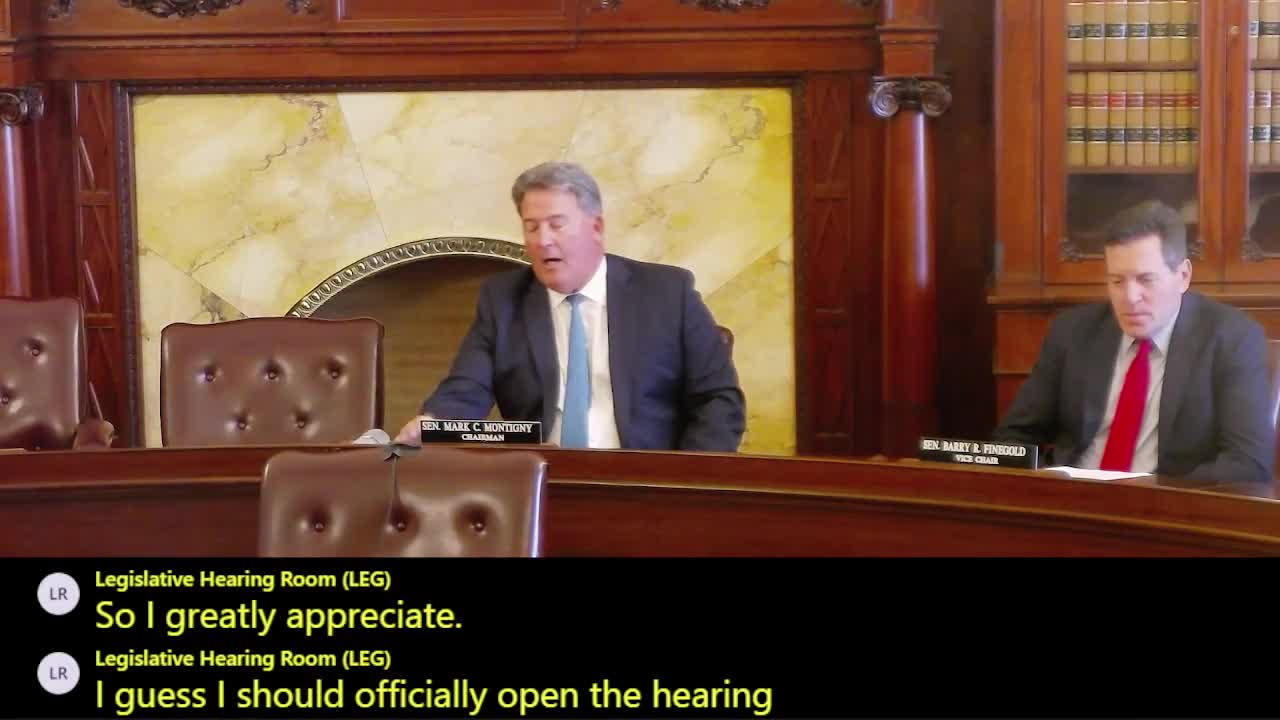
Senator Marc P. Montigny, who chaired the hearing, opened by saying he had asked two committees to take testimony jointly and emphasized the intent to move the issue forward. Dan McKernan, director of the Massachusetts Division of Marine Fisheries, outlined the state’s role and introduced the federal-management witnesses. Kate O’Keefe, executive director of the New England Fishery Management Council, explained how the council and NOAA Fisheries use stock surveys, catch reporting and rotational-area management to set annual catch limits under the Magnuson-Stevens Fishery Conservation and Management Act. She noted that the council in April 2024 voted to discontinue consideration of a specific plan to open the northern edge after staff and members found competing objectives that they could not reconcile.
O’Keefe described the 2025 management package currently in effect (Scallop Framework 39, effective April 1, 2025, through March 31, 2026) and said the council manages scallops annually using days-at-sea, rotational-area allocations and quota for the general-category fleet. She said about 300 vessels use dredge gear and that approximately 207 federal scallop permits are home-ported in Massachusetts. Projected fishery revenue for the 2025 fishing year is roughly $350 million, she said; statewide landings value in 2024 was about $260 million, down roughly 40% from 2021 highs.
UMass Dartmouth scientist Kevin Stokesbury described long-running industry–academic surveys funded in part by the Research Set-Aside (RSA) program and by industry donations. Stokesbury said surveys show recent ‘‘extreme recruitment’’ events: ‘‘There are about 24,000,000,000 scallops in our resource right now,’’ he told the committee, emphasizing that many of those animals are too small to be harvested with current dredge selectivity. He and other scientists warned that the fishery faces a mix of positive signs (greater abundance) and constraints (lower biomass because many scallops are small, higher natural mortality linked to predators and changing ocean conditions).
Industry advocates said opening selected portions of the northern edge of Georges Bank could relieve pressure elsewhere and produce new landings for New Bedford while protecting long-term resource health through rotation and timing restrictions. Jeruman Kavich, attorney for the Sustainable Scalloping Fund, urged the legislature to ‘‘support efforts to reevaluate access to Northern Edge under a framework that preserves environmental integrity while maximizing public benefit,’’ and he described the fund’s role in financing research and supporting industry stewardship. Captains and owners testified that the fleet’s economics have shifted: after management changes and higher catch rates, many vessels now fish far fewer days and face high fixed costs for dock space, maintenance and insurance.
Several witnesses pushed for narrowly tailored permit consolidation (sometimes called ‘‘permit stacking’’), limited to allowing up to two permits on a single vessel under existing ownership caps. Proponents said the change would let family-owned owners modernize and reduce unsafe practices tied to forced tethering and underused vessels; opponents and port representatives asked for safeguards to prevent outside investors or private equity from gaining control of permits. John Regan, representing the Port of New Bedford, reiterated the port’s economic weight: ‘‘The port in New Bedford is the top earning commercial port in the U.S. for the past 23 years,’’ he said, and urged preserving shore-side infrastructure and working waterfront access.
On the northern-edge question, council staff and scientists described the site as a Habitat Area of Particular Concern (HAPC) closed to gear capable of catching groundfish since 1994. Kate O’Keefe said the council considered the issue multiple times over many years and, when it pursued action during 2023–2024, staff concluded the alternatives produced tradeoffs in timing, area size and protection for juvenile cod, lobster and herring. The council ultimately discontinued the action in April 2024 because ‘‘the council had a fundamental conflict between optimal timing for scallop yield and the importance of the northern edge to other fishery resources,’’ O’Keefe said.
Committee members asked how the council could move faster and how state officials could help. O’Keefe said council work is prioritized annually and that the discontinued action could be reprioritized. Industry leaders pointed to recent collaborative science and to planned public engagement: the Sustainable Scalloping Fund will host a public event in New Bedford in September and a community outreach event called Scallapalooza in August.
Discussion remained sharply divided on the balance between protecting habitat and expanding access. Scientists stressed uncertainty in stock-assessment models, the role of changing ocean conditions and higher nonfishing mortality, and the time lag before small recruits reach harvestable size. Industry and port witnesses stressed the immediate economic strain on vessel owners, processors and shore-side businesses and asked for narrow, science-backed reforms (framework action, targeted timing and area restrictions, or a limited council amendment) rather than broad or permanent changes without safeguards.
No formal legislative votes were taken at the hearing. The committee gathered testimony and asked for follow-up information from council and scientific staff; witnesses agreed to continue engagement with senators and with the New England Fishery Management Council. The council’s prior vote to discontinue the northern-edge action (April 2024) remains the last formal management outcome on that specific proposal.
The hearing demonstrated the interplay of federal management (council/NOAA), state agency oversight and industry-led science. Senators signaled interest in staying engaged and in coordinating state-level input if the council reinitiates action or if NOAA seeks expedited decisions. The committee did not direct a specific policy change during the session but opened lines for further data sharing, local forums in New Bedford and continued review of the RSA-funded surveys and Framework 39 outcomes.
Ending: Committee members and witnesses identified next steps including written submissions to the committee, further briefings from council staff and scientists, public outreach events in New Bedford (public open house scheduled for Sept. 16; Scallapalooza on Aug. 14 mentioned by industry witnesses), and continued monitoring of Scallop Framework 39 through March 31, 2026. The council and NOAA retain statutory authority to approve any change to federal scallop management under the Magnuson-Stevens Act.