Get Full Government Meeting Transcripts, Videos, & Alerts Forever!
Get email alerts on the Blue Envelope Autism Safety topic
No spam. Unsubscribe anytime.
Senate codifies voluntary "blue envelope" program for drivers with autism and adds officer training requirement
Summary
The Senate ordered S.2558, the "blue envelope" bill facilitating safer interactions between police and people with autism spectrum disorder, to a third reading and passed it to be engrossed after adopting a training amendment. A proposed "yellow dot" amendment to extend a similar registry for older drivers with chronic illness was defeated.
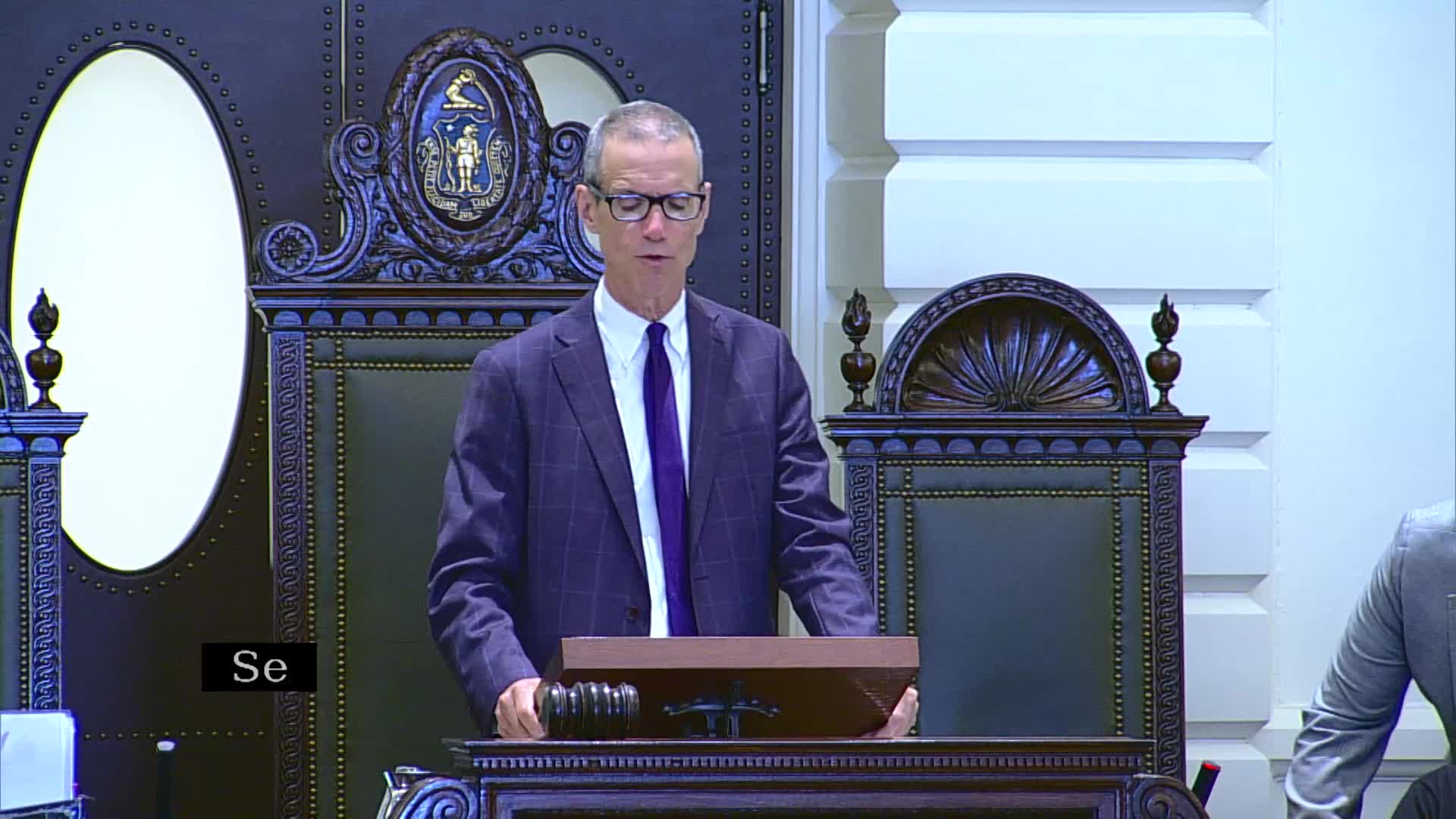
The Massachusetts Senate on Monday advanced S.2558, An Act facilitating better interactions between police officers and persons with autism spectrum disorder, ordering the bill to a third reading and passing it to be engrossed after adopting several amendments, including a requirement for in‑service training for law enforcement.
Sponsor Senator Ellen J. Comerford (identified in the transcript as Senator Commerford) said the bill — commonly called the blue envelope program — establishes a voluntary envelope that drivers or passengers with autism spectrum disorder (ASD) can place in their vehicle. The envelope holds licenses, registration and insurance cards and signals first responders to specific communication or sensory needs; the Massachusetts State Police implemented a similar program in April 2024, the sponsor noted. “We call this bill the blue envelope bill,” Senator Comerford said.
Why it matters: Advocates and lawmakers said the envelope helps de‑escalate roadside encounters and improves safety for neurodivergent people, particularly when officers are not trained to recognize differences in communication or behavior. Supporters pointed to more than 8,500 blue envelopes already distributed in Massachusetts via barracks and mailings.
Amendments and actions: Senator Moore offered an amendment requiring the Massachusetts Police Training Council to provide in‑service training for the blue envelope program; the amendment was adopted after a roll call. Senator Bruce E. Tarr (in the transcript: Patrick M. O'Connor? — see audit) offered a separate amendment to create a voluntary “yellow dot” program for drivers 62 and older with chronic illness (a similar registry previously reported to the Joint Committee on Transportation). The yellow dot amendment was defeated on a roll call (5 in favor, 34 opposed). The underlying ways and means amendment and subsequent amendments were adopted and the bill passed to be engrossed; the final roll call recorded 39 affirmative votes and none opposed.
Discussion versus decision: Floor debate included explanations of the program’s voluntary nature, references to state police pilot implementation, and advocacy testimony cited by the transportation committee; the chamber formally adopted the Moore training amendment and rejected the yellow dot expansion as a floor amendment.
What happens next: The Senate passed the measure to be engrossed; additional legislative steps (final passage, House concurrence, or governor action) are not recorded in the transcript.
Implementation notes: The adopted language requires coordination between the Registry of Motor Vehicles, the Massachusetts State Police, autism advocacy organizations and the Massachusetts Police Training Council to make the envelopes available and to provide officer training. The transcript references The Arc of Massachusetts, Advocates for Autism in Massachusetts, Chief John Paciorek (Deerfield), and Chief Parham (UMass Amherst) as supporters of implementation.
— End —