Get Full Government Meeting Transcripts, Videos, & Alerts Forever!
Get email alerts on the Forest Reserves topic
No spam. Unsubscribe anytime.
State seeks to double conservation pace; aims for 10% passive forest reserves but currently at about 3%
Summary
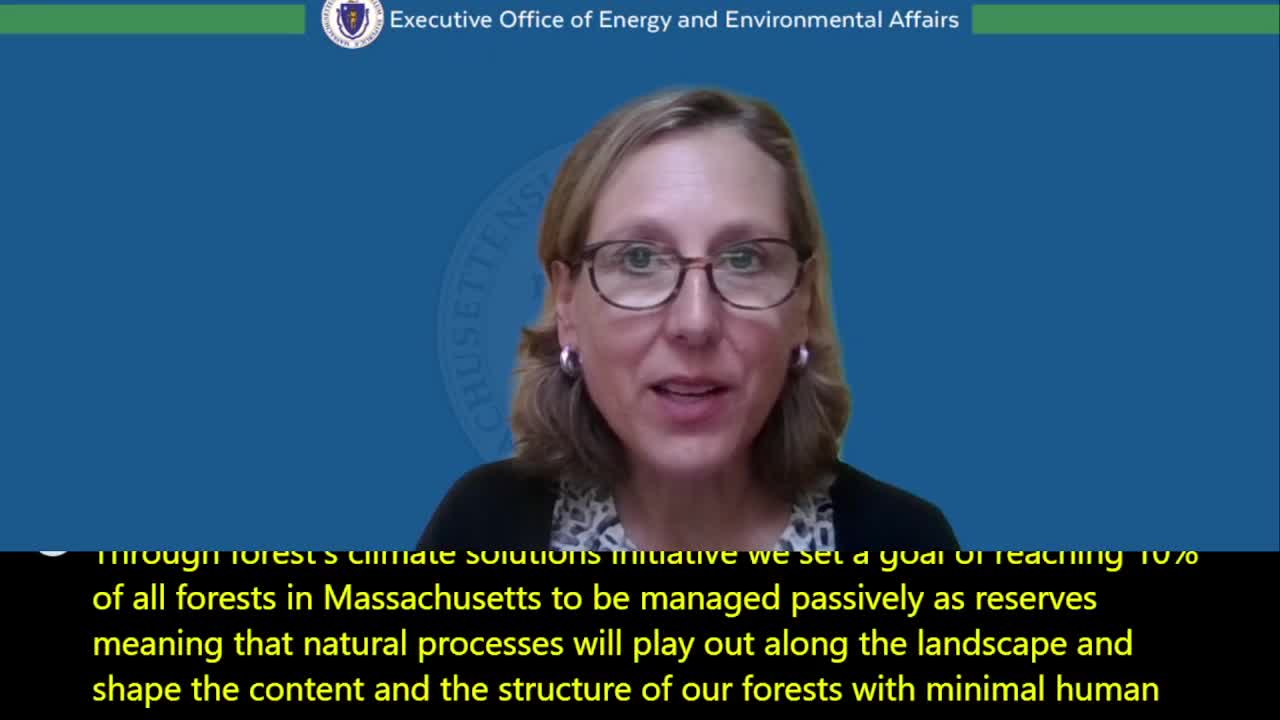
EEA said the state presently has about 3% of forest acreage managed as passive reserves and set a goal to reach 10% of forestland under passive management, while new guidelines and incentives aim to improve forest carbon storage and resilience.
EEA described a multifaceted approach to forest climate solutions that includes protection, stewardship incentives for private forest landowners, new climate‑oriented guidelines for state land stewardship and a target to manage 10% of Massachusetts forests passively as reserves. Undersecretary Stephanie Cooper said the Commonwealth is at about 3% passive reserve coverage today and is reviewing state holdings to identify candidate reserve lands.
The nut graf: The administration told the committee it is pursuing both protection and active management where warranted, and the Mass Ready Act includes a provision to codify the process for designating — and if necessary de‑designating — forest reserves on state lands, with oversight roles for agency boards and stewardship councils to provide durability to reserve decisions.
Cooper said the Forest Climate Solutions initiative has adopted new guidelines to advance both carbon sequestration and climate resilience on state lands. She described a climate stewardship incentive program to help private forest owners undertake stewardship practices that retain soil carbon and improve long‑term sequestration. Cooper said last year EEA awarded more than $4,000,000 in grants to protect more than 1,200 acres of forest reserves on municipal and land‑trust lands.
On logging and harvest levels, Cooper and Fish and Game Commissioner Tom O’Shea said active timber harvesting on state forested lands averages about one‑half of one percent per year. They described harvesting practices that aim to remove non‑native plantations or stands that crowd out more diverse, resilient forest types; timber in those projects is bid to contractors and the timber is processed through markets per usual practice.
Ending: The bond bill would codify a reserve designation process intended to balance permanence and the ability to adjust reserve boundaries when justified; the administration said it sought oversight by agency boards to avoid unilateral, short‑term designations or reversals.