Get Full Government Meeting Transcripts, Videos, & Alerts Forever!
Get email alerts on the Northern Edge Access topic
No spam. Unsubscribe anytime.
Lawmakers, council and scientists weigh limited access to Northern Edge of Georges Bank
Summary
Federal and state fishery managers, scientists and lawmakers debated whether to allow limited scallop fishing on the Northern Edge of Georges Bank, a long-closed, high‑productivity area the New England Fishery Management Council previously decided not to open because of habitat and ecosystem trade‑offs.
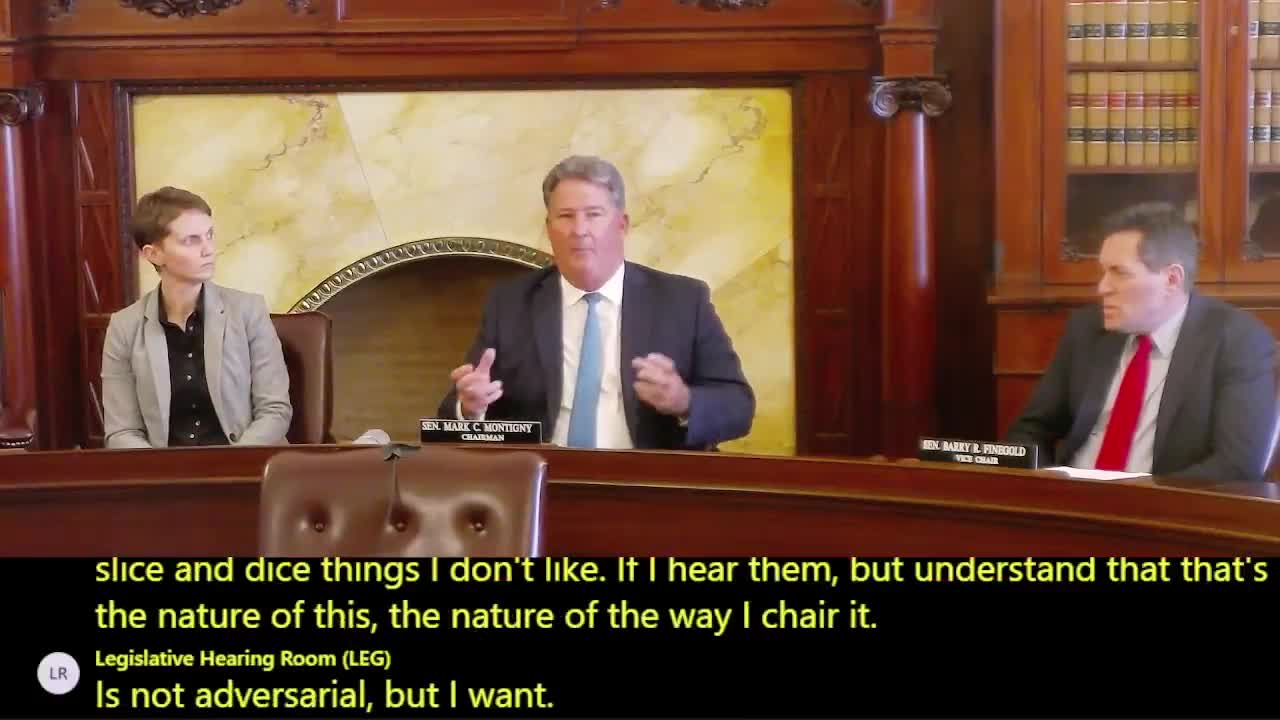
Senator Mark Montigny, who chaired a joint hearing of two Senate committees, pressed regulators and scientists on reopening a small portion of the Northern Edge of Georges Bank to scallop harvest, saying, “Like, I'm looking to find out why we haven't opened these grounds long ago.”
The Northern Edge is a portion of Georges Bank that has been closed to gear capable of catching groundfish since 1994 and is designated a habitat area of particular concern (HAPC). Proponents say the area holds dense scallop populations that could relieve fishing pressure elsewhere; opponents and council staff cited trade‑offs with juvenile Atlantic cod, American lobster and Atlantic herring habitat that contributed to the New England Fishery Management Council’s April 2024 vote to discontinue action to open it.
Why it matters: New Bedford and other Massachusetts ports depend heavily on scallop landings; opening a portion of the Northern Edge could shift fishing effort, revenues and the distribution of harvest. The decision requires balancing scallop yield, habitat protection and other species’ productivity under federal law and the council’s management process.
Dr. Kate O’Keefe, executive director of the New England Fishery Management Council, told the committee the council prioritized consideration of the Northern Edge in 2023 and worked on a joint action with the council’s habitat plan. “The council decided that they had a difficult time identifying appropriate areas and seasons,” she said, and cited a “fundamental conflict between optimal timing for scallop yield and the importance of the northern edge to other fishery resources.” O’Keefe said the alternatives considered became geographically small because larger openings would have required mitigation such as offset closures elsewhere.
University of Massachusetts Dartmouth scientist Kevin Stokesbury described long‑running industry–academic surveys that show the Northern Edge is “extremely productive” for scallops and said the area has been filmed repeatedly since 1999. He told the committee that, biologically, “it is one of the best fishing ground in the world for scallops,” but acknowledged that decisions about opening it are management choices that trade off habitat protection and scallop yield.
Several senators and industry representatives urged a narrowly tailored approach that could use the council’s framework procedures or rotational measures — short seasonal openings combined with area closures — to limit habitat effects while spreading fishing effort. O’Keefe said the council’s strategic planning and visioning process, which gathered industry input from Maine to Philadelphia, kept the issue alive and could lead to reprioritization of an action to reopen parts of the Northern Edge.
No formal council or legislative action to reopen the Northern Edge was adopted at the hearing. The council previously voted in April 2024 to discontinue the formal action after staff analysis showed unresolved conflicts among objectives.
The committee asked council and academic staff to stay in touch as the council completes its scallop strategic plan; senators expressed interest in participating in future council priority discussions.
The transcript includes discussion of science, habitat designations and council process; the hearing did not produce a statutory change or a new management measure.
Looking ahead: Council staff said the discontinued action could be reprioritized in the council’s annual priority‑setting process and revisited if the council chooses to reopen development of a framework or amendment.