Get Full Government Meeting Transcripts, Videos, & Alerts Forever!
Get email alerts on the Cannabis Regulation topic
No spam. Unsubscribe anytime.
House advances broad overhaul of Massachusetts cannabis law, tightens rules for hemp products
Summary
The Massachusetts House voted to pass House Bill 4187, a comprehensive rewrite of cannabis regulation that restructures the Cannabis Control Commission, expands license and ownership options for businesses, removes a medical vertical requirement and bans certain unregulated consumable hemp products; multiple amendments were adopted unanimously.
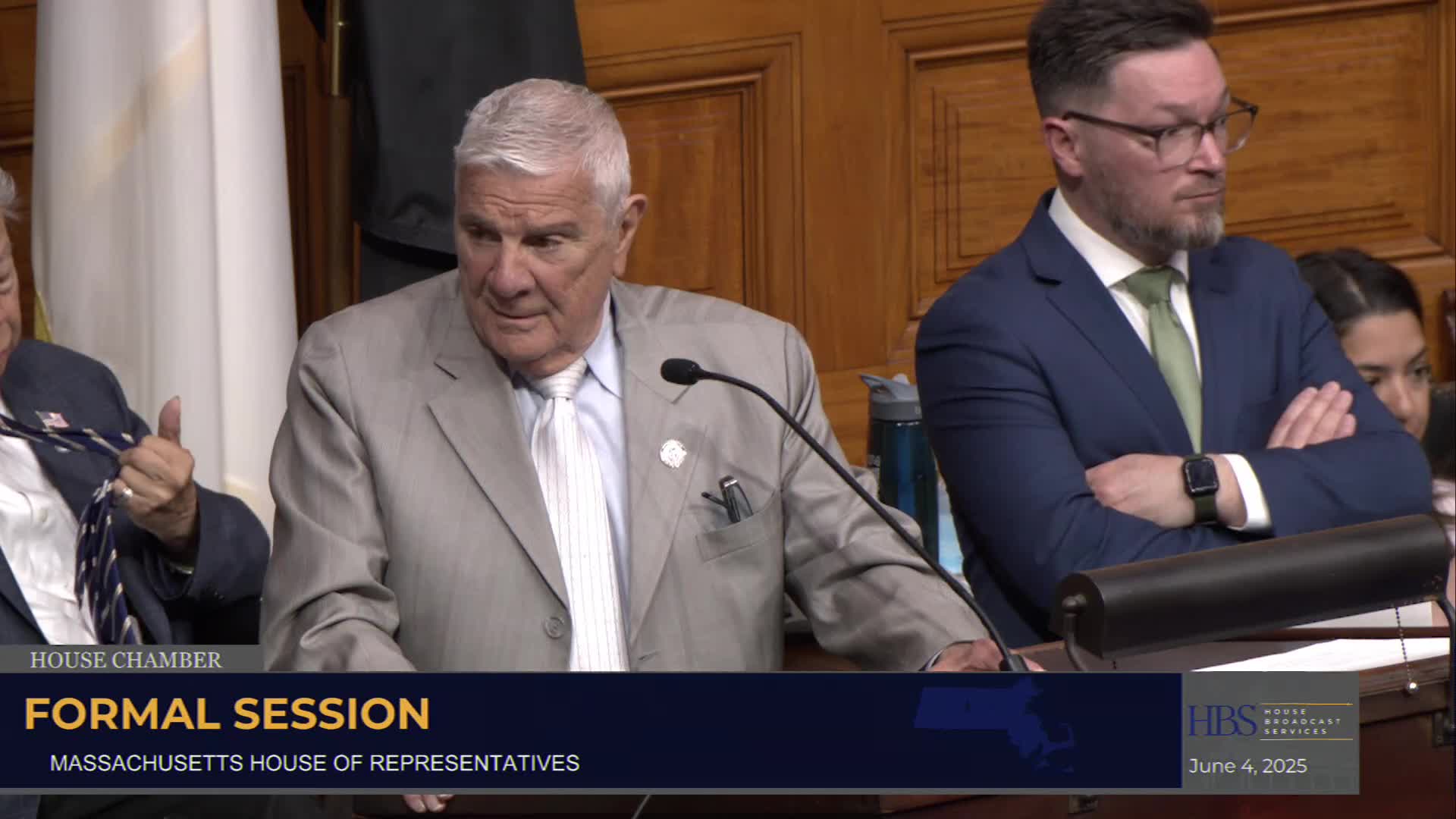
The Massachusetts House on a voice and roll-call series of votes passed House Bill 4187, “An act modernizing the Commonwealth’s cannabis laws,” sending the measure to be engrossed after adopting several amendments that narrow and clarify how hemp and CBD products will be regulated.
The bill restructures the Cannabis Control Commission (CCC), reduces the number of commissioners from five to three with a full-time chair, shifts appointing authority to the governor, and makes the chair responsible for overseeing the executive director. It also changes market rules for license caps and ownership, alters medical marijuana licensing, and bans certain unregulated consumable hemp products while creating a new regulatory path for federally permitted hemp beverages.
Proponents say the measure aims to improve accountability at the CCC, support social-equity and small cannabis businesses as the market matures, and protect public health from intoxicating hemp products sold outside the regulated system. Representative Donahue of Worcester, who led debate for the bill, said the measure is intended to "retool the CCC" and to address the proliferation of unregulated, consumable hemp products across the Commonwealth.
Key provisions adopted in debate include increasing the retail license cap for marijuana establishments from 3 to 6 over a phased period, raising the allowable ownership stake for an individual or entity from 10% to 35%, and exempting employee-owned business trusts from the license cap. The bill also eliminates the strict vertical integration requirement for medical marijuana treatment centers; the bill directs the CCC to create new medical license types that would be limited exclusively to social-equity businesses for terms of at least 36 months. The bill directs the CCC to study use patterns among minors and adults, impaired-driving incidence, hospitalization related to marijuana, and economic factors such as appropriate license counts and potential oversupply.
On hemp and CBD, sponsors said federal changes under the 2018 Farm Bill created a loophole that allowed intoxicating hemp products to enter the market outside state regulation. The bill bans the sale of unregulated consumable intoxicating hemp products, proposes a new regulatory framework for federally allowable hemp beverages and CBD consumables requiring production under a federally mandated hemp program and certificates of analysis, and limits hemp beverage sales to Alcoholic Beverages Control Commission retailers. Representative Donahue said the changes will "remove those which are unregulated of unknown origin or composition and too easily accessible to minors."
Amendments adopted on the floor included Representative Giannino of Rivera’s amendment narrowing a proposed ban on hemp beverage sizes from 11 ounces to 7.5 ounces; the amendment passed by roll call, 153–0. Representative Day (Stoneman) offered an amendment requiring out-of-state tested product to be certified by a laboratory “certified in good standing with the commission;” that amendment passed by roll call, 154–0. Additional amendments from Representatives Dave Stoneham, Duffy of Holyoke and Gonzalo Boston were also adopted by voice votes or unanimous consent during floor debate.
Votes at key moments: amendment 29 (Giannino) adopted 153–0; amendment (Day) requiring Massachusetts-certified lab verification adopted 154–0; multiple subsequent amendments adopted by voice vote; final passage to be engrossed recorded as 153–0.
Supporters framed the bill as both a public‑health and market‑stability measure that also advances the legislature’s social‑equity goals in cannabis policy. Representative Duffy of Holyoke said the reforms would help communities disproportionately affected by the war on drugs take advantage of new economic opportunities, while other members emphasized testing standards, consumer safety and transparency.
The bill now goes forward in the legislative process to be engrossed and later considered for final passage and transmission to the Senate. No implementation dates or effective dates were specified on the House floor; those details will depend on the final enrolled legislation and any conference actions.