
Senate Appropriations Committee reports FY2026 military construction, VA bill, including $153.5 billion discretionary package
Get AI-powered insights, summaries, and transcripts
Subscribe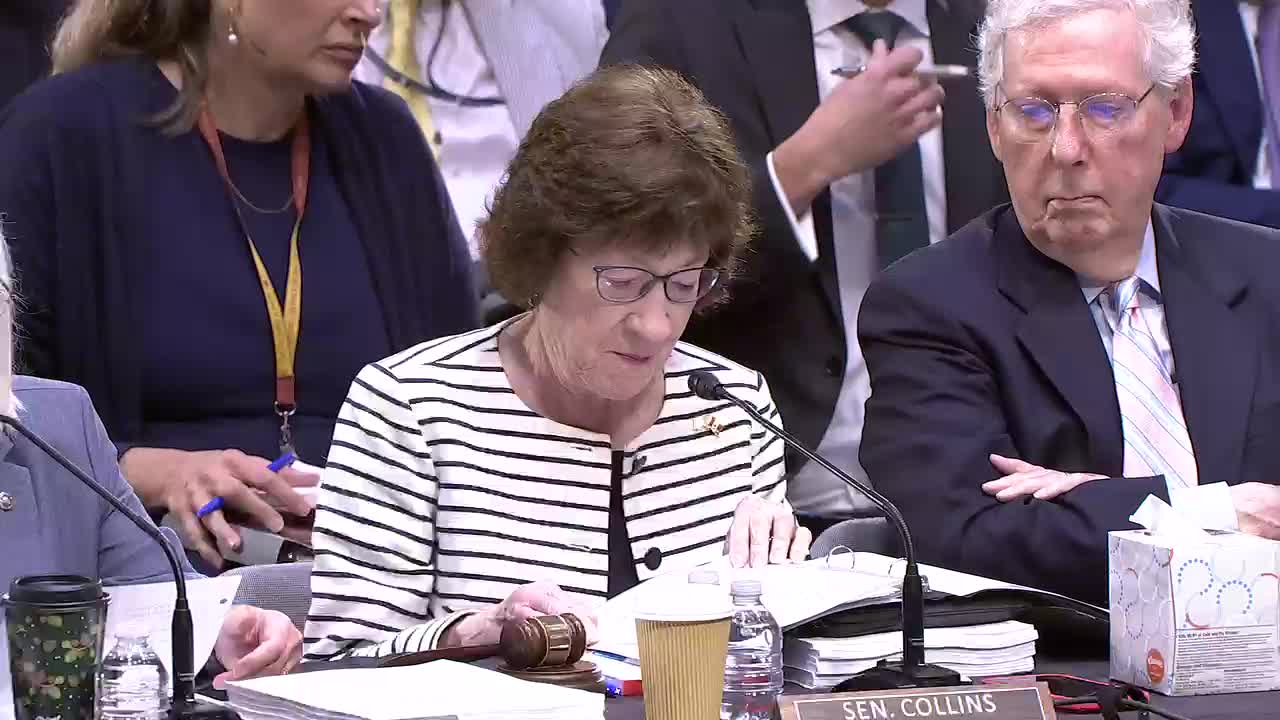
Summary
The Senate Appropriations Committee on Wednesday voted to report HR 3944, the fiscal 2026 Military Construction, Department of Veterans Affairs, and related agencies appropriations bill, moving the measure to the Senate floor for further amendment and consideration.
The Senate Appropriations Committee on Wednesday voted to report HR 3944, the fiscal 2026 Military Construction, Department of Veterans Affairs, and related agencies appropriations bill, moving the measure to the Senate floor for further amendment and consideration. Chair Collins presided and Vice Chair Murray moved the committee to report the House-passed bill with an amendment in the nature of a substitute; the motion was agreed to on a roll-call vote the clerk announced as 25 ayes and 3 nays.
The bill packages discretionary funding for military construction and veterans programs and, according to subcommittee leaders, combines $153,500,000,000 in discretionary spending for the bill's accounts. Subcommittee Chair Boseman said the Department of Veterans Affairs would receive $133,300,000,000 in discretionary funds under the measure; combined with $49,800,000,000 from the toxic exposures fund, veterans medical care would total $163,600,000,000 for fiscal 2026, the subcommittee statement said. The bill also provides funds to military construction and family housing, related agencies and mandatory veterans benefits.
Why it matters: Committee members said the bill funds VA health care, mental-health and suicide-prevention programs, veterans benefits and roughly 300 construction projects for military family housing and child development centers. Committee remarks emphasized investments for rural and women's health programs, toxic-exposure accounts, homelessness prevention and medical research.
What the bill funds and committee statements: Subcommittee leaders described targeted amounts within the bill: $698,000,000 for outreach related to suicide prevention; $342,000,000 for the Office of Rural Health; $18,900,000,000 for mental-health programs; $5,300,000,000 for veterans homelessness prevention; $943,000,000 for medical research; and mandatory veterans benefits described in committee remarks as $253,600,000,000. The managers' package and subcommittee summary also listed advance appropriations for certain accounts in fiscal 2027.
Amendments and debate: The committee adopted a manager's package by unanimous consent before the roll call. Senator Merkley's Veterans Equal Access amendment, permitting doctors in states where cannabis is legal to discuss it with veteran patients, was agreed to by voice vote. Senator Murphy offered an amendment that would have required the VA to report aggregate counts of suicides among veterans adjudicated mentally incompetent by the VA; after roll-call debate the clerk announced 14 ayes and 15 nays and the amendment failed. Several speakers, including Vice Chair Murray and Senator Reid, urged more data and attention to veteran suicide during debate; proponents argued the reporting requirement would preserve privacy while yielding aggregate metrics.
Procedure and context: Chair Collins and Vice Chair Murray framed the markup as a member-driven, bipartisan product reflecting hundreds of requests submitted by senators. Murray and other Democrats repeatedly criticized a partisan rescissions package passed elsewhere and warned it threatened future bipartisan appropriations work; several Republicans said the committee must continue to focus on advancing bills to the floor.
Votes at a glance: The motion to report HR 3944 (manager's package; subject to amendment on the floor) was agreed to on the committee roll call with the clerk announcing 25 ayes and 3 nays. The Murphy reporting amendment failed, 14 ayes to 15 nays. The Merkley Veterans Equal Access amendment passed by voice vote; the manager's package was adopted without objection.
What's next: The bill will proceed to the Senate floor with a Senate amendment in the nature of a substitute and remain subject to additional amendment on the floor and in follow-on committee consideration if senators offer germane changes. Committee leaders said the majority leader has signaled intent to bring reported bills to the floor.
Ending note: Committee leaders repeatedly called for bipartisan cooperation to advance appropriations on schedule; several senators warned that executive-branch rescissions could undercut the committee's bipartisan agreements and complicate future negotiations.