
Senate committee presses for timely reauthorization and technology upgrades to U.S. Grain Standards Act
Get AI-powered insights, summaries, and transcripts
Subscribe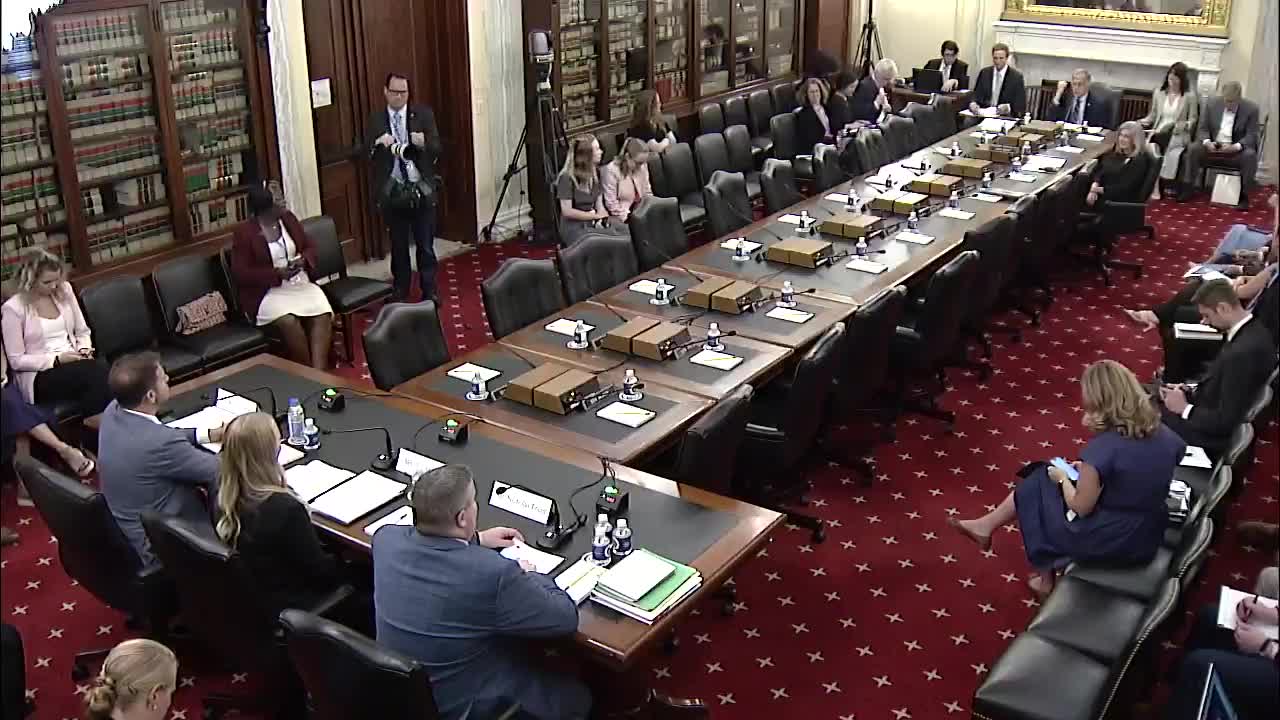
Summary
Witnesses and senators told the Senate Committee on Agriculture, Nutrition, and Forestry that reauthorizing the U.S. Grain Standards Act before its September expiry is critical to maintaining international buyer confidence, and urged Congress to fund and authorize modernization of Federal Grain Inspection Service tools and emergency-waiver rules.
The Senate Committee on Agriculture, Nutrition, and Forestry convened a hearing to consider reauthorizing the U.S. Grain Standards Act, which witnesses said is set to expire in September and underpins official inspection and weighing of U.S. grain exports.
The hearing drew testimony from industry and inspection representatives who urged Congress to modernize inspection technology, clarify emergency-waiver authority, and strengthen the advisory process that informs the Federal Grain Inspection Service (FGIS). “The U.S. grain inspection system has long set a global benchmark for quality and reliability,” said Nick Friant, director of raw material quality and regulatory at Cargill and chairman of the National Grain and Feed Association’s grain grades and weights committee.
The statute’s role and why it matters
Witnesses described the official USDA inspection certificate as the commercial foundation for U.S. grain trade. Kia Mickish, president of the American Association of Grain Inspection and Weighing Agencies and vice president of North Dakota Grain Inspection, told the committee that the export-inspection mandate “underlies official inspection, but it also allows a uniform voluntary inspection system to provide trust in U.S. grain.” Senators and witnesses said that without timely reauthorization, international buyers could lose confidence and that would damage market access for farmers and exporters.
What witnesses asked Congress to do
- Invest in modernization: Industry and inspection-agency witnesses urged Congress to authorize FGIS to accelerate research, development, validation and deployment of modern grain-grading technologies (for example, visual imaging) to improve speed, objectivity and consistency and to relieve reliance on manual grading.
- Clarify authorities and funding: Witnesses recommended statutory language to permit FGIS and official agencies to engage flexibly in research and development (including other-transactions authority), and to create a modest dedicated funding account combining user fees and appropriations to pilot and validate new technologies.
- Strengthen contingency rules: The National Grain and Feed Association urged clearer emergency-waiver authority so FGIS can issue conditional waivers in a transparent, predictable way during natural disasters or force majeure events, provided buyer and seller voluntarily agree and the waiver does not undermine the act’s objectives.
- Preserve advisory continuity: Senators and witnesses discussed delays in appointing members to the Grain Inspection Advisory Committee and suggested mechanisms to maintain continuity (for example, allowing members to remain until replacements are appointed).
Examples and background raised in testimony
Speakers highlighted several concrete examples to show the system’s function and limits. Brandon Wipf, a South Dakota soybean farmer and board member of the American Soybean Association, described how official grades affect prices at the elevator and recalled FGIS’s multi‑stakeholder process that removed “soybeans of other color” (SBOC) as a grade‑determining factor in a July 2023 final rule after study and industry consultation. Kia Mickish and other witnesses said inspection still relies on largely legacy technology and a shrinking pool of trained human graders; Mickish said that has made the system a bottleneck as loading rates and port activity speed up.
Senators’ questions and committee context
Committee members pressed witnesses on practical consequences if the act lapsed: loss of confidence by international buyers, impaired price discovery, and disruption to the futures markets that U.S. producers and traders use to hedge risk. Senator Hyde‑Smith cited recent national trade figures during her remarks, saying overall agricultural trade is projected to shift while grain and oilseeds remain a strong export sector; she contrasted a projected $49,000,000,000 agriculture deficit for 2025 with an asserted $65,000,000,000 surplus for grain and oilseeds (as stated in the hearing record).
Witnesses also discussed related operational topics: the rise of on‑farm storage that changes when grain arrives at elevators, the frequency of laboratory mycotoxin testing (aflatoxin, vomitoxin and others) and limits on pesticide residue testing at origin. Witnesses agreed that modernization and clearer statutory tools would help inspectors keep pace with faster loading and variable port volumes.
Next steps and procedural notes
No formal committee action or vote occurred at the hearing. Witnesses said they stand ready to work with the committee and USDA; Chairman Bozeman said the committee will work with Ranking Member Klobuchar and USDA staff toward a bipartisan reauthorization. The hearing record was left open for five business days, and the committee indicated it will continue engagement with USDA officials, including a planned session with the Deputy Secretary referenced in the hearing.
Ending
Committee members and witnesses framed reauthorization and targeted statutory changes as urgent to preserve export market confidence and to enable FGIS and its official partners to pilot and validate new technology without disrupting the credential that supports U.S. grain trade worldwide.