
Senate hearing probes USDA plan to move 2,600 headquarters jobs to five regional hubs
Get AI-powered insights, summaries, and transcripts
Subscribe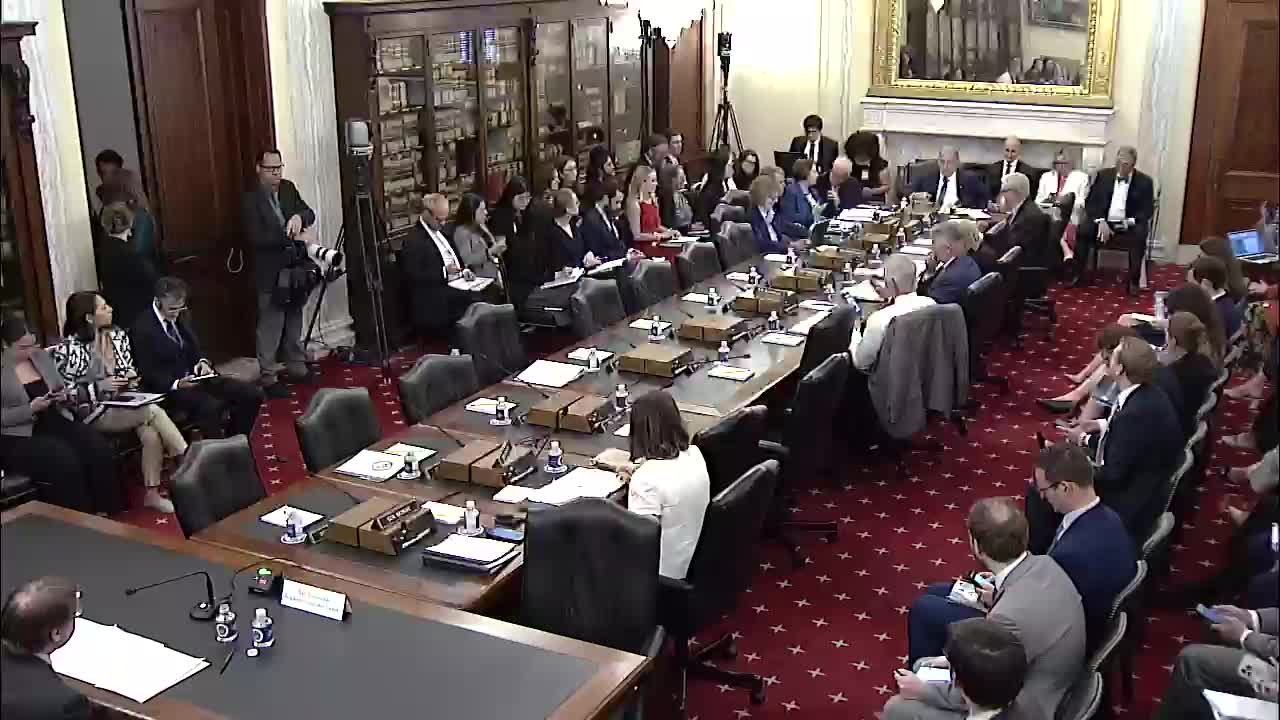
Summary
Chairman Bozeman convened the Senate Committee on Agriculture, Nutrition, and Forestry to review the USDA’s proposed relocation of about 2,600 National Capital Region employees to five regional hubs.
Chairman Bozeman convened the Senate Committee on Agriculture, Nutrition, and Forestry on short notice to review the Department of Agriculture’s reorganization proposal and to question how it will affect services to farmers, ranchers and rural communities.
The central element of the proposal, Deputy Secretary Stephen Vaden told the committee, is “relocating 2,600 employees from the National Capital Region to 5 hubs around the country.” Vaden said the move is intended to reduce costs, improve service by putting more employees closer to the field and to address a congressional requirement on building occupancy. “Not a single one of USDA's buildings in the National Capital Region meet this congressionally mandated 60% occupancy rate,” he said, citing the USE IT Act as the legal driver for consolidation.
Why it matters: senators on both sides endorsed the goal of strengthening USDA’s field presence but pressed for details on how the plan would affect programs that deliver emergency farm aid, wildfire response, nutrition assistance and research. Ranking Member Senator Amy Klobuchar called the plan “half baked,” raised concerns about earlier relocations that produced service disruptions, and urged protection of USDA’s boots-on-the-ground capacity. Vaden said the memorandum is a first step and that a 30-day consultation period will follow before implementation.
Most contested elements - Scope: Vaden said the department has 4,754 facilities where employees report to work and that the secretary’s plan proposes vacating four National Capital Region sites. He framed that choice as compliance with the USE IT Act’s 60% occupancy requirement. - Timeline and process: Vaden said the department will honor the statutory 30‑day consultation period, will consult with mission areas and General Services Administration on available real estate in hub regions, and will publish a phased implementation timeline after those discussions. - Savings claims: the department estimated net savings of roughly $4 billion driven by reduced headcount costs, deferred-resignation savings (about $1.9 billion net) and an estimated $2.2 billion in deferred maintenance liability avoided by vacating four capital‑region buildings.
Wildfire and Forest Service issues: several senators pressed Vaden about wildfire response and the Forest Service. He said the secretary’s memorandum protects the Forest Service fire lab and that Forest Service fire assets were explicitly considered when selecting Fort Collins and Salt Lake City as hubs. Vaden also acknowledged the administration’s budget proposal to centralize federal wildland firefighting capabilities, a separate—ongoing—proposal pending congressional consideration.
Next steps and oversight: Vaden said the memorandum contains built‑in flexibility and that he has delegated authority to adjust the plan as consultation proceeds. Multiple senators requested written analyses and impact assessments on program delivery, personnel effects, and disparate impacts; Vaden committed to follow‑up briefings and to provide additional information during the consultation period.
Ending: The committee left the hearing record open for additional written questions and materials; no votes or formal committee actions were taken at the hearing.