Controlling Board approves Attorney General software renewals amid questions over sole-source waivers
June 02, 2025 | State Controlling Board, Joint, Committees, Legislative, Ohio
This article was created by AI summarizing key points discussed. AI makes mistakes, so for full details and context, please refer to the video of the full meeting. Please report any errors so we can fix them. Report an error »
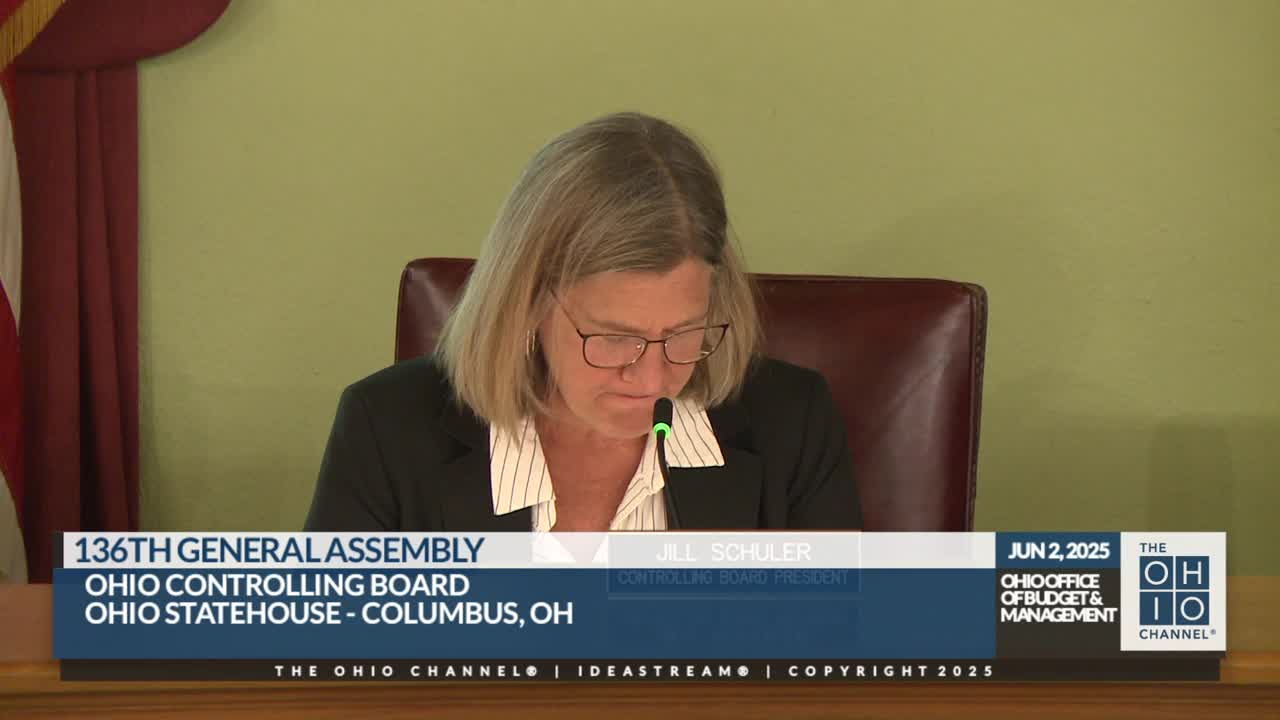
Sen. Kirk Wilkin held items 2, 3 and 5 to ask whether the contracts were sole source and what the agency planned after the current terms end. A representative of the Attorney General's Office told the board the offender-watch system is a sole-source commercial off‑the‑shelf product used to manage arson, violent and other offender notifications and registrations. “This is the third year of a three‑year contract,” the agency representative said about item 2.
The agency said its time‑and‑tracking product for managing outside counsel assignments and billing (item 3) is a two‑year contract and that it previously attempted to find alternatives by issuing competitive solicitations twice without success. For the state's legacy debt‑collection system (item 5), the office said the 18‑month extension is intended to allow data migration from the decades‑old system to a successor product that was selected in 2019–2020.
Why it matters: lawmakers pressed the office to explain how sole‑source renewals protect taxpayers and whether future procurements would seek competition. Sen. Wilkin asked, “How do we know come 2026 that there's not another vendor out there that's better, cheaper?” The agency responded it intends to put the systems out to bid for the 2028–29 biennium but cited implementation and migration costs as reasons for short extension windows now.
Discussion vs. action: the board took formal action to approve the three items after the Attorney General's Office explained the technical and continuity reasons for each waiver. There were no recorded roll‑call votes; approvals were announced by voice.
What’s next: the Attorney General's Office told the board it plans competitive procurements for successor systems in the next biennium and that some contracts include clauses making execution contingent on appropriations in the next budget.
View the Full Meeting & All Its Details
This article offers just a summary. Unlock complete video, transcripts, and insights as a Founder Member.
30-day money-back guarantee
Sponsors
Proudly supported by sponsors who keep Ohio articles free in 2025

