Get Full Government Meeting Transcripts, Videos, & Alerts Forever!
Get email alerts on the Utility Liens Landlord Liability topic
No spam. Unsubscribe anytime.
Property owners urge end to municipal utility lien practice in testimony on Senate Bill 118
Summary
Multiple housing providers and industry representatives testified in favor of Senate Bill 118, which would bar municipal utility corporations from certifying tax liens against property owners for unpaid tenant utility charges and would create complaint and appeal processes for disputed charges.
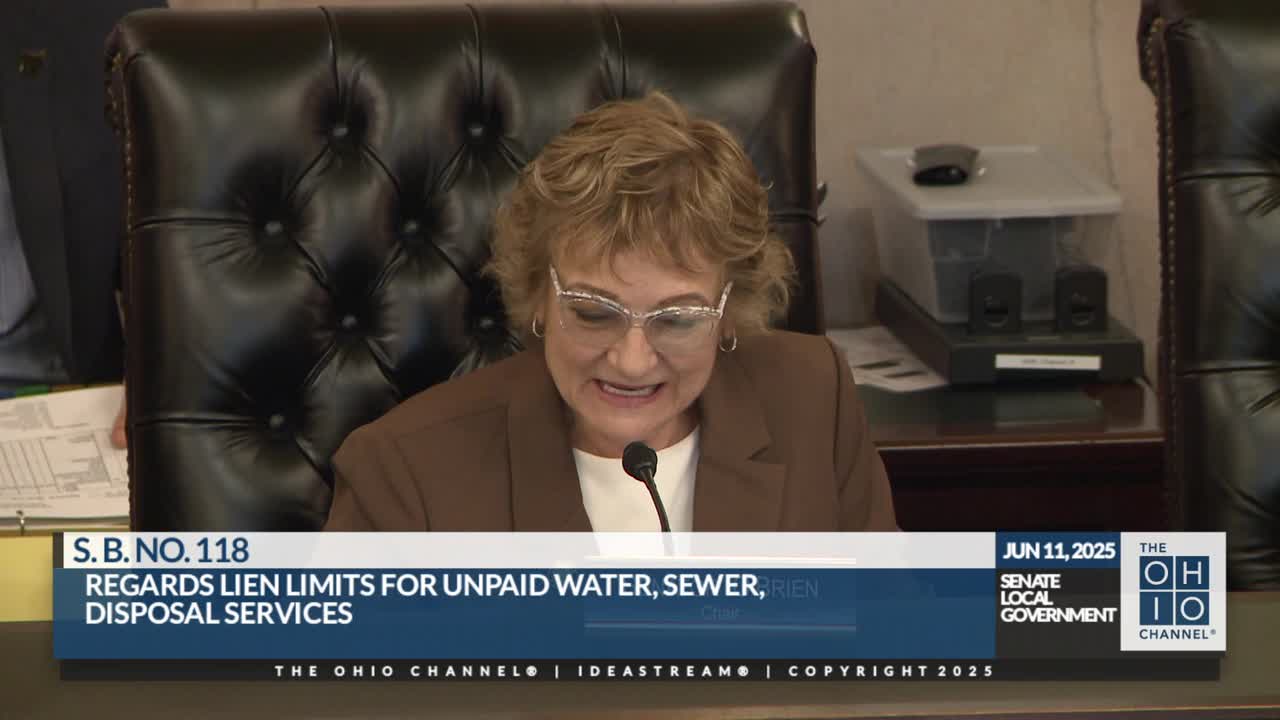
The Senate Local Government Committee held a second hearing on Senate Bill 118, a proposal to limit municipal utility corporations’ ability to certify property tax liens for unpaid tenant utility charges and to create an appeals process for disputed municipal service bills.
Deborah Collins, administrator of the Ohio Real Estate Investors Association, told the committee that municipal utilities “can place liens on property owners for unpaid tenant utility bills, sometimes without prior notice and regardless of who was actually responsible for that debt,” and described SB 118 as a “straightforward and necessary correction.”
Several housing providers gave similar testimony. Devin Woolwind said municipal utilities “expect an entirely separate third party to pay” when residents do not pay, comparing the practice to making landlords pay another person’s credit‑card debt. Eric Wolwind described receiving a water bill for $1,072.20 that he said he never agreed to pay and said municipal utilities sometimes refused to shut off service even when bills were delinquent.
Dan Acton, director of government affairs for the Ohio Real Estate Investors Association, said SB 118 would create a rebuttable presumption preventing certification of liens for amounts “exceeding the termination amount” when the owner did not contract for the service, and would establish complaint and appeal procedures, including potential appeals to municipal or county court for disputed amounts above $300.
Witnesses told the committee municipal utility practices vary by jurisdiction: some municipalities allow accounts to go unpaid for months before action, and witnesses said municipal utilities often do not charge deposits or track tenant payment histories. Committee members asked whether landlords could address the problem through lease terms, deposits, or eviction; witnesses said those remedies are limited in practice because eviction is slow, deposits are often legally capped, and municipal utilities may not terminate service during occupancy or winter months.
No committee vote was taken. Witnesses urged passage of SB 118 to restore accountability to consumers and municipal utilities and to protect small landlords operating on thin margins.