Get Full Government Meeting Transcripts, Videos, & Alerts Forever!
Get email alerts on the Legislative Rules topic
No spam. Unsubscribe anytime.
House approves conference report adopting new joint rules to speed and publicize legislation
Summary
The Massachusetts House accepted a conference committee report that sets new joint rules for the 2025–26 legislative session, imposing deadlines for committee action, expanding public notice and remote participation, and requiring more transparency; the measure passed by roll call, 147–2.
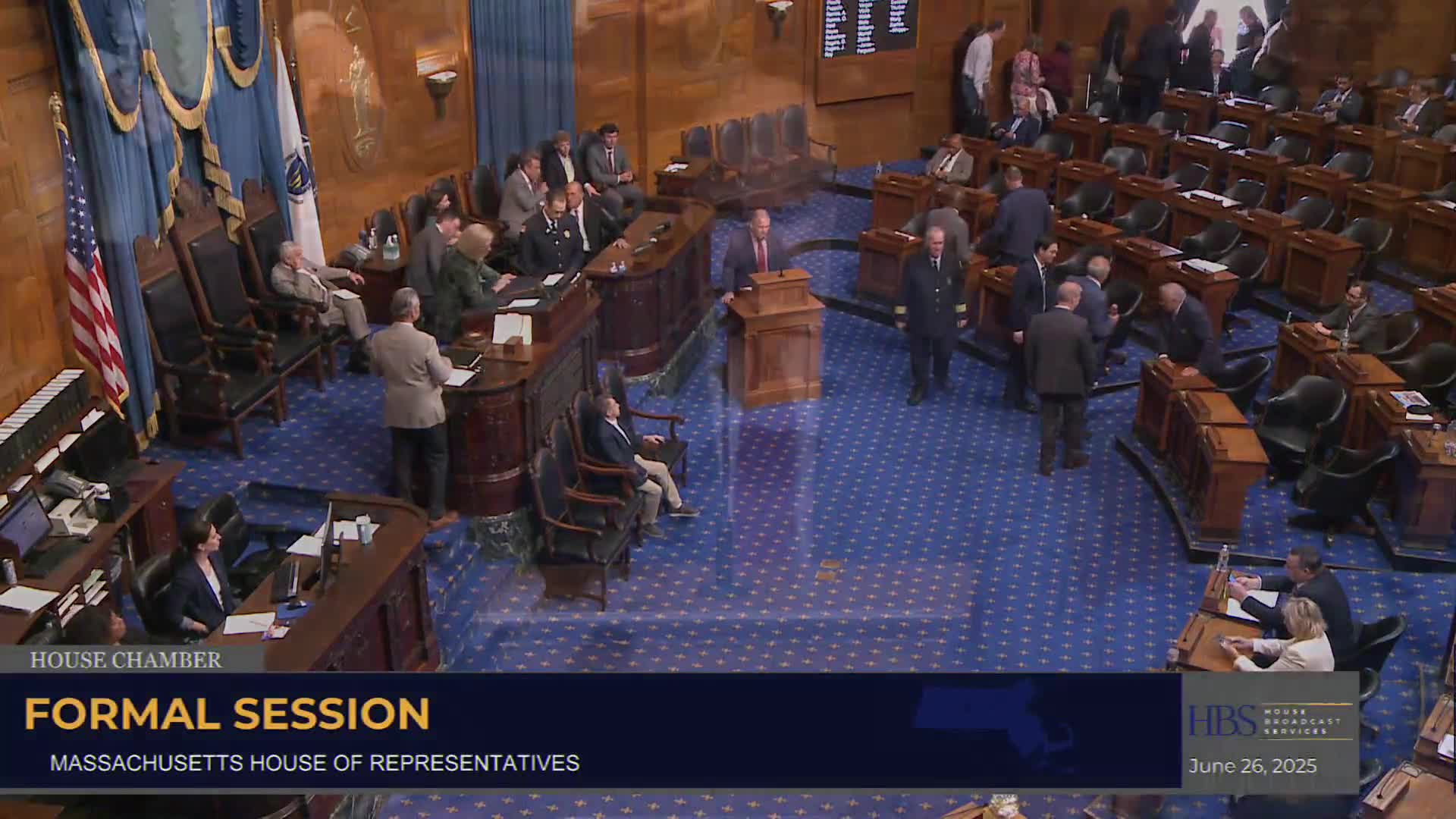
The Massachusetts House of Representatives voted to accept a conference committee report adopting a package of joint rules for the 2025–26 legislative session, approving the report by a roll-call vote of 147 in favor and 2 opposed during a session at the State House.
The rules change package, tied to Senate No. 2545, imposes new deadlines for committees, expands public notice and remote participation, and requires posting of committee votes and bill summaries online. Representative Michael J. Moran of Brighton urged colleagues to support the package, saying, "I ask that my colleagues join me in voting yes on this conference committee report." The House then directed a recorded vote; the conference report was accepted.
Supporters said the package is intended to modernize and streamline the legislative process and increase transparency. "These changes will also streamline the joint legislative process to remote legislative efficiency," a speaker listed in the record said, describing provisions that include longer public notice periods for hearings, mandatory committee hearings in many cases, posting committee votes online and live-streaming and archiving hearings on the General Court website. The rules also require committees to vote on bills originating in their branch within 60 days of being heard, with a 30-day "safety valve" extension available to chairs and further extensions subject to approval by the branch seeking the extension.
Other specific provisions spelled out in the conference report and discussed on the House floor include: public hearing dates posted 10 days before hearings (instead of the previous 72 hours), recording committee attendance beginning Oct. 1 and posting it online, posting plain-language bill summaries and committee votes to the General Court website, provisions to allow remote public testimony and electronic submission of testimony, and a requirement that the first conference committee be open to the public. The package sets the House's new final reporting date as the third Wednesday in March of the second annual session and directs that bills not acted upon by that date be audited to a study by default. Committees retain the ability to withhold sensitive testimony under committee rules if confidentiality concerns apply.
Members of the minority who spoke in floor debate welcomed several changes while noting the package could be improved. One member emphasized the longer public-notice window, saying the increase from 72 hours to 10 days will allow the public more time to arrange to testify. Another member noted procedural protections added for last-minute conference committee reports filed late in the day, calling for additional time in some circumstances.
The House also adopted related orders transferring matters between joint committees as part of the temporary rules restructuring, and the rules committee will review the joint rules at the end of the second annual session, per the adopted package. The floor debate and roll-call vote indicate the House has set a new procedural framework for how it and the Senate will process legislation in the coming legislative year.
The rules take effect for the 2025–26 session and include administrative steps—such as sharing administrative responsibilities between the branches—that House and Senate staff will implement going forward.