
House passes hotel-staff training, signage bill to help identify human trafficking victims
Get AI-powered insights, summaries, and transcripts
Subscribe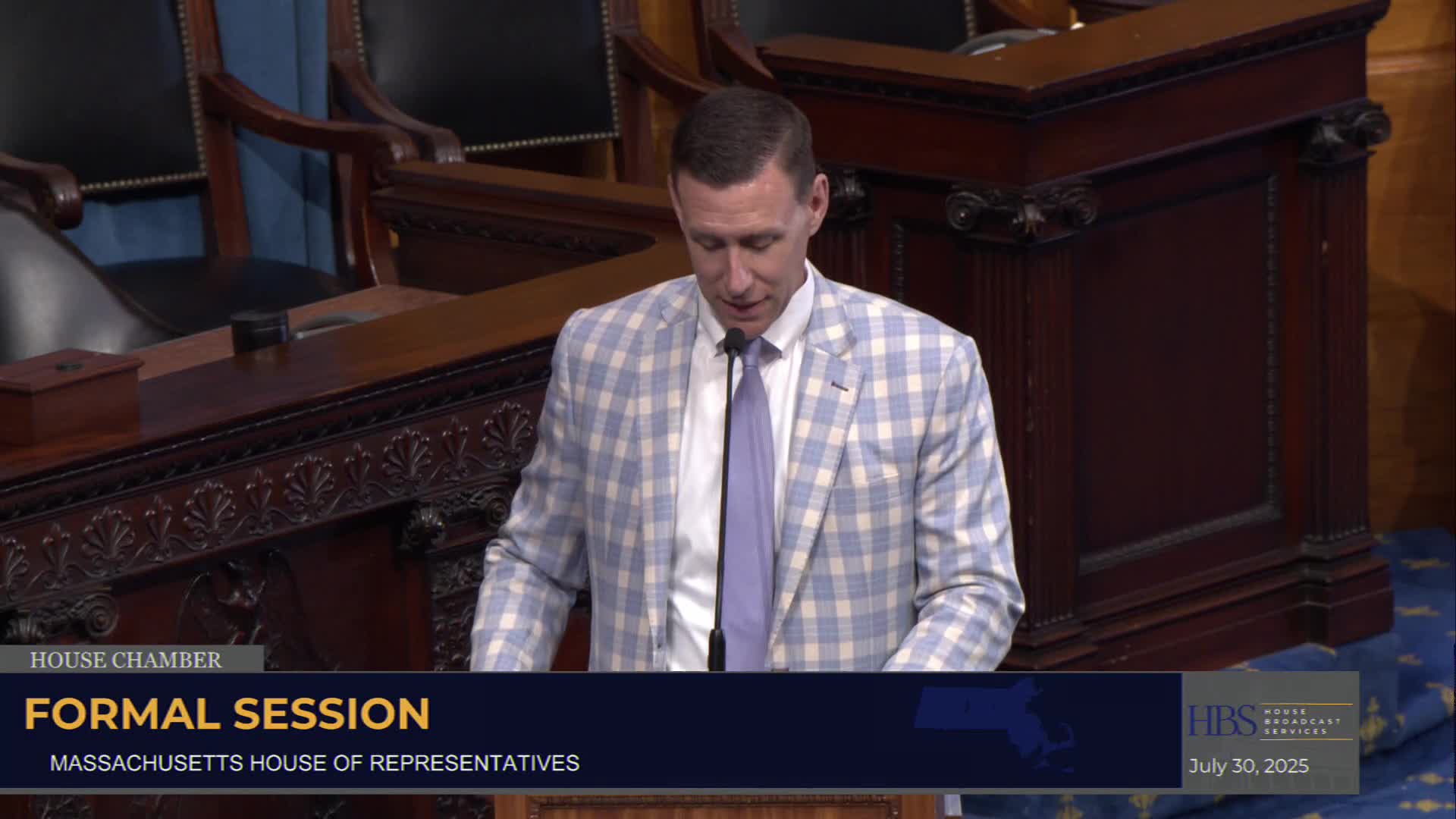
Summary
The House passed H.4360 requiring hospitality staff training and Attorney General-developed signage (including the National Human Trafficking Hotline) in lodging establishments; an amendment clarifying federal statutory definitions was adopted on the floor and the bill passed 158–0 to be engrossed.
The Massachusetts House approved H.4360, an act requiring recognition training for certain hospitality workers and mandated posting of the National Human Trafficking Hotline in lodging establishments, after floor debate and an amendment clarifying statutory definitions.
Supporters described the bill as a practical, victim-focused policy that equips hotel and motel staff — characterized as “the eyes and ears on the ground” — to identify and report signs of human trafficking. “This will give employees of lodging establishments the tools they need to recognize folks that are either engaging in human trafficking or victims thereof,” Rep. Cahill of Lynn said on the floor.
Key provisions described on the floor include Attorney General–developed signage to be posted prominently in hotel lobbies and public restrooms, inclusion of the National Human Trafficking Hotline number on that signage, and mandatory participation by hospitality staff in a training program approved by the Attorney General designed to recognize and report signs of trafficking. Rep. Walsh of Peabody said the bill targets trafficking that often exploits hotels and motels along interstate corridors.
Floor amendment and vote: Rep. Ryan of Boston moved an amendment to section 6(c) to define “human trafficking” and to identify victims by cross-referencing specified provisions of the federal Victims of Trafficking and Violence Protection Act; the amendment was adopted by voice vote. After final debate and roll-call voting (roll call number 68), the clerk displayed a tally of 158 yeas, 0 nays; the bill was passed to be engrossed.
Supporters credited collaboration with law enforcement, survivor advocates, industry groups and nonprofits — including the American Hotel and Lodging Association, Massachusetts Lodging Association, Hotel Workers Local 26, My Life, My Choice, and Peabody Police Department officers mentioned by name — and noted prior grant investments to nonprofits supporting victims. Rep. Walsh quoted survivor Melissa Deal on the floor: “Remember that every person on the street, in a club, on the internet, in a hotel room…they are worthy and enough,” he said, urging members to support the legislation.
The bill as described places implementation responsibilities with the Attorney General for signage and training approval; the floor record did not specify implementation timelines, penalties for noncompliance, or projected fiscal impacts.