Get Full Government Meeting Transcripts, Videos, & Alerts Forever!
Get email alerts on the Statute Of Limitations topic
No spam. Unsubscribe anytime.
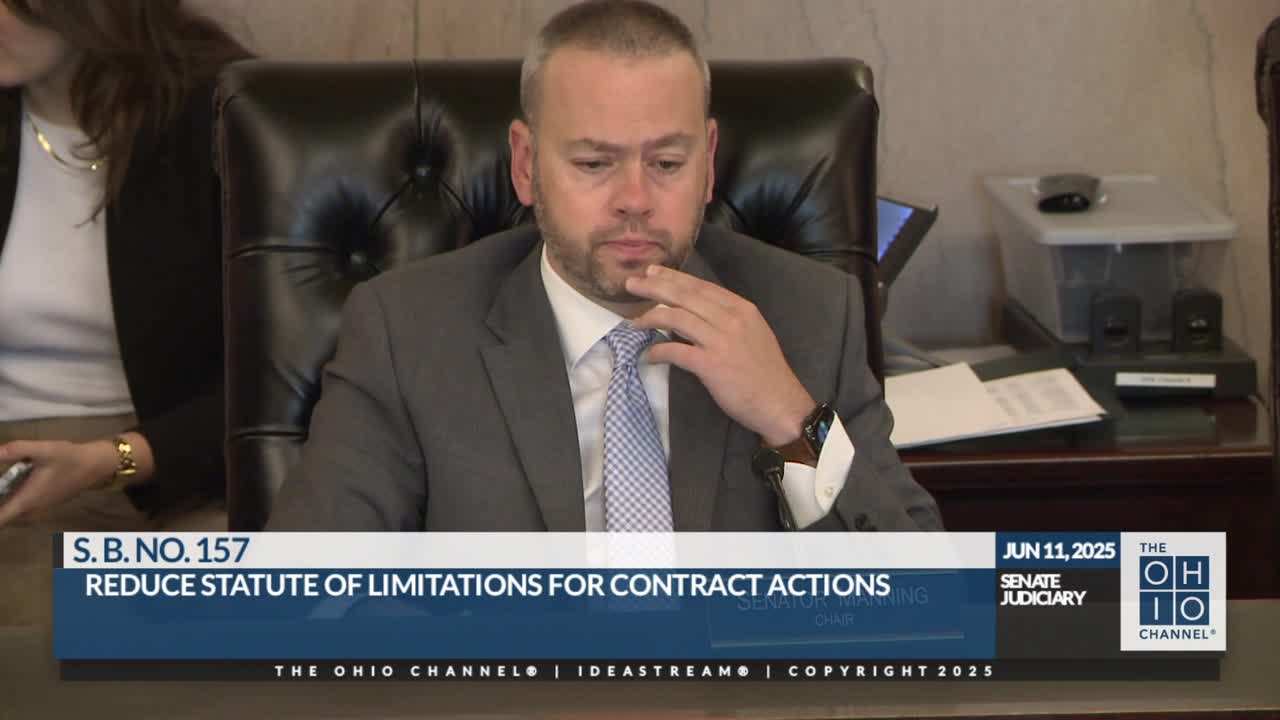
Business groups back cutting contract statute-of-limitations to three years for written deals
Summary
Kevin Schimp of the Ohio Chamber of Commerce testified that Senate Bill 157 would lower the statute of limitations to two years for oral contracts and three years for written contracts to bring faster resolution and reduce business costs.
Kevin Schimp, testifying for the Ohio Chamber of Commerce, and Michael Farley of the Ohio Insurance Institute both urged the committee to support Senate Bill 157, saying shorter limitations periods will bring faster resolution of contract disputes and reduce costs for businesses.
"This reduced period of time to bring contract claims will bolster Ohio's business climate," Kevin Schimp said, describing the bill's reduction to two years for oral contracts and three years for written contracts. Schimp told the committee that shorter limitations periods make evidence more available and reduce litigation uncertainty.
Michael Farley, general counsel for the Ohio Insurance Institute, told the committee the reductions are "not a novel concept" and that prior statutory changes shortened the period from 15 years to eight and then to six. He cited a recent decision from the Tenth District Court of Appeals (Shiganti v. Cincinnati Insurance) as supporting the view that limitations statutes are remedial rather than substantive.
Proponents argued the change will save businesses money in records retention and insurance costs, and that the proposed three-year written-contract period remains longer than many tort-related limitations. Schimp and Farley said the bill builds on earlier legislative changes that progressively shortened the period to bring contract claims.
Senator Blessing questioned whether successive cuts risked undermining consumer protections and asked when the legislative process would stop; other senators raised similar concerns about balance. Committee members did not take a vote; the hearing was recorded as the bill's second hearing and written proponent testimony was noted from the Ohio Alliance for Civil Justice and the Ohio Manufacturers Association.