Get Full Government Meeting Transcripts, Videos, & Alerts Forever!
Get email alerts on the Constitutional Convention topic
No spam. Unsubscribe anytime.
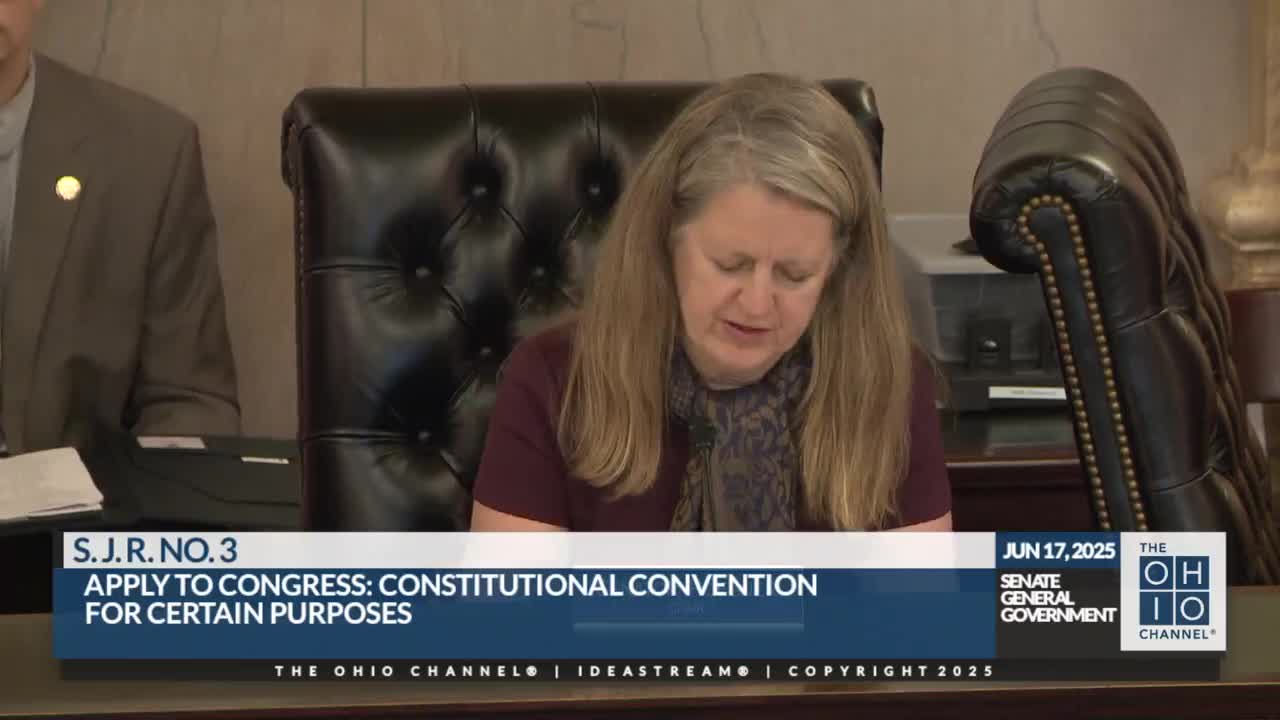
Heated committee hearings on Article V convention proposals; supporters urge action, critics warn of uncontrolled risks
Summary
The Senate General Government Committee heard competing testimony on measures applying to Congress for an Article V convention and on a bill proposing state procedures for appointing delegates; proponents argued a convention could restore federal limits while critics warned the process is untested and could exceed its scope.
The Senate General Government Committee convened competing hearings on proposed applications for an Article V constitutional convention and a related bill to prescribe state delegate appointment procedures.
Proponents including Michael Farris (Convention of States co‑founder), John Fowler, John Kersey and others said state action is necessary to check federal overreach, restore federalism and advance reforms such as a balanced budget and term limits. Farris described the convention process as a constitutionally authorized safety valve and emphasized historical precedent and legal arguments that, in his view, give states control over the convention agenda and delegate selection.
Opponents — including constitutional scholars and civic groups represented by witnesses such as Robert Tuttle, Ellen Horton, Tom Rice, Joseph Demare (Wood County Green Party), Catherine Tercer (Common Cause Ohio) and others — criticized the proposal as risky and untested. They argued Article V provides insufficient procedural rules for delegate selection, convention rules, delegate conduct and ratification, and they warned a convention could exceed its stated subject matter or adopt new ratification rules. Witnesses cited historical episodes from the 1787 convention and legal uncertainty about whether Congress could set rules for a convention or whether the resulting convention could propose expansive changes.
Several witnesses raised procedural and institutional concerns about SB 112, the companion bill that would prescribe appointment procedures for delegates and include a “faithful delegate” pledge. Critics said states lack constitutional authority to bind a plenipotentiary delegate once the convention is convened and argued the Ohio General Assembly cannot unilaterally impose criminal penalties for delegate votes at a convention. Supporters countered that historical practice and legal interpretation support state control of the delegate appointment process and that state safeguards can limit risk.
The hearings included arguments about political opportunity and the practicalities of ratification: proponents said 34 states applying for the same purpose would bring a limited, safe, and agenda‑focused convention; opponents noted that any convention proposal must be ratified by 38 states and said that even if delegates were limited by instructions, convention delegates historically have not always followed state instructions.
No committee vote was taken on SJR 3 or SB 112 during these hearings. Multiple written testimonies were added to the committee record; members may take further action after additional review and legal analysis.