Get Full Government Meeting Transcripts, Videos, & Alerts Forever!
Get email alerts on the Initiative Process topic
No spam. Unsubscribe anytime.
Sponsor proposes 'off‑ramp' for ballot initiatives: SJR 2 would ease path for initiated statutes, add brief legislative protection
Summary
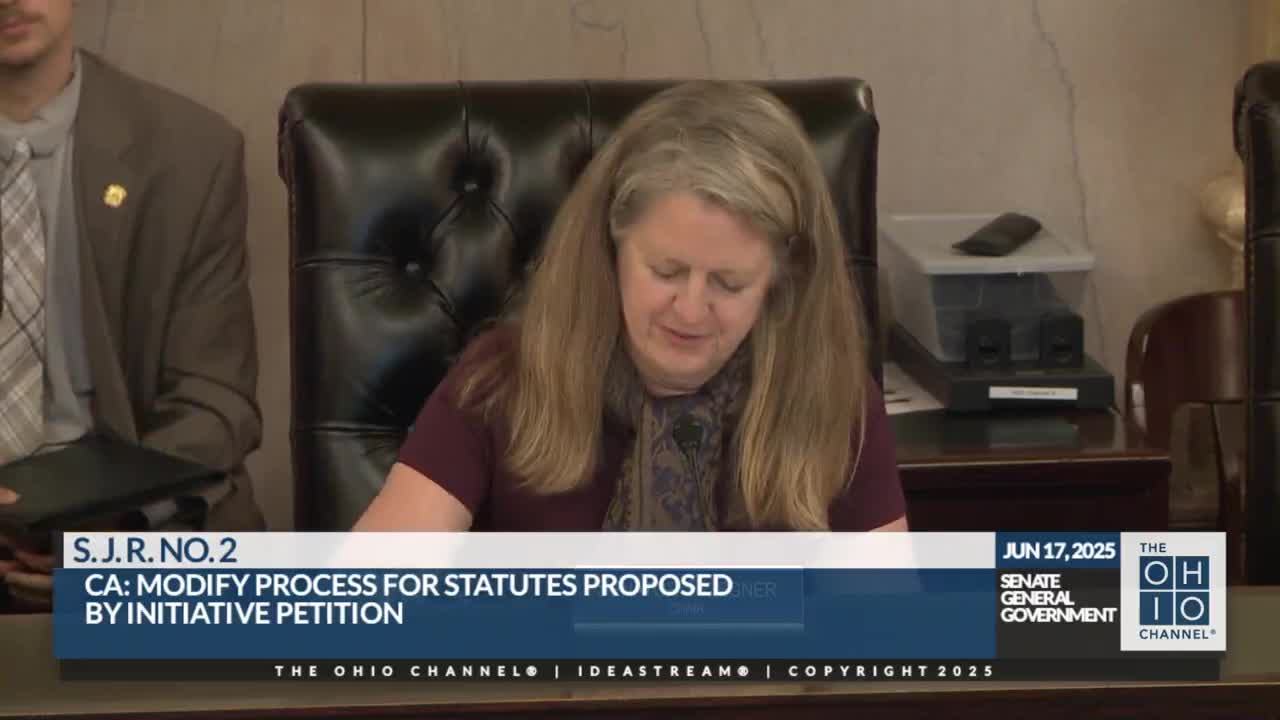
Senator Blessing presented SJR 2, a constitutional amendment to create a lower signature threshold and a temporary legislative protection for citizen-initiated statutes; supporters say it will discourage constitutional amendments, critics were not present, and the committee took testimony with no vote.
Senator Blessing told the Senate General Government Committee he supports Senate Joint Resolution 2, a proposed constitutional amendment that would create an “off‑ramp” for initiative petition sponsors by enabling a lower signature threshold for initiated statutes and providing a two‑year period during which the General Assembly could not amend a voter‑approved initiated statute except under a supermajority rule.
“It does this by amending the initiated statute process,” Blessing said, describing a proposal that would require petitioners to collect 3% of the total vote cast for governor in the last gubernatorial election to qualify an initiated statute for the ballot. Under the plan presented, if an initiated statute passed, the legislature would need a supermajority — modeled on a veto override — to amend the law during a two‑year “cooling off” period.
Blessing said the intent is to give reformers a statutory route that is easier to achieve than a constitutional amendment and to reduce the number of matters placed in the state constitution. He cited casino gambling as an example of policy that critics say should be in statute rather than the constitution, and referenced the work of the state’s constitutional modernization commission for context.
The sponsor framed the change as a way to limit the frequency of constitutional amendments and to provide greater security for citizen‑led statutes, describing the 3% signature threshold as an incentive for proponents to choose statute over constitutional amendment. He also described concerns with the current process that allows the General Assembly a four‑month window to act before petitioners can collect supplementary signatures; SJR 2 would send a properly certified initiated statute directly to the ballot after the signature threshold is met.
During the hearing Blessing acknowledged the proposal could be adjusted — suggesting the cooling‑off period, the percentage threshold and the supermajority level could be subject to amendment — and invited committee members to consider alternative thresholds or minority‑party protections.
No formal action was taken; the committee heard the sponsor’s presentation and asked questions. The measure remains under consideration.